
By Sead Omeragić
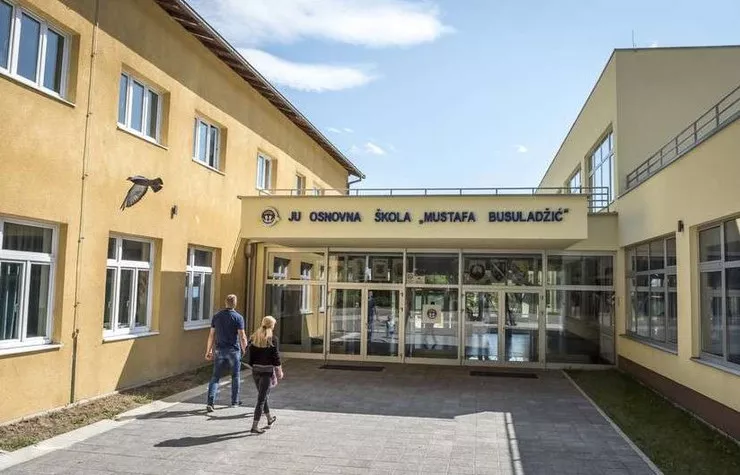
After the Assembly of the Sarajevo Canton first voted to name the school in Dobroševići after Mustafa Busuladžić, a few days ago, after fierce protests and debates, the decision on naming the school was withdrawn.
In Sarajevo and in the area with a Bosniak majority, from 1995 to the present day, we have had a government that has faithfully and cooperatively implemented all the demands of the international community. If an indictment was filed against any official, they would immediately pack their bags and leave office. Things went smoothly, and those who were politically inconvenient were often singled out and removed from political life using this proven method.
This was also the case with those who wanted to join the police force immediately after the war, coming from the Army of the Republic of Bosnia and Herzegovina. Demobilized soldiers, the only formation that honorably defended and protected their country, were supposed to be integrated into the police forces. But even then, foreign administrators said no – those who fought in military formations could not join the police.
A decade later, the first returnees to Republika Srpska could see how those who had killed their family members and persecuted them were strutting around in the police uniforms of the MUP of Republika Srpska. Numerous arrests of war criminals showed that most of them had been active police officers.
In Bosnia and Herzegovina, injustice is done once and lasts for too long.
When the process of return began, the Sarajevo Canton was a model site. People who had arrived in Sarajevo during the mass exodus in 1992, leaving behind destroyed homes and decimated families, began to be evicted from temporary accommodation. Many became homeless at that time and preferred to leave the country rather than return to cities where they had witnessed murders.
The then first cantonal minister for housing, Dr. Resul Bašić, clashed with foreign officials responsible for monitoring property restitution on several occasions. He demanded that for every person evicted in Sarajevo, their property in Foča, Višegrad, Sokolac, Pale, and other cities from which most refugees came to Sarajevo should be released simultaneously. This was impossible because most of that property was in ruins. People were terrified of the possibility of returning to the scene of the crimes.
The response from these foreigners was always: "If you want the state of Bosnia and Herzegovina, then you must show cooperativeness first and leave Serbian apartments in Sarajevo." Due to the constant complaints from these foreign officials, the controllers of return, the authorities of the Sarajevo Canton eagerly seized the opportunity to dismiss Resul Bašić.
This void in property restitution for evicted Bosniaks lasted for seven to eight years. Apartments were vacated, and Serbs did not return. Bosniaks, condemned to homelessness, left their homeland en masse. It is estimated that more than 20,000 Bosniaks emigrated from Bosnia and Herzegovina during that period.
Today, cooperativeness has also been demonstrated by withdrawing the school named after Mustafa Busuladžić. The debates held on this matter show that Bosniaks are torn in their souls and minds over these issues.
And just three days before Radovan Karadžić's verdict, Milorad Dodik opened a student dormitory in Pale named after this war criminal. Karadžić was convicted, but the plaque remained. In Mostar, the singer Thompson held a concert for the "Quartet of Six" from The Hague, spiced with Ustasha scenery and popular Ustasha songs.
The names of Ustasha and Chetnik criminals adorn the streets of western Mostar and Banja Luka. In Serbia and Croatia, streets named after Ratko Mladić, Francetić, and Budak have been and continue to be paraded, war criminals from World War II like Draža Mihailović and Milan Nedić are being rehabilitated, and a monument to Milošević is being erected. The greeting "za dom spremni" (ready for the homeland) is hypocritically approved in certain cases. Europe has been calmly observing this horrific historical revisionism, which is raging around Bosnia and Herzegovina, for years without any serious reactions.
Only in Bosnia and Herzegovina, in the area with a Bosniak majority, can sincere discussions about such topics and dilemmas still be heard. In Croatia, dissenting opinions on outbursts of revisionism and Ustašism are barely audible. In Serbia, there is almost no reaction to the rehabilitation of Chetnik ideology, except for the statements of a few respected historians, who are then silenced by threats.
Revisionism is when Milorad Dodik does not recognize the crime of genocide in Srebrenica, and then receives recognition from the mayor of the municipality. There are too many falsifiers of history, misrepresentations, and a real masquerade ball of fascistoid types is on display. Given the vast amount of denial of crimes and revisionism, and deceptions of all kinds, it is no wonder that the mayor of Sarajevo got dizzy from fascism and antifascism.
Komentari (0)
Prijavite se za komentiranje
PrijavaJos nema komentara. Budite prvi!
Minuta
Sve →Iz drugih kategorija

High Representative Not Elected: Germans, French and British Sabotaged Americans, New Attempt at End of June

ČOVIĆ WITHOUT MERCY: How Those Who Brought Ademović to Office Created a Political Hell for Him



Sunny Saturday, quite warm



Tragedy in Albanian resort: Two minors drown












