
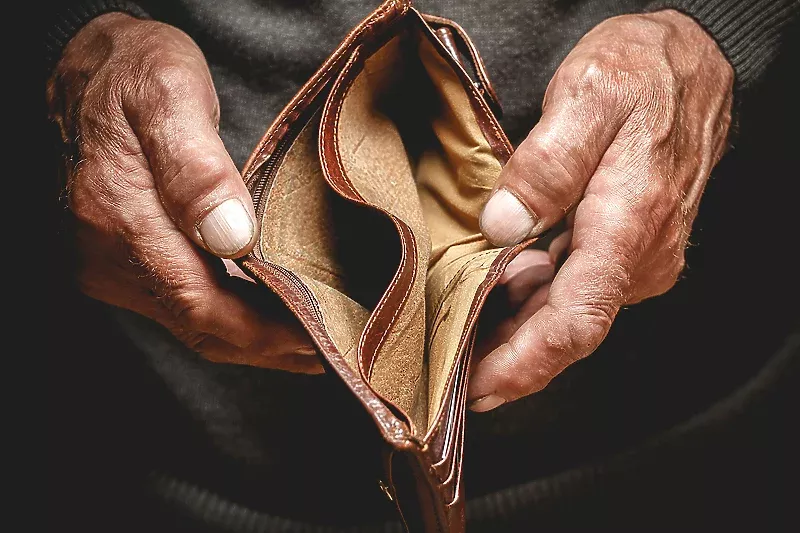
(Patria) - While most citizens look forward to the holidays, decorate their homes and plan festive tables, there are families and children for whom the New Year does not bring joy, hope, or prosperity. Around 19,000 citizens of Bosnia and Herzegovina eat in soup kitchens every day, and estimates show that almost one in five residents cannot afford even one meal a day.
For these people, the morning begins with waiting in line for a meal at soup kitchen points. While some celebrate, the holiday meal for others will depend on the solidarity and empathy of society.
Branko Todorović from the Helsinki Committee for Human Rights warns that social differences in BiH are becoming more pronounced, BHT reports.
"Some will welcome these holidays very modestly, struggling with basic issues, even with heating, while others are already in ski resorts in Italy, Austria, and Switzerland," says Todorović.
Pensioners are barely making ends meet, children live in poverty, and an increasing number of citizens are leaving the country. Data from the Red Cross confirms that more and more people are welcoming the holidays below the poverty line.
"Citizens contact us daily, and in increasingly difficult cases. There are many illnesses and problems that we cannot influence. We are creating a social map and database," says Aleksandar Savić, secretary of the Red Cross Bijeljina.
Numerous humanitarian actions and calls for solidarity are organized during this period. The City of Bijeljina and donors, according to officials, have been providing holiday packages for two decades.
"For 20 years, the same donors and the city administration have been providing holiday packages," states Mitar Škorić, head of the Department for General Affairs of the City of Bijeljina.
Aleksandar Đurđević, director of the Center for Social Work Bijeljina, states that all users of the soup kitchen will receive assistance.
"There are 306 users. They received assistance before the New Year so they could buy basic groceries for the holidays," says Đurđević.
Around 20,000 KM was collected for this purpose – about 15,000 KM through bank transfers, and the rest in goods. Although solidarity and empathy are particularly evident during the holidays, representatives of institutions and civil society agree that this is only a short-term relief.
A long-term change, they say, is possible only through systemic measures and stronger involvement of the state and local communities.
Komentari (0)
Prijavite se za komentiranje
PrijavaJos nema komentara. Budite prvi!
Minuta
Sve →Iz drugih kategorija

High Representative Not Elected: Germans, French and British Against Americans, New Attempt at End of June

ČOVIĆ WITHOUT MERCY: How Those Who Brought Ademović to Office Created a Political Hell for Him



Sunny Saturday, quite warm



Tragedy in Albanian resort: Two minors drown












