
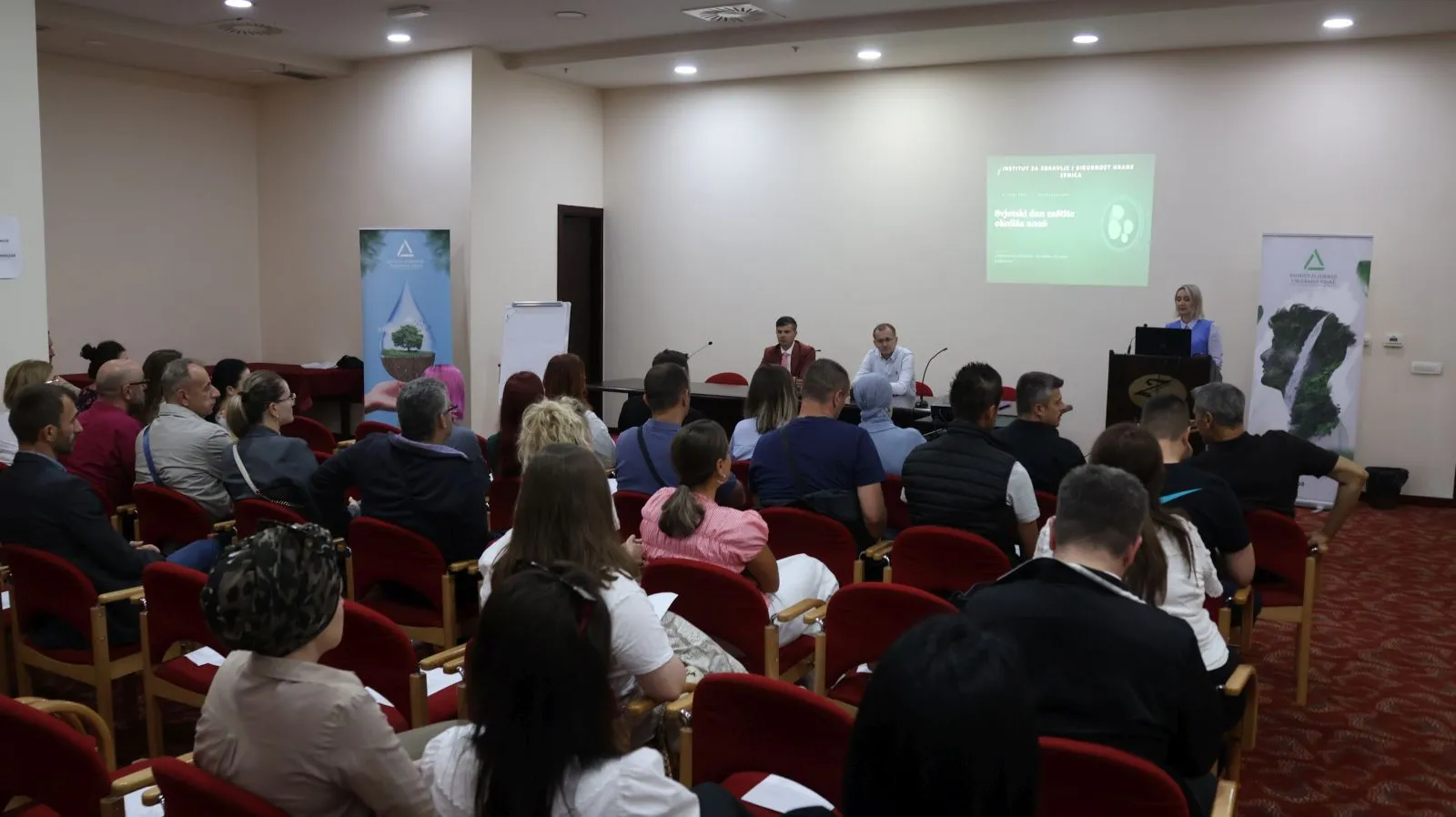
(Patria) - The Department for Health Ecology and Hygiene of the Institute for Health and Food Safety Zenica, on the occasion of World Environment Day 2026, organized a seminar "Inspired by Nature - for the Climate - for Our Future".
After an introductory presentation on World Environment Day 2026 by Melita Lelić from the Institute, a guest lecture on the topic "Climate Challenges in Bosnia and Herzegovina - What Awaits Us?" was given by climatologist and climate change expert from the Federal Hydrometeorological Institute, Bakir Krajinović.
- Climate change is no longer a theory, but our reality and everyday life in Bosnia and Herzegovina as well. We need to build a society more resilient to climate change. This is a task not only for climatologists but also for all other experts from various sectors, including the public health sector, and in this way we all strive together to protect all Bosnians and Herzegovinians, Krajinović emphasized.
He pointed out that year after year we have more and more extremes that disrupt our comfort zone, such as weather adversities, both the heat in 2025 and the floods in 2014 or the heavy snowfalls in the earlier period.
- What happened in October 2024 is a strong warning to all of us that nature is extremely powerful, and if we do not respect it, it can strike back with devastating flash floods like those that hit Jablanica, Fojnica, Kiseljak, and Kreševo. We don't even have to go far from Zenica; for example, Zenica was the hottest city in April, and the absolute record for Bosnia and Herzegovina was measured in Zenica, he said.
On the connection between climate change and the One Health concept, i.e., the status of vector-borne diseases in the Western Balkans in the context of weather changes, spoke Rusmir Goletić from the Institute.
- Much points to the link between climate change and negative impacts on the health of people, animals, and the environment. This is essentially what we are trying to explain through the One Health Approach and to see the whole picture of this undeniable connection between humans, animals, and the environment, Goletić said.
He pointed out that increasingly frequent weather changes affect the emergence, maturation, and spread of previously unknown diseases or those not native to these areas. As a result, we have types of vectors and the occurrence of some diseases that we did not have before.
- Some diseases that we considered "exotic" are now our norm, seen in our regions as well, he emphasized.
Komentari (0)
Prijavite se za komentiranje
PrijavaJos nema komentara. Budite prvi!
Minuta
Sve →Iz drugih kategorija

High Representative Not Elected: Germans, French and British Against Americans, New Attempt at End of June

ČOVIĆ WITHOUT MERCY: How Those Who Brought Ademović to Office Created a Political Hell for Him



Sunny Saturday, quite warm



Tragedy in Albanian resort: Two minors drown












