
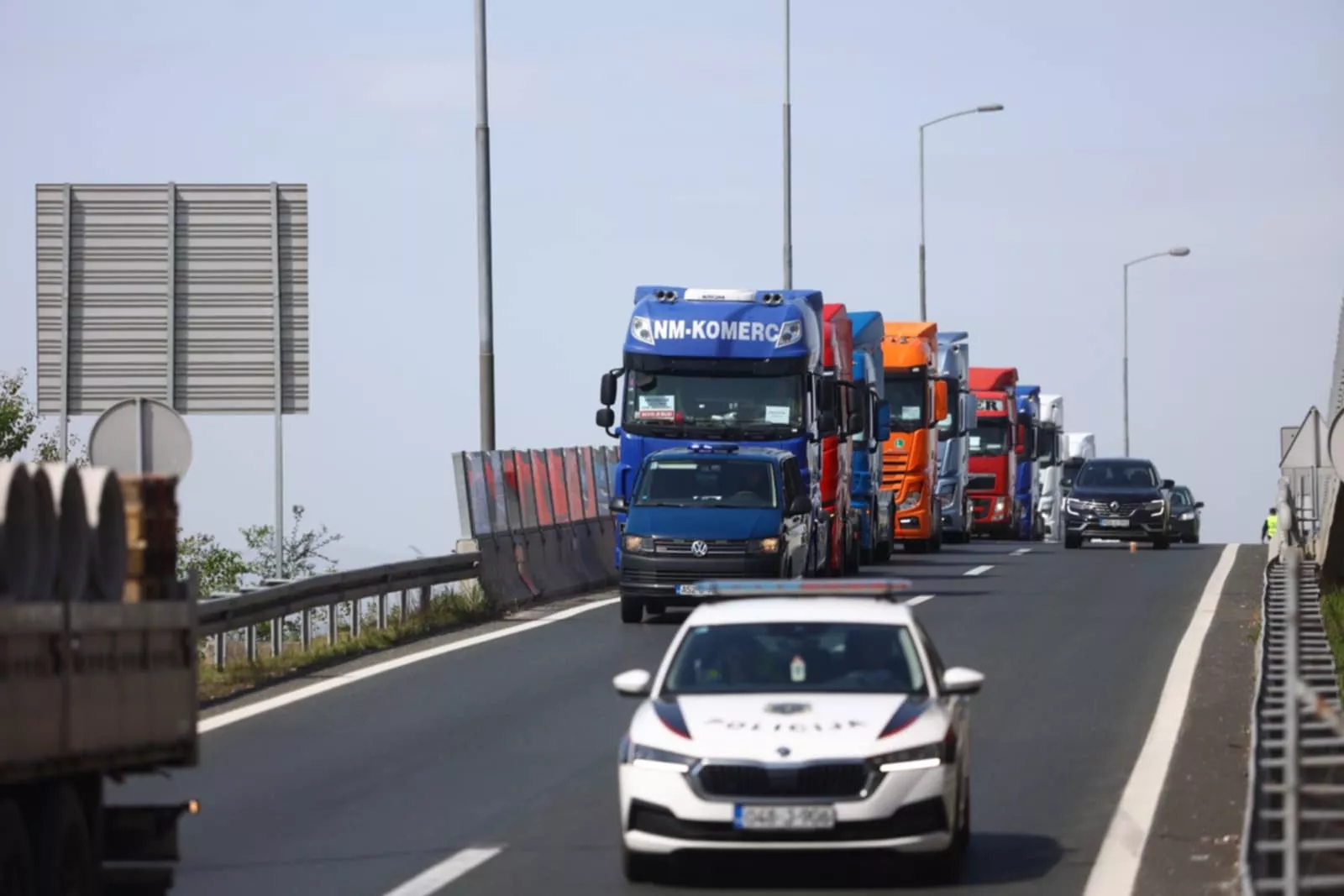
(Patria) - The Logistics Consortium of Bosnia and Herzegovina warns the public and institutions that the situation in the international road transport sector is dramatically deteriorating.
After weeks of problems at the border with the Republic of Croatia and the mass return of professional drivers from Bosnia and Herzegovina, today we are facing a new phase of pressure.
According to information from the sector, the detention of professional drivers in police stations on the territory of the Republic of Croatia has begun, along with the imposition of a six-month ban on entering Schengen for drivers with Bosnian and Herzegovinian passports.
Although formally not a deprivation of liberty, the very fact that drivers are being detained and banned from entering is an alarming signal for the entire transport sector of Bosnia and Herzegovina.
Therefore, we publicly ask:
Is it clear to anyone in the institutions of Bosnia and Herzegovina what is currently happening?
The application of the 90/180-day rule for stays in the Schengen area, as well as the introduction of the Entry-Exit System (EES), are already causing serious disruptions in international transport.
In some weeks, more than 300 professional drivers have been returned from the border, which directly affects the realization of goods exports and the functioning of supply chains.
If this trend continues, the consequences for the transport sector of Bosnia and Herzegovina will be dramatic.
Estimates from the sector indicate that in the first phase, a large number of transport companies could go out of business, leading to the loss of up to 20,000 jobs, and seriously endangering the country's exports and logistics system.
The structure of the transport sector presents a particular problem.
In Bosnia and Herzegovina, transport companies are the most vulnerable to restrictions on drivers' work in international transport in the entire region. If a professional driver can only work 15 days a month in international transport, the business model of most transport companies becomes unsustainable.
In such a situation, transport will not disappear – it will be replaced by foreign carriers, but at significantly higher prices.
Sector estimates show that the cost of transport with foreign carriers will be 1,000 to 1,500 euros higher per transport operation, which will ultimately be paid by the domestic economy and citizens of Bosnia and Herzegovina.
Unfortunately, instead of a strong institutional response, we are witnessing delays in resolving problems through working groups, a lack of political lobbying towards European Union institutions, and a lack of coordination with neighboring countries.
Forming working groups and postponing meetings does not solve the problem – it is just buying time while the transport sector slowly dies.
Therefore, the Plenum of the Logistics Consortium of Bosnia and Herzegovina, at an extraordinary session, confirmed that March 23 remains the date for protest activities.
The transport sector of Bosnia and Herzegovina is one of the key economic branches, with an estimated value of several billion euros annually.
Therefore, we warn again, this is no longer just a problem for drivers and transport companies.
This is a matter of the economic survival of the logistics system of Bosnia and Herzegovina.
If serious political dialogue with the institutions of the European Union and neighboring countries is not urgently initiated, the entire economy of Bosnia and Herzegovina will feel the consequences.
In recent weeks, we have witnessed a series of statements and proposals that show a serious misunderstanding of the problems facing the transport sector of Bosnia and Herzegovina. From proposals to direct protests towards the headquarters of the European Commission, to shifting responsibility between institutions, to claims that the introduction of the TAG system is supposedly a great solution – such statements are an insult to basic intelligence and fundamental economic facts.
The problem facing carriers in Bosnia and Herzegovina has nothing to do with toll collection. The problem is the right to work and equal access to the European transport market.
Therefore, we must clearly state today: Bosnia and Herzegovina is effectively exposed to serious pressure in this matter, and the struggle of domestic carriers is not equal. We are not talking about a formal conflict, but it is evident that through a series of administrative and political decisions, a situation is being created in which the transport sector of Bosnia and Herzegovina is becoming uncompetitive and pushed out of the market.
Our struggle has been ongoing for 14 months and will continue until the legitimate demands of the transport sector are met.
Institutions must understand that the consequences of this crisis will not appear overnight. The collapse of the transport sector comes gradually – through the dying out of businesses, loss of markets, and reduction in the number of jobs.
Sector estimates show that the consequences could be visible as early as the period from March to November this year, through: a drop in VAT revenue and other public revenues, loss of access to European funds and logistics projects, serious disruptions in the import and export of goods, and the loss of thousands of jobs in transport and logistics.
Therefore, we say again, carriers from Bosnia and Herzegovina are not seeking privileges – we are only asking for the right to work and equal status in the market in which we operate.
Our struggle is not against institutions or the European Union. Our struggle is for the survival of the domestic transport industry and for the preservation of the economic sovereignty of Bosnia and Herzegovina.
Komentari (0)
Prijavite se za komentiranje
PrijavaJos nema komentara. Budite prvi!
Minuta
Sve →Iz drugih kategorija

High Representative Not Elected: Germans, French and British Against Americans, New Attempt at End of June

ČOVIĆ WITHOUT MERCY: How Those Who Brought Ademović to Office Created a Political Hell for Him



Sunny Saturday, quite warm



Tragedy in Albanian resort: Two minors drown












