
Written for NAP by: Murat Tahirović, President of the Association of Victims and Witnesses of Genocide
The fact that the judiciary of Bosnia and Herzegovina lost its dignity long ago is evidenced by the absence of a single indictment for the siege of the so-called UN safe areas - Sarajevo, Goražde, Žepa and Srebrenica, Bihać and Tuzla.
Back in 1993, the UN committed to placing these areas, designated as safe areas, under the direct protection of the UN, meaning that not only the lives of citizens would be ensured in these zones, but also the supply and delivery of all necessary resources for the normal life of the population.
However, a completely different scenario unfolded on the ground; the safe areas were precisely under the strongest attacks by the aggressor, who, due to weakness on the front lines, demonstrated his power by firing projectiles at civilians, choosing the most densely populated areas, blocking humanitarian convoys, cutting off electricity and water, and often killing UN personnel.
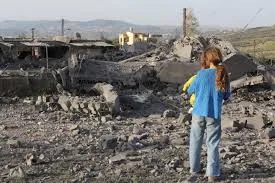
Such indiscriminate shelling caused enormous material damage, but also immense suffering to civilians, children, women, and the elderly, which was ultimately the aggressor's goal - to create unbearable conditions for the local population and to capture the so-called safe areas with the aim of creating a Greater Serbia.
Unfortunately, the only UN Security Council resolution that was effective was the arms embargo on the sovereign state of Bosnia and Herzegovina, which was effective only against the Army of the Republic of Bosnia and Herzegovina, while others - at that time paramilitary groups in BiH - received a supply of weapons from Serbia and Croatia.
The murder of more than 20,000 civilians in the safe areas, and more than 50,000 wounded, means absolutely nothing to the judiciary in BiH.
Today, more than 30 years after the sieges of the so-called safe areas, it sounds shocking that we do not have a single indictment for siege, indiscriminate shelling, sniper fire on civilians, or the obstruction of food, water, and energy supplies. We do not even have investigations indicating that the competent prosecutor's offices are attempting to prove any of these crimes.
For example, we have published the names of dozens of snipers involved in the siege of Sarajevo, which were forwarded by the Hague tribunal for prosecution. I live for the day when at least one aggressor sniper, or artilleryman, for each so-called safe area will be convicted, and their photos will be permanently displayed in the largest possible format in the most frequented places in the so-called UN zones. Unfortunately, it seems that their places might be taken by many individuals who have kept these cases in drawers for decades or have 'dried them up'.
It sounds horrifying that there is not a single indictment for five UN safe areas, but we do have a trial against General Ramiz Dreković, who at the time of the event was the commander of the IV Corps of the Army of the Republic of Bosnia and Herzegovina.
Thus, for one shell fired at Kalinovik, which killed one child, an indictment is filed against the Corps commander, and in the end, General Dreković is acquitted. Who will be held accountable for that?
For the siege of Sarajevo, for example, where thousands of shells were fired daily, killing more than 11,000 civilians, including 1,601 children, there is not a single indictment.
How did we end up in judicial despair?
The International Criminal Tribunal for the former Yugoslavia, through nine verdicts, established that Serbia and Croatia participated in the international armed conflict in BiH. Is this perhaps the reason for the resurgent attitude of Serbia and Croatia towards Bosnia and Herzegovina, which they manifest through the work of their judiciary, which they clearly control completely.
The most obvious example is the indictment in BiH for 'Dobrovoljačka', which was fabricated in Belgrade, even though the Hague prosecutor's office did not give permission to prosecute any individual, from Ganić to Pušina, and Belgrade subsequently added the names of other members of the MUP RBiH, led by Bakir Alispahić, to the BiH judiciary.
Bosniaks, especially those in various positions within the system, must take responsibility and stand, with arguments, in defense of the honor not only of the defenders but of justice as a whole. I say Bosniaks because they identified themselves as such when receiving judicial and other positions from the 'Bosniak quota'.
These Bosniaks should not be patriots, nor just Bosniaks as such, but conscientious professionals who honestly earn their salary and bread. Unfortunately, the day is fast approaching when all five so-called UN safe areas will form a unified pillar of shame, on which many from all walks of life who are responsible will be found, not only for the crimes against the UN zones but also for the current state of society and the judiciary.
Komentari (0)
Prijavite se za komentiranje
PrijavaJos nema komentara. Budite prvi!
Minuta
Sve →Iz drugih kategorija
High Representative Not Elected: Germans, French and British Sabotaged Americans, New Attempt at End of June
ČOVIĆ WITHOUT MERCY: How Those Who Brought Ademović to Office Created a Political Hell for Him

Sunny Saturday, quite warm
Tragedy in Albanian resort: Two minors drown