
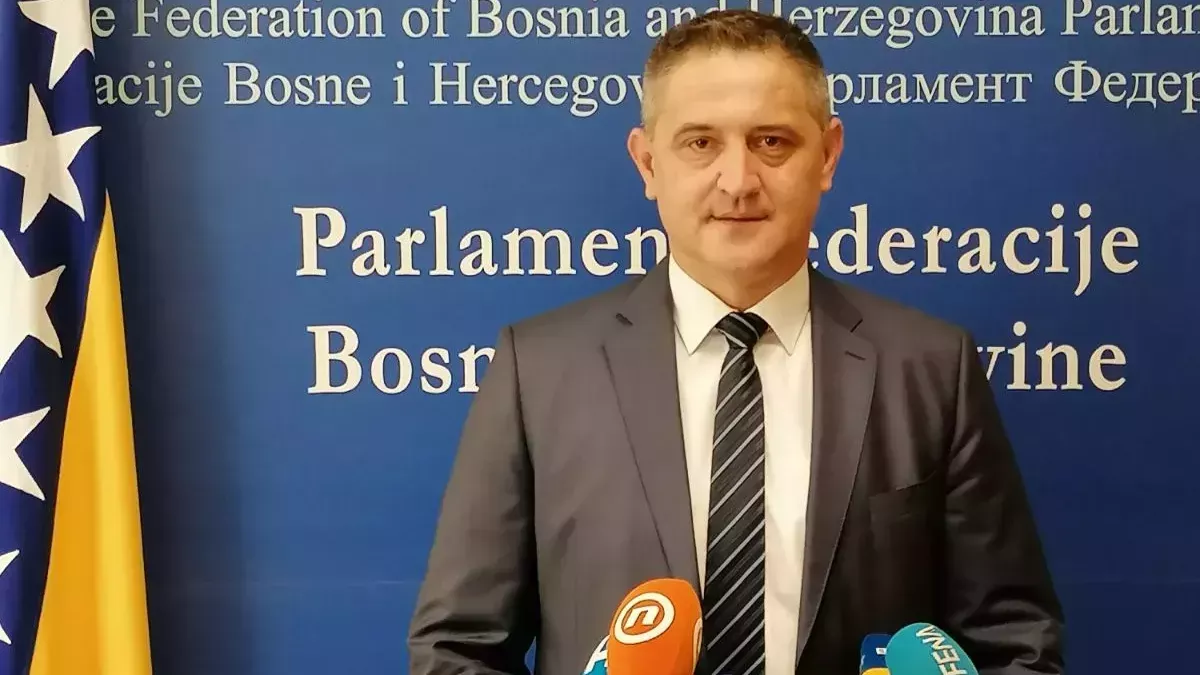
Written by: Enes Peštek, delegate of the Party for BiH in the House of Peoples of the FBiH
At yesterday's session of the House of Peoples of the Parliament of the FBiH, the ruling structure adopted the Report on the Execution of the FBiH Budget for the period from January 1 to December 31, 2024. Although in the first "secret" round of voting the Report did not receive the necessary majority, in the second round of voting, during individual public declarations, some delegates of the ruling Trio and the HDZ abruptly changed their minds, and ultimately the Report was adopted.
I wish to point out that the growth of the internal debt of the Federation of BiH is concerning, which increased by more than 27% in the last year alone, while the external debt remains predominantly tied to variable interest rates and foreign currencies.
Borrowing in itself is not a problem if it is conducted responsibly and serves development. Unfortunately, here debt is increasingly used for "patching holes" in the budget and for political projects without real economic effect. It is necessary to monitor the fiscal sustainability of domestic borrowing and the potential pressure on the domestic capital market. If demand for loans within the country increases, it could lead to a rise in interest rates and less favorable loan conditions for citizens.
While through the Information on internal and external debt they try to convince us that the situation is satisfactory and "under control" because the debt is at 20.5 percent of GDP, behind the dry figures lies a serious problem of borrowing without strategic thinking and without a genuine plan. According to the submitted information, total debt increased by more than 4% compared to last year, with internal debt jumping by as much as 27%. Over 91% of the internal debt consists of market bonds, which will mature over the next 15 years and directly burden future generations.
Also, we rely too much on loans with variable interest rates, tied to EURIBOR and similar reference rates. What will happen if interest rates, which are already rising, continue to increase? Will citizens through taxes pay interest greater than investments in healthcare or education?
We must not forget the currency risk either. External debt is predominantly in euros and dollars. And we have no protective instruments to mitigate a possible decline in the exchange rate of the KM against these currencies.
I particularly want to highlight the problem of end users (municipalities and cantons in the Federation of BiH), who do not fulfill their obligations on time. This information clearly states that municipalities, cantons, and public enterprises are late in servicing debt. When they fail, it falls on the federal budget and all citizens.
In the submitted information, the Government states that we have a "Maastricht level of debt." True, that is a criterion, but that criterion was not made for economically weaker countries like ours. We do not have sufficiently developed industry, we do not have fiscal space, and working-age people are leaving us every day. Therefore, that percentage means much more for us than for Germany or Austria.
Key objections regarding the external and internal debt of the Federation of BiH are:
1. Growth of total debt
- The total debt of the Federation of BiH reached 6.87 billion KM, which is 20.51 percent of GDP. Although this satisfies the Maastricht criterion, the growth trend is concerning, especially the internal debt, which increased by 27.45% compared to the previous year.
2. Excessive reliance on market bonds
- More than 91% of the internal debt consists of long-term market bonds. In this way, the Government places a significant repayment burden on future budgets, without a clearly presented plan for revenue development that could more easily bear that burden.
3. Dangers of currency and interest rate exposure
- The majority of external debt is denominated in euros (78.75%) and dollars (17.54%), which carries currency risk, especially in the event of a change in the exchange rate of the KM against the EUR or USD.
- Additionally, many loans have variable interest rates, meaning that an increase in EURIBOR would significantly increase interest expenses.
4. Too many guarantees, too little control
- The guarantee potential of the Fund is 506 million KM, and the issued guarantees have not yet been fully activated. If enterprises fail to service their obligations, the FBiH budget would have to take over the debts, thereby increasing fiscal risk.
5. Uneven development of cantons and municipalities
- It is noticeable that certain cantons (Sarajevo, Herzegovina-Neretva) bear a huge debt burden compared to others, which could long-term cause fiscal instability in those regions.
6. Delays in settling obligations of end users
- From the document, it is evident that end users (municipalities, public enterprises) often delay payment of due obligations to the Federation. This increases the risk that the Federation will have to directly cover their debts. Such a method and approach could jeopardize the liquidity of the single treasury account of the FBiH, which will require additional borrowing.
These issues are not political, but a responsibility and obligation of all of us for a more stable, secure, and better life for all citizens of the Federation of BiH.
Komentari (0)
Prijavite se za komentiranje
PrijavaJos nema komentara. Budite prvi!
Minuta
Sve →Iz drugih kategorija

High Representative Not Elected: Germans, French and British Against Americans, New Attempt at End of June

ČOVIĆ WITHOUT MERCY: How Those Who Brought Ademović to Office Created a Political Hell for Him



Sunny Saturday, quite warm



Tragedy in Albanian resort: Two minors drown












