
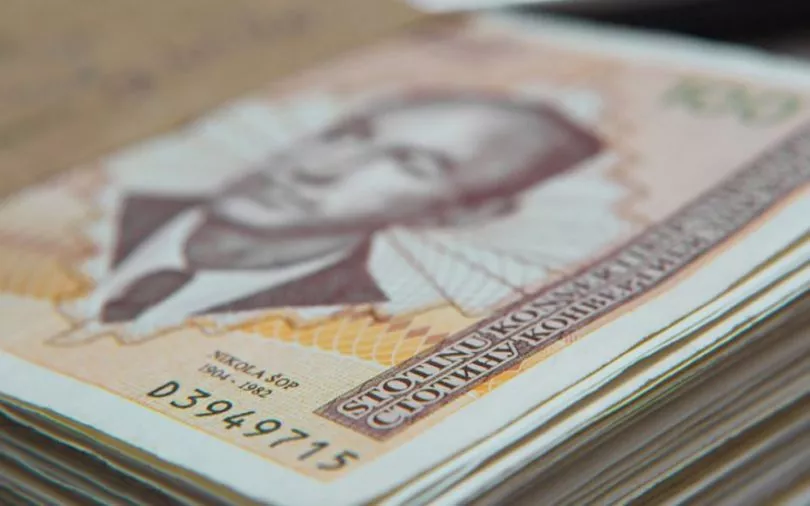
(Patria) - Transparency International in Bosnia and Herzegovina presented the results of monitoring election campaign costs, showing that by October 1, parties spent around 10.8 million KM on billboards, advertisements in the media (television and print media), Meta company ads, and pre-election rallies.
The largest amounts were spent by SNSD (1.6 million KM), followed by SDA (1.3 million KM), SDP BiH (1 million KM), PDP (713,000 KM), and HDZ (643,000 KM). The most was spent on billboard advertising (around 6.2 million), then on pre-election rallies (2.6 million), while the value of advertising in major media amounts to 1.6 million KM. Additionally, according to Meta company data, 254,000 KM has been spent so far on online ads via Facebook, Instagram, and WhatsApp.
These amounts represent only part of the costs, as they do not include advertising and pre-election rally costs at the end of the election campaign, nor other forms of advertising that cannot be estimated, such as Google ad costs, for which no open data exists. Under the new provisions of the Election Law, parties were required to channel all campaign financing funds through a special account and, three days before election day, submit a final report to the Central Election Commission (CEC) on all transactions from that account, including funding sources. TI BiH previously pointed out that in previous years, parties reported significantly lower campaign costs than those determined on the ground, because most lacked legal sources to justify the millions.
Over the past three months, TI BiH observers recorded over 2,570 instances that can be characterized as the use of public resources for the election campaign or as direct violations of election legislation. 123 complaints were submitted to the competent institutions, and the Central Election Commission has so far imposed 18 sanctions based on TI BiH's complaints, totaling 115,500 KM. These fines mostly relate to premature campaigning; some complaints have not yet been processed, while numerous cases of abuse of public resources continue to go unpunished.
TI BiH has already pointed to numerous examples of indirect vote buying through the distribution of one-time subsidies, through which about 60 million marks have been distributed from all levels of government in the last three months. Nevertheless, the CEC took the stance that all one-time pre-election payments that the authorities claim are budgeted do not constitute abuse of public resources, so numerous TI BiH complaints have been dismissed. During the campaign itself, the Brčko District Government allocated one-time assistance of 100 KM to all pensioners, while the Herzegovina-Neretva Canton Government gave a one-time payment of 1,000 KM to 5,700 budget beneficiaries. The President of Republika Srpska, during the campaign, distributed 56 contracts for the allocation of small livestock to returnees in Una-Sana Canton, while the Zenica-Doboj Canton Government allocated a one-time payment of 200 KM to over 8,100 budget beneficiaries.
The CEC has so far received a total of 140 complaints regarding the abuse of public resources, and by the beginning of the last week of the campaign, only 7 sanctions had been imposed, most of them for the abuse of communication resources and social media posts. In one of the latest cases, the mayor of Banja Luka was fined for promoting the distribution of free transport cards for pensioners, although the CEC had previously rejected a TI BiH complaint on the same grounds, then reopened proceedings on the same matter based on a complaint from another entity and imposed a 15,000 KM sanction.
The CEC also made a controversial decision regarding a TI BiH complaint against SNSD, which was challenged by the Court of Bosnia and Herzegovina, concerning the party's promotion at a series of rallies near Banja Luka called "Krajiško veče." In its initial decision, the CEC did not find anything objectionable in the fact that speakers at these rallies called for voting for candidates of this party, but after the Court's decision, in a repeated procedure, a sanction was imposed for premature campaigning. What is particularly problematic is that it is not officially known who pays for these events, which are held before every election and represent a standard form of campaigning for SNSD candidates.
During the campaign itself, the practice of election promotion through infrastructure projects continued, and the value of started and completed works, along with several larger projects in this pre-election period, amounts to 589 million KM. TI BiH has also submitted new complaints to the CEC in numerous cases where these works were presented as the party's success, but sanctions were imposed only for premature campaigning. One recent complaint concerns a NES candidate in Zavidovići, whose pre-election poster was on trucks that were paving local roads. The mayor of Žepče opened a local road before a pre-election rally, and the event itself featured numerous HDZ markings, although the Election Law clearly prohibits campaigning at institutional events.
A complaint was filed against the Minister of Health of Bosnian-Podrinje Canton, who is also a NIP candidate for mayor of Goražde, for promoting free check-up services with a political party logo, while the CEC was notified of a case at the "Srbija" Hospital in Stanari where pre-election materials of United Srpska were distributed at the patient admission counter. TI BiH has already informed the public about complaints against the Minister of Security of Bosnia and Herzegovina, Nenad Nešić, regarding a video in which he promises voters in Višegrad that he will intervene in the competition for police agencies for candidates from this municipality "regardless of whether they are from SNSD or DNS." A complaint was also filed against Milorad Dodik for a speech at a pre-election rally in which he warned voters who do not vote for his party's candidate "that they will have reduced chances for life if they need surgery."
Also recorded were 47 instances of using children for political purposes, 79 cases of increased pre-election hiring, and 77 examples of providing special benefits in the form of free check-ups, public transport, or other public services in the pre-election period. Based on TI BiH complaints, 41 individuals found to be connected to political parties were removed from the list of polling station committee presidents and their deputies, while the CEC refused to remove over 160 individuals for whom TI BiH provided evidence of their connection to political parties. It is evident from all this that the technical amendments to the Election Law have not produced the expected results in practice, either in punishing the abuse of public resources or in preventing the establishment of party control over polling station committees.
Komentari (0)
Prijavite se za komentiranje
PrijavaJos nema komentara. Budite prvi!
Minuta
Sve →Iz drugih kategorija

High Representative Not Elected: Germans, French and British Against Americans, New Attempt at End of June

ČOVIĆ WITHOUT MERCY: How Those Who Brought Ademović to Office Created a Political Hell for Him



Sunny Saturday, quite warm



Tragedy in Albanian resort: Two minors drown












