
(Patria) - The regime of Bashar al-Assad has officially fallen!
Confirmation has come from the Syrian army. He has fled and his final destination is unknown. There is a theory that he was killed.
Either way, the regime has ended its 53-year-long history.
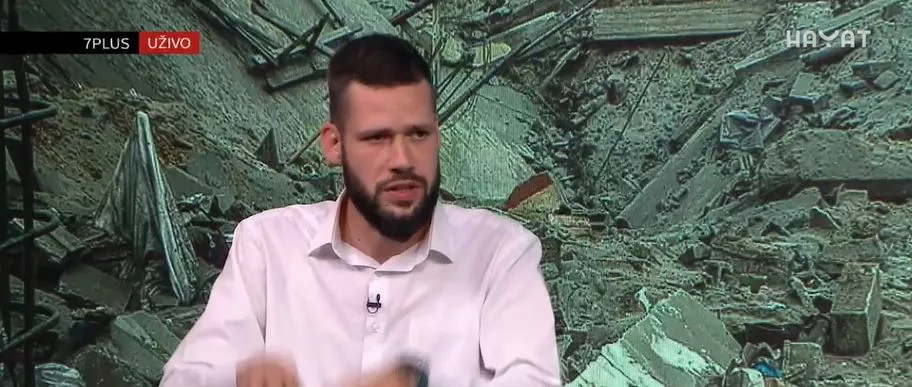
It began with Bashar's father, Hafez. The opposition has captured the capital, Damascus," says Jahja Muhasilović, a professor at the International University of Sarajevo, at the beginning of his analysis for Politicki.ba.
Analyzing the events in Syria, he says that the opposition forces are a collection of several different factions.
"What follows now is certainly the takeover of power, because the capital has been conquered.
But the status of Latakia, the strip along the Mediterranean coast, has not been resolved. Traditionally, Alawites are the majority there, although there are also some Sunnis. Latakia has always been considered a stronghold of the Alawites.
Now we do not know how that transition within Syria will go, given that the 'Assadists' still hold that strip.
A peaceful transition is possible. If that does not happen, then it is definitely a continuation of the war," Muhasilović continues.
He estimates that this would mean the creation of an Alawite state in that region.
He also believes that it will become clear very soon in which direction that part of Syria will go.
Muhasilović also draws attention to the parts of Syria where Kurds live.
"Their military formations are gathered around the SDF. That is a coalition of the Kurdish YPG and various Arab tribes.
What certainly complicates the situation are the American troops positioned there.
And there we will see what the stance of the United States of America is - whether they will allow the integration of the state, this new Syria, or whether they will instead go for retaining the territories they hold under their control and the creation of a possible Kurdish state. We will know that very soon as well," assesses the interlocutor of Politicki.ba.
Muhasilović emphasizes that this will shape the West's stance.
If the US withdraws its troops, it means they have a benevolent attitude towards the opposition.
If not, then it is clear that they are not in favor of that type of government in Syria.
"If the cards really fall into place for the new government in Syria, with the Alawites handing over Latakia and the SDF handing over the eastern part of Syria, the next problem that will have to be resolved is the unification of the various factions that make up the opposition.
If that also passes without problems, the next step is the reconstruction of a devastated state that was, even before the outbreak of war in 2011, poor, with weak infrastructure, and a very large young population without jobs, which was one of the reasons the war broke out.
Either way, the new Syrian government faces enormous challenges," assesses Muhasilović.
Asked what kind of relationship he expects from the West towards the possible new Syrian authorities, he says that this bloc has not had a consistent stance since the beginning of the Syrian crisis.
"At the beginning of the war, the West supported Assad's departure.
But, sometime around 2013-2014, that began to change, which certainly negatively reflected on the outcome of the war and gave the upper hand to Assad, who had been on the defensive until then.
For now, the stances from the West are positive when it comes to the new developments in Syria.
So, they are indeed for the overthrow of Assad. And in due time, we will probably know what they want next."
Muhasilović emphasizes that over time, Assad had increasingly weaker Russian support, and that Iran was not enough to prevent his fall.
He believes that Moscow will try to retain its two bases in Syria on the Mediterranean.
"The Assad regime was obviously left to its own devices and did not have, especially, Western support, nor concrete help from its traditional allies.
The West, therefore, is currently favorably disposed towards the new authorities.
But that does not necessarily mean it will stay that way.
The new government has a huge task ahead of it to 'iron out' all the differences that exist among them, from religious to ideological.
If their rule is more normal than Assad's, if they undergo a certain degree of democratization within themselves, build quality institutions... that would definitely remove any argument for condemning this new government," believes Muhasilović in an interview for Politicki.ba.
Komentari (0)
Prijavite se za komentiranje
PrijavaJos nema komentara. Budite prvi!
Minuta
Sve →Iz drugih kategorija

High Representative Not Elected: Germans, French and British Sabotaged Americans, New Attempt at End of June

ČOVIĆ WITHOUT MERCY: How Those Who Brought Ademović to Office Created a Political Hell for Him



Sunny Saturday, quite warm



Tragedy in Albanian resort: Two minors drown












