
By Rasim Belko
The world is not united. Neither are Americans, Europeans, Russians, or Chinese. And this is the biggest consequence of the crisis, the biggest since World War II. We should be working together, and that will not happen, said American political scientist Ian Bremmer, editor-in-chief of Time magazine and professor at Columbia University's School of International and Public Affairs, in an interview with RTS today.
Interestingly, Bremmer's message is echoed by UN Secretary-General Antonio Guterres, who stated that the pandemic and all that accompanies it is "the biggest test the UN has faced since its founding."
Will the COVID-19 virus halt and dismantle the narrative of globalism? Bremmer believes that the biggest consequence of the pandemic will be deglobalization.
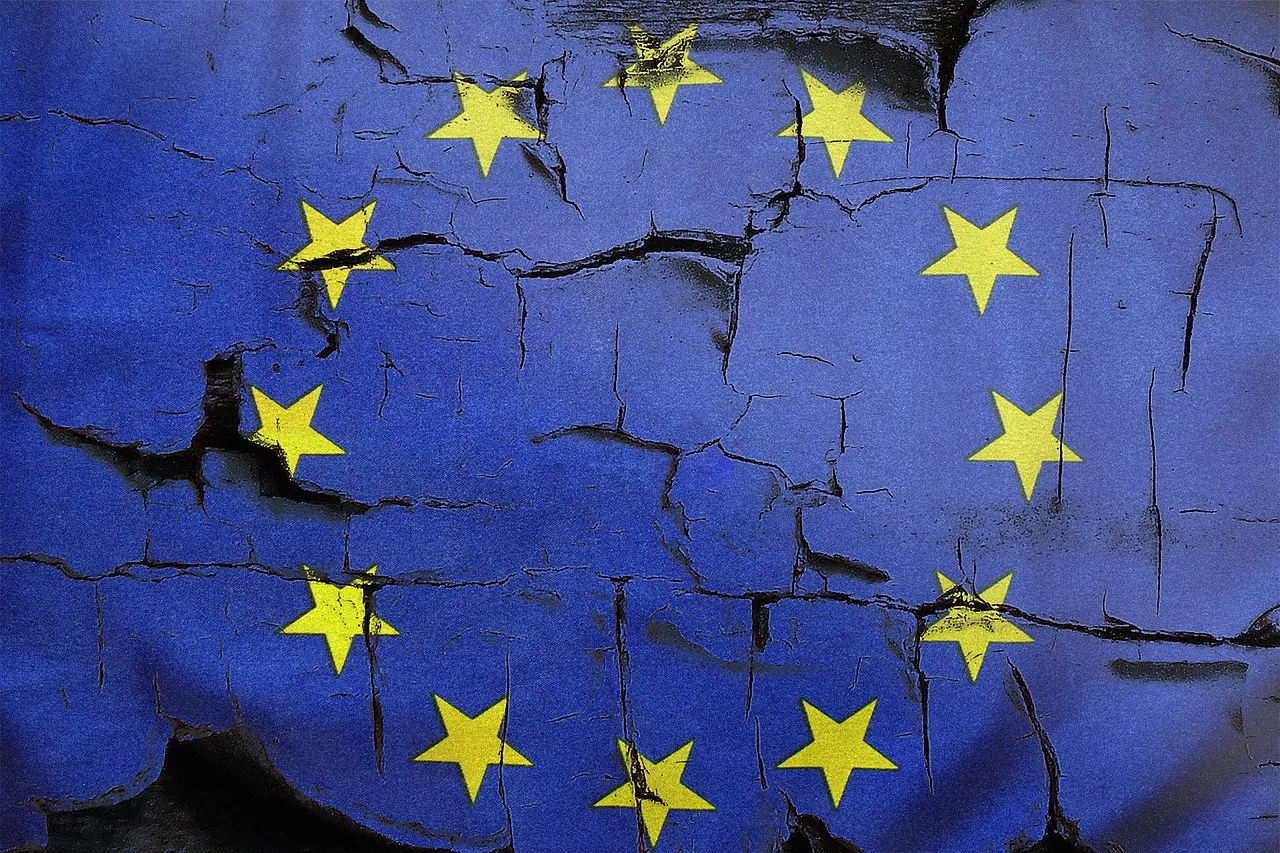
If these predictions come true, the European Union could pay the highest price. But the Union will not only be burdened by the pandemic. The virus has actually revealed everything the British warned about before Brexit.
Bureaucracy and hypocrisy could cost the European Union dearly. An additional burden and danger, even to the Union's survival, are the Eastern Bloc countries, which were readily admitted but unprepared.
These Eastern Bloc countries still rely at the core of their political systems on decades of political legacy from the USSR. The European Union has not managed to instill enough democracy in these countries to this day. In fact, it has done the opposite of what it has done with, say, Bosnia and Herzegovina, or perhaps even worse than what it has done with Turkey.
And then they get dictators in the likeness of Viktor Orbán in Hungary and Jarosław Kaczyński, who has ruled Poland for five years on the ideology that the liberalism imposed by the EU is destroying "traditional Poland." Both have in common that they base a good part of their power on anti-immigrant behavior.
And then the European Union, in its powerlessness to clean its own backyard of dictatorship with fascist characteristics, imposes rules on Bosnia and Herzegovina that it has not imposed on any Eastern Bloc country. Because, let's not forget, Romania was not far from returning to its dictatorial past.
Based solely on behavior during the pandemic, it is easy to conclude that the European Union has become an open camp where neighbors shut their doors on each other in times of storm.
The central house in this European camp has fallen asleep and turned a blind eye to the dictatorship within the Union founded on democracy, and on the other hand, has not acted promptly on the emergence of the pandemic on its territory. No one will be surprised by the drop in support for the EU in these countries anymore.
Especially considering that China and Russia competed to see who could help Italy more. Cuba also helped.
"And Europe? Compared to the aid coming from China, the support from Italy's neighbors seems modest. For now. At the beginning of the pandemic, we were quite disappointed by the indecisive and slow response of the European Union," Elisabetta Gualmini, a member of the Progressive Alliance of Socialists and Democrats in the European Parliament, recently told DW.
Democracy and solidarity in the EU are on life support.
Solidarity, on the other hand, is what largely unites Bosnia and Herzegovina when it faces trouble. Let's remember the floods, and this solidarity was not lacking during the pandemic either.
Democracy is also not doing poorly in BiH compared to how we are portrayed. In this country, by force or not, migrants have found a new home. In camps, yes, but no one beats them in the streets, nor does anyone profit politically from their fate. A great lesson for many EU member states. Even for the Union's government itself.
Even in the state of the pandemic, we are not doing badly. And we are small, limited by resources. True, we are occasionally hit by the political immaturity of the authorities and a rather decentralized system. But we are fighting.
We did not allow the pandemic to kill our democracy, nor, God forbid, our neighbor.
A great lesson for those who impose some of their democracy on us, which falters at the first test. We should also not forget that we coordinated certain things quite quickly with our neighbors, Serbia, Montenegro, and Croatia.
What should not be overlooked is the fact that the public in Bosnia and Herzegovina can influence the government to a considerable extent. Primarily, this possibility is not denied to them. Especially the media and non-governmental organizations.
Although certain decisions during the crisis can be treated as restrictions of human rights, the mere possibility of criticizing them makes this country better than at least one-third of the EU in that segment.
Why then does the EU restrict us on the path to membership, slowing us down with numerous reform impositions? In terms of democracy, this country is far ahead of those they admitted before us. The political gene of the people in BiH has all forms of political action in its code, and the initial code, the connective tissue of the codes, has been democratic and solidary since Kulin Ban.
If Bremmer's predictions come true, it is not impossible that the EU has been too late to admit the Western Balkans, and thus BiH. Because why would a much more democratic BiH join a Union where Orbán and Kaczyński call the shots?
Therefore, it is time for our government, instead of adapting to various external plans, to adapt this country to us in BiH. Given the times, this might be the best path.
Komentari (0)
Prijavite se za komentiranje
PrijavaJos nema komentara. Budite prvi!
Minuta
Sve →Iz drugih kategorija

High Representative Not Elected: Germans, French and British Against Americans, New Attempt at End of June

ČOVIĆ WITHOUT MERCY: How Those Who Brought Ademović to Office Created a Political Hell for Him



Sunny Saturday, quite warm



Tragedy in Albanian resort: Two minors drown












