
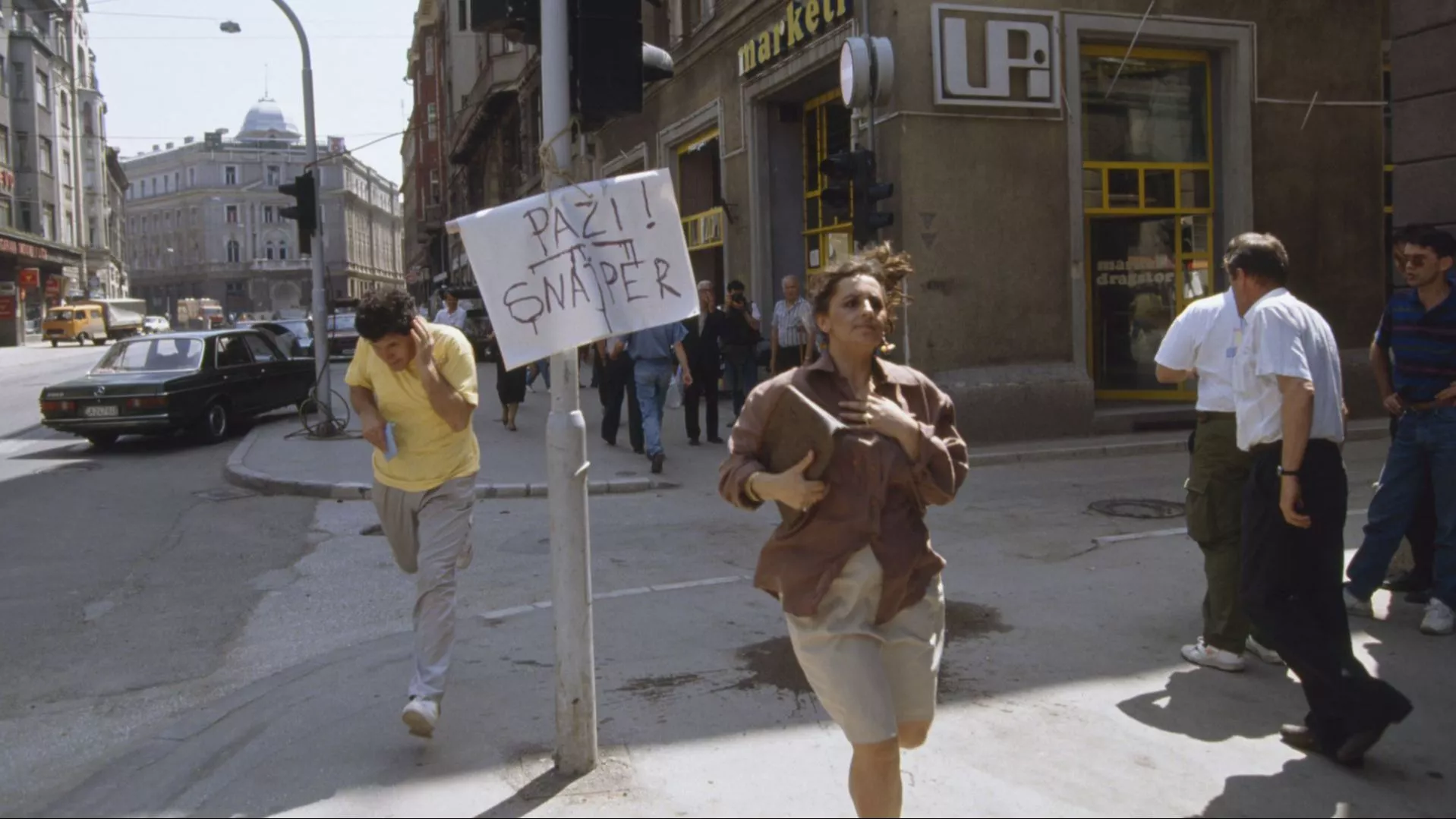
(Patria) - Edin Subašić is a wanted man. As he personally states via email, he has been cooperating with state prosecutor's offices in Milan and Sarajevo in recent days. He says he can no longer speak with the media for the protection of ongoing processes. Because the 62-year-old Bosnian has information, writes Nicole Anliker, the correspondent for the Swiss newspaper Neue Zürcher Zeitung (NZZ) from Istanbul.
The author reminds that he is one of the main witnesses in the investigation by the Italian and Bosnian-Herzegovinian state prosecutor's offices into disturbing accusations that 'manhunt trips', so-called 'sniper tourism', were organized during the war in Bosnia and Herzegovina.
- Wealthy Europeans allegedly paid large sums to shoot at people from Serbian positions during the siege of Sarajevo (1992-1995), writes NZZ.
The newspaper points out that 'Subašić worked for the Bosnian intelligence service during the war and is considered one of the first to have uncovered information about alleged 'sniper safaris'. His statements could be key to clarifying the case, writes Deutsche Welle.
- Subašić was once a literature professor, and at the beginning of the war in 1992, he joined the Army of the Republic of Bosnia and Herzegovina. He soon transferred to military intelligence, the text further states, in which the author quotes Subašić from the film 'Sarajevo Safari' (2022): 'I knew the Sarajevo battlefield like the back of my hand,' he says in the documentary, in which he appears as a witness.
The newspaper reminds that Subašić said in the film that 'at the end of 1993, his superior gave him a captured Serbian soldier's interrogation for analysis. It was, he says, about a 20-year-old from Paraćin, a volunteer who came to fight for the Bosnian Serbs.
The young man said that he arrived by bus from Belgrade to Pale, then the political center of the Bosnian Serbs. In the bus, he says, there were also five foreigners, who were accompanied by military police. Their special status caught his eye: 'They arrived in civilian jeeps or luxury sedans, wore top-of-the-line hunting gear, and had packed weapons.'
The text further states that 'the Serb allegedly started a conversation during the bus ride with three of them. They told him they were from Italy. When he asked them about their pay, he received an answer that apparently surprised him as much as it later surprised the secret agent Subašić: they didn't receive a salary for their wartime engagement, but covered their own expenses.'
- These people paid to come to Sarajevo and shoot at people, Subašić summarizes the statements of the interrogated person in the film. While analyzing the interrogation, he realized: 'This is a human safari.'
The author of the Swiss daily emphasizes in the text that 'the Bosnian Serb army systematically used snipers against civilians during the siege of Sarajevo (...) and that Sarajevo became a place for a 'special hobby'.'
- According to Subašić, his boss informed the Italian military intelligence service about this. In March 1994, Italian agents allegedly confirmed that they had identified the starting point of the 'sniper tours' and had stopped them. A recent Italian diplomat confirmed Subašić's claims in the Italian media. Now the judiciary must react, writes NZZ.
The newspaper points out that after the screening of the film 'Sarajevo Safari' by Slovenian producer Franci Zajc, the then mayor of Sarajevo filed a report against unknown perpetrators in 2022. It is also added that the BiH Prosecutor's Office then opened an investigation called 'Safari' at the end of 2022.
NZZ writes that the 'investigation had been stalled for a long time' and that Subašić 'eventually agreed to help the Italian writer Ezio Gavazzeni', who was investigating further.
It is stated that 'according to Gavazzeni's findings, the sniper safaris were professionally organized – with precise routes, departure times, group sizes, and locations of 'sniper nests'.'
The NZZ correspondent from Istanbul concludes the text with Subašić's conviction:
- High-ranking members of the Serbian intelligence service and army in Belgrade were behind this, he said. Subašić is also 'convinced that without Gavazzeni's research, the topic would never have received a legal epilogue,' DW concludes.
Komentari (0)
Prijavite se za komentiranje
PrijavaJos nema komentara. Budite prvi!
Minuta
Sve →Iz drugih kategorija

High Representative Not Elected: Germans, French and British Against Americans, New Attempt at End of June

ČOVIĆ WITHOUT MERCY: How Those Who Brought Ademović to Office Created a Political Hell for Him



Sunny Saturday, quite warm



Tragedy in Albanian resort: Two minors drown












