
By Muharem Cero, Armin Aljovic
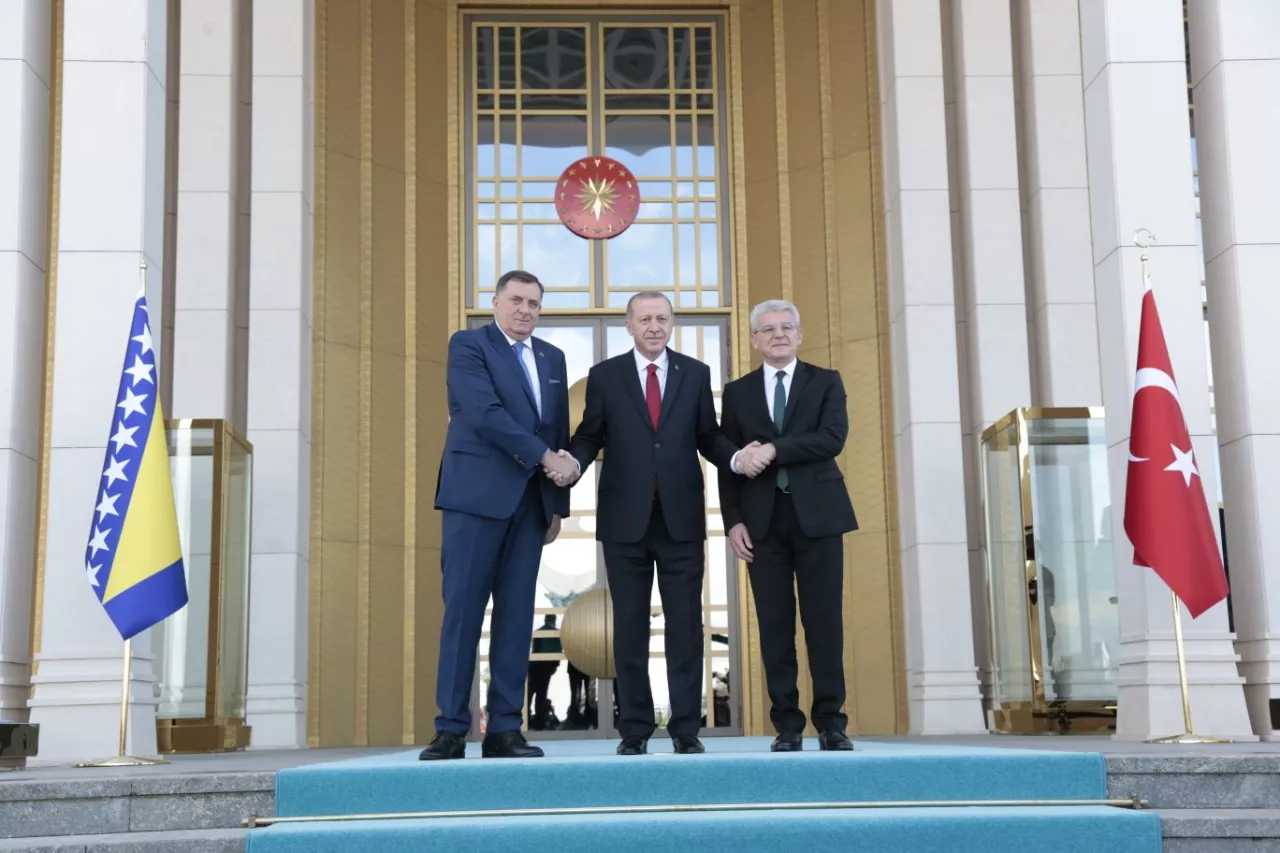
Few periods in post-Dayton Bosnia and Herzegovina have seen more significant events for the country accumulate in such a short time than in the past few days – from Dodik's visit to the Vatican, the meeting of Western Balkan leaders in Berlin, to the meeting of Dodik and Džaferović in Ankara with the influential Turkish President Recep Tayyip Erdoğan.
All these events, however seemingly separate, share a common characteristic – each individually, and all together, directly concern Bosnian-Herzegovinian statehood. Dodik's meeting with the Pope in the Vatican ended in a debacle for Dodik's destructive policy in Bosnia and Herzegovina, at least as far as the Holy See is concerned. The Berlin summit has so far been insufficiently illuminated, ultimately only brushing against Bosnia and Herzegovina, but not fully moving away from it. This, of course, concerns the Serbian-Kosovo issue, which has significant implications for BiH as well. To better understand the effects of the talks in Berlin, we will have to wait for the meeting in Paris, announced as a continuation of the Berlin dialogue, this time in a smaller format.
The Bosniak-Serb meeting with Erdoğan, although the most recent, may have the greatest impact on the future of Bosnia and Herzegovina, even a historical impact can be expected. This is because the meeting in Ankara has very precisely indicated a European alternative not only for Bosnia and Herzegovina but for the entire Western Balkans. Namely, the price of Trump's disinterest in Balkan issues, and European indecisiveness, coupled with their own problems there, has created a kind of material fatigue in the political and human substance of the Balkans. The British The Economist describes the Balkans as a European backyard "behind the house." And it is clear that what is most often thrown into the backyard behind the house is what is no longer needed by anyone.
Because of this, there are increasing rumors that doors to the Eurasian Union are opening for Bosnia and Herzegovina and the region instead of European ones. This claim can also be supported by Dodik's statement after the meeting with Erdoğan: "I strongly presented the position on why Republika Srpska believes that the entire Bosnia and Herzegovina should be militarily neutral, and there were no specific assurances that this position would be changed. I gained the conviction that Erdoğan understands this." Whether this represents a change in the geopolitical course of Bosnia and Herzegovina and the region will not take long to find out, and it will be announced the moment the formation of the Council of Ministers of BiH is no longer conditioned by the NATO path for Bosnia and Herzegovina, but the entire situation is "unraveled" in favor of Milorad Dodik's policy, who very clearly states that he received some kind of understanding from the Turkish president.
It is no secret that a strong China, Russia, and Turkey have not only economically but also politically entered the Western Balkans. This primarily includes Serbia, Bosnia and Herzegovina (Bosniak-Serb component), the unfinished story in Macedonia, and even Montenegro. Dodik, who can be considered merely a kind of PR agent for some major powers, recently drew maps of this new project.
Of course, provided that things align as described, a new problem would arise in Bosnia and Herzegovina. The swift reaction of Božo Ljubić – who is also someone's PR – indicates that the so-called Croatian factor does not count on the offered Bosniak-Serb scenario.
"We must decide where we belong; rhetorically, it is said that we are part of Europe and that we are following Euro-Atlantic integration. In this polarized world, we cannot be non-aligned," Ljubić said, commenting on the meeting in Ankara.
The citizens of the Western Balkans strive for a better life. If it remains a backyard behind the European Union's house, undemocratic systems will move in and take it over entirely.
Why would Bosnia and Herzegovina fare the worst in such power relations? Bosniak and Serb leaders could dedicate their part of the country to the East, and Croatian politicians their part to the West. After all, is the Serbian-Croatian demarcation on the territory of Bosnia and Herzegovina an unfulfilled dream of national policies from Belgrade and Zagreb?
Komentari (0)
Prijavite se za komentiranje
PrijavaJos nema komentara. Budite prvi!
Minuta
Sve →Iz drugih kategorija

High Representative Not Elected: Germans, French and British Against Americans, New Attempt at End of June

ČOVIĆ WITHOUT MERCY: How Those Who Brought Ademović to Office Created a Political Hell for Him



Sunny Saturday, quite warm



Tragedy in Albanian resort: Two minors drown












