
By Armin Sijamić
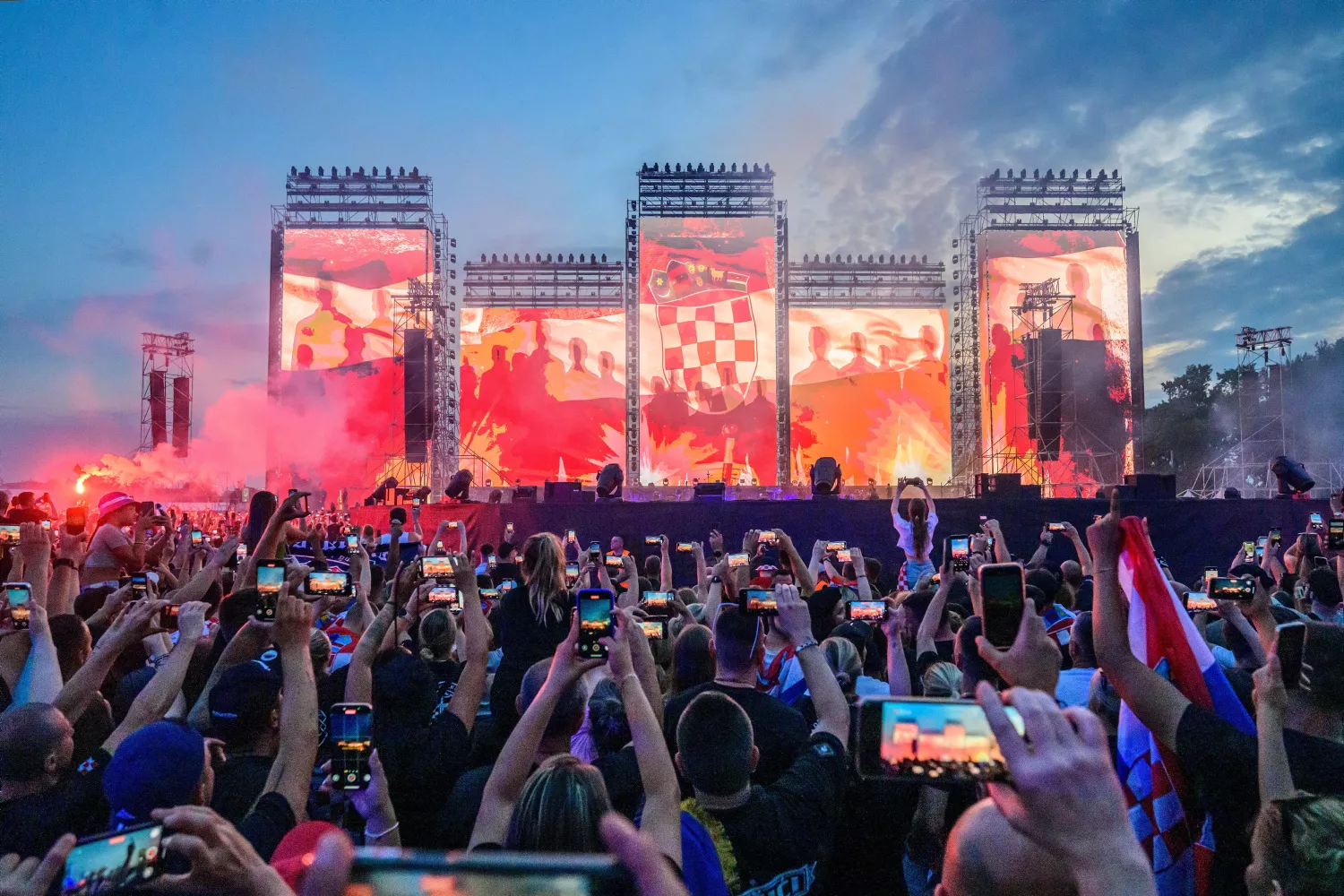
For several weeks, the public in the former Yugoslav countries has been discussing Marko Perković Thompson's concert in Zagreb and the student protests in Belgrade. Some in Croatia and Serbia see this as a positive development, while many across the borders view these gatherings as a new threat.
Marko Perković Thompson ceased to be just a musician who endures despite challenges and bans long ago. For hundreds of thousands of people in Croatia and among the Croatian diaspora, he is the voice of a romanticized version of Croatia's past and the unfulfilled expectations from the Croatian state since leaving Yugoslavia. In other words, the voice of those deeply disappointed with Croatian politics.
Therefore, time should not be wasted on the quality of his musical work, but on the resonance of what he does and what he himself could not have produced. Drawing half a million people to a concert in a country with less than four million inhabitants would not have been possible for Thompson or any other musician if someone who channels political demands that no one in Croatia represents had not stood behind him.

The concert was a demonstration of the political aspirations of his listeners, not just an event that should fill media columns designated for music. In this joint effort of parts of the political elite, the church, the media, and citizens, after years of work, the gap between fascism and "patriotism" has been "smoothed over." Those behind Thompson see nothing wrong with using fascist salutes to help "love the homeland" and presenting it as a "Christian value."
In Whose Name?
Therefore, the question of how this came about is important. Did Franjo Tuđman or his successors in the Croatian Democratic Union (HDZ) betray the idea of Croatia that Thompson's fans desire? How is it possible for people from both the government and the opposition to challenge Thompson, and then appear at his concert? Does Thompson have a political program, or is he just seizing an opportunity? Is Thompson aware that he has stepped outside musical boundaries? Who are the people who attend his concerts?
The Croatian public has not yet received answers to these questions, although it is often heard from the Croatian right, which is largely outside parliament and the mainstream media, that today's HDZ does not resemble Tuđman's, that the European Union and NATO are not what they once were and how Croats imagined them, that the current Prime Minister Andrej Plenković is some kind of Brussels leftist commissioner, and that Zagreb has less sovereignty today than it had under Belgrade after World War II.
These demands essentially align with the demands of those protesting against the government in Serbia, namely the fact that Serbia, like all former Yugoslav countries, is diminishing day by day, and that political and economic flows from the center (West) to the periphery (Balkans) are reshaping everyday life in unimaginable ways. For example, an "American influencer" named IShowSpeed is currently visiting this part of the world; in short, he walks the streets in the host country's football jersey, surrounded by bodyguards, laughs, and speaks incoherently, while thousands of young people stick to him even when he eats. Some media outlets have concluded that the guest is promoting the countries he visits.
In Serbia's case, where the situation is worse than in Croatia in almost all areas, the problem is even more pronounced. The authorities there, including the current one, allegedly want to connect the country, surrounded by EU and NATO member states, with Russia and China, thus becoming the front line in their confrontation with the West. Pro-Russian movements are flourishing, and displays of "brotherly love" towards distant China are increasingly frequent, while cooperation with the West is presented by the authorities as a matter of pragmatism.
The student protests after the canopy collapse at the train station in Novi Sad eight months ago demonstrate the futility of Belgrade's policy. Every defeat of official Belgrade, and there have been many since the nineties – from Slovenia through Croatia and Bosnia and Herzegovina, to Kosovo and Montenegro – pushes its society further to the right, creating prerequisites for the same policies and the same outcomes.
Against Themselves
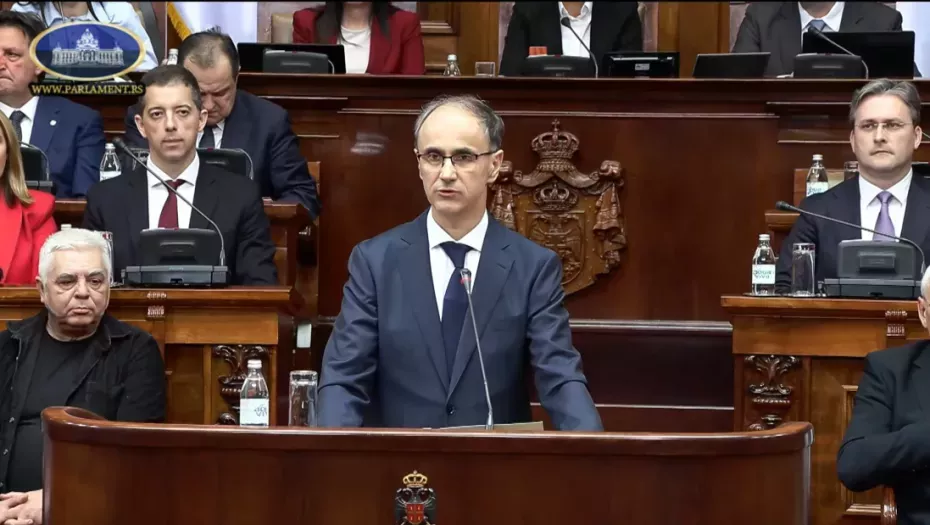
In such circumstances, it was expected that the student protests would eventually turn to the right, which some segments of the public have strongly condemned. Some have concluded that there is no difference between those in power, who were part of the policy of aggression and genocide in neighboring countries in the nineties, and the students who were born after those major political and military defeats of Belgrade.
Some were particularly bothered by the speeches at the last major student gathering on Vidovdan, with which the organizers tried to win over more right-wingers – in a country where all other political forces are struggling to reach the parliamentary threshold of three percent. Before that, students cycled to Strasbourg to gain Brussels' support. Brussels' response: support for Aleksandar Vučić, who, according to some Serbian media, has pledged to allow lithium mining in Serbia and agree to a final resolution of Kosovo's status in favor of the Albanian side.
Choosing extreme right-wingers, at concerts or protests, is not accidental, as the situation in this part of the world suits those who created it after the collapse of Yugoslavia. Croats at the concert sang about fighting Serbs, Chetniks, and Yugoslavs, while Serbian students are portrayed by pro-government media as Ustaše who, through ties with the West, want to create a new Yugoslavia. And many within both groups see Bosnia and Herzegovina as a place for reckoning. Serbian nationalists, in addition, seek Kosovo, Montenegro, Albania, and North Macedonia, while in Serbia, every resource is being sold.
In the gigantic mental cage that has been systematically created in the Balkans, some people see their closest neighbors as their primary enemies, while they disappear from the lands they have inhabited for centuries. In economies heavily dependent on imports and foreign banks, the thesis of a "labor shortage" and the need to bring in people from other parts of the world has already been accepted. It has gone a step further – the leaders of their countries are offering themselves as a place for prisons and camps for people that the rest of Europe does not want.
The new phase in Balkan politics is being explained to the public through "trends" in Western politics, such as the rise of the right, new American politics symbolized by Donald Trump, the danger from Russia, the fight against Chinese influence, threats from the Middle East... Every local conflict reinforces this argument, as warring parties seek protection from those who shape these political currents.
The consequences are visible. The periphery remains dependent on the center, and nationalist leaders of various nations listen to the same addresses. Young people in Balkan countries are a reflection of the society they live in, before they flee to the West, where rules apply that do not exist on its periphery. The rise of right-wing movements in Eastern Europe confirms this, as poverty and hopelessness create conditions for rebellion. These rebellions are mostly right-wing in nature, and the economic system is not mentioned.
Even the biggest political supporters of Thompson are not bothered by the fact that Croatia imports food, that it has lost its factories (for example, world-renowned shipyards), that foreign banks dominate the market. The difference among them is in betting on a different politician, a messiah, outside Croatia, and this is happening twelve years after joining the European Union, which supposedly awaits Vučić and other Balkan leaders with open arms, leaders who are turning their countries into colonies and hoping for permission to turn them into a kind of Alexander Lukashenko's Belarus in the meantime.
Komentari (0)
Prijavite se za komentiranje
PrijavaJos nema komentara. Budite prvi!
Minuta
Sve →Iz drugih kategorija

High Representative Not Elected: Germans, French and British Against Americans, New Attempt at End of June

ČOVIĆ WITHOUT MERCY: How Those Who Brought Ademović to Office Created a Political Hell for Him



Sunny Saturday, quite warm



Tragedy in Albanian resort: Two minors drown












