
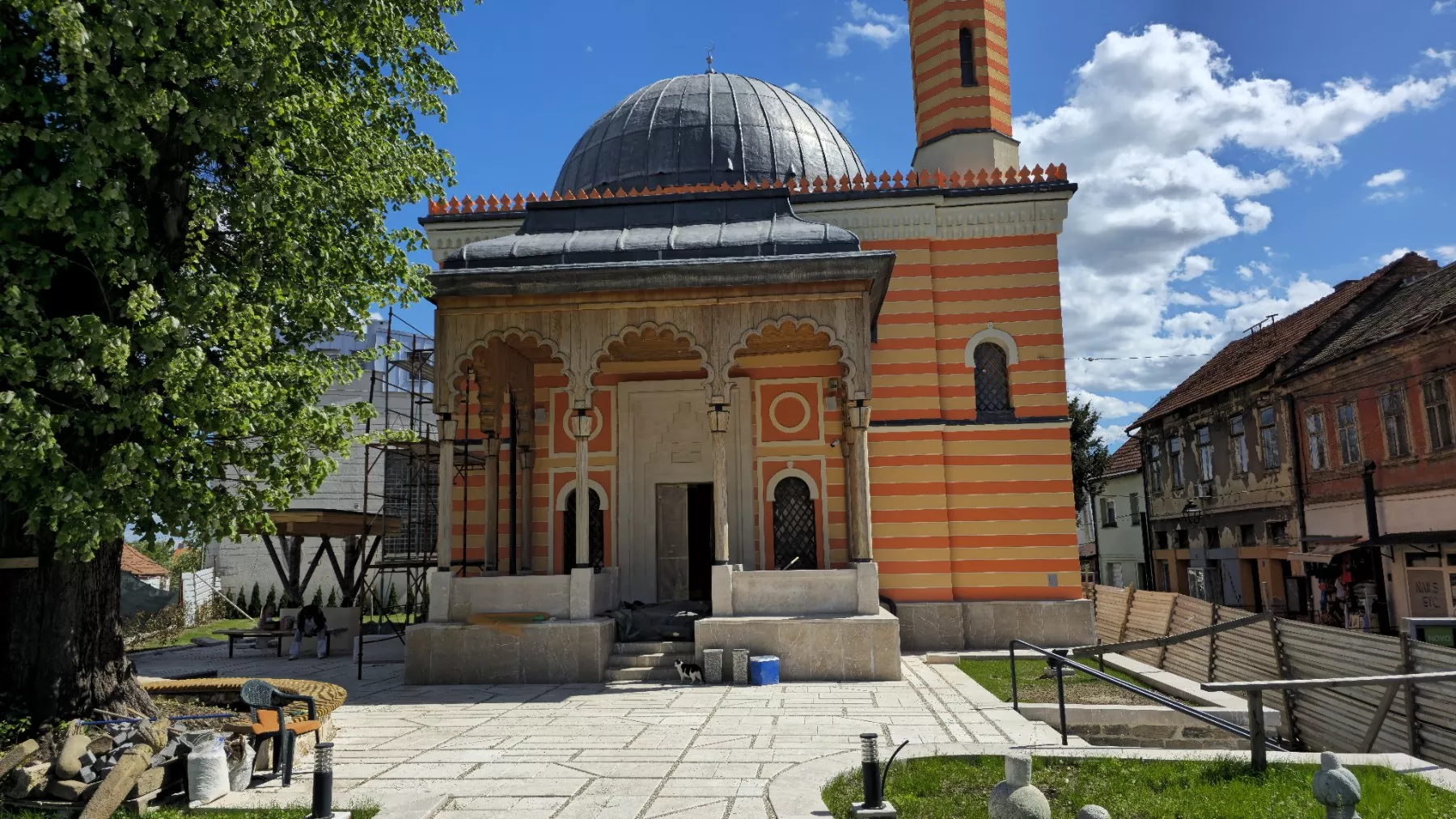
(Patria) - Located in the very heart of Tuzla, with a new dome and minaret, the Painted Mosque - one of the most significant monuments of Islamic architecture in Bosnia and Herzegovina - will be officially opened on May 5 as part of the "Vakuf Days 2025" event.
The total value of the reconstruction project amounted to approximately 2.1 million KM, and it was fully financed by the General Directorate of Endowments of the Republic of Turkey, through the Endowment Directorate of the Islamic Community in BiH.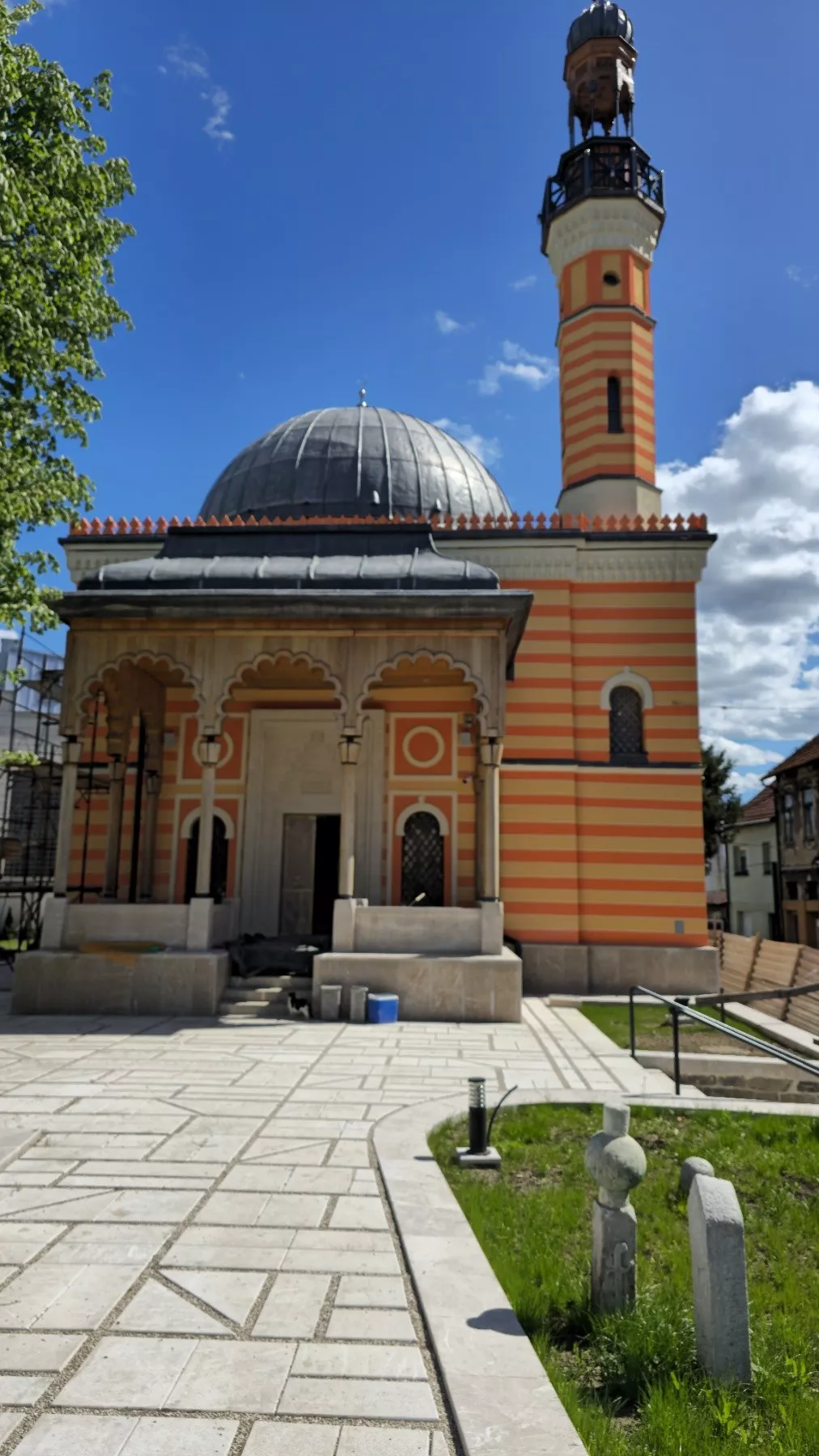
Thanks to this, the Painted Mosque, also known by the names of the Honorable, Atik, City, and Behram-bey Mosque, has been restored to a form reminiscent of its original appearance. The protocol for restoration was signed in 2017, and the works began in 2018.
As it has been a national monument since 2010, the works were monitored by experts from the Institute for the Protection of Monuments of BiH, in addition to the Endowment Directorate. The reconstruction was an extremely complex and demanding process, from research and design to the actual execution.
Today, the Painted Mosque is adorned with rich wall motifs that, in addition to their spiritual significance, leave a strong visual impression and remind us of the rich cultural and historical heritage.
The beautiful interior of the Behram-bey Mosque testifies to its exceptional artistic and architectural value.
- The combination of traditional architecture and foreign influences has resulted in a unique architectural expression. The relief and painted decoration, one of the main features of the pseudo-Moorish style in the Painted Mosque, is among the most beautiful in Bosnia and Herzegovina - said Elmedin Avdibašić, senior expert associate for endowments at the Majlis of the Islamic Community in Tuzla.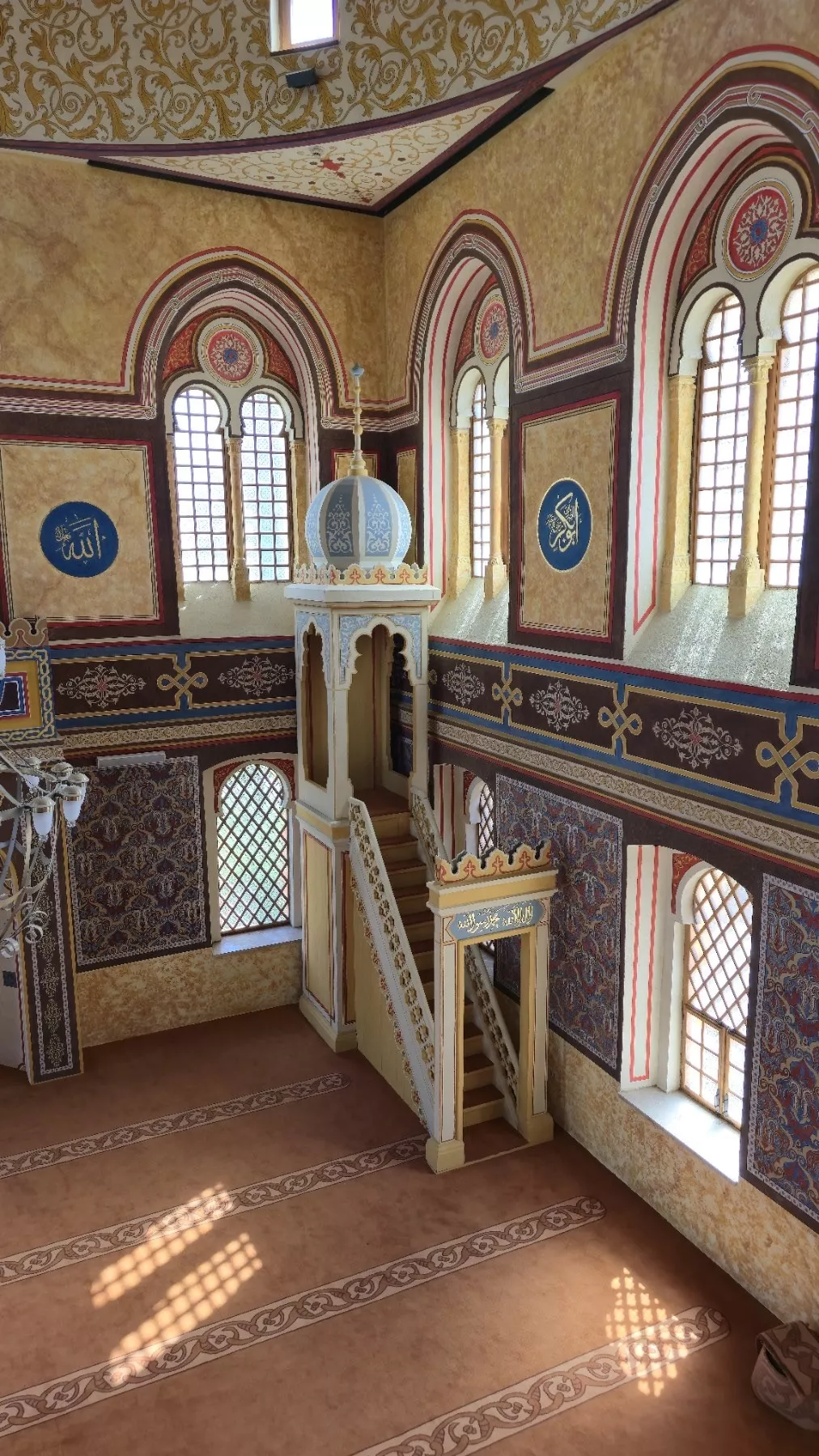
He added that all aesthetic characteristics, including the facade treatment, openings, decorative elements such as crenellated parapets and cornices, and interior finishing, were executed in a pseudo-Moorish style.
- One of the characteristics of the Behram-bey Mosque that resembles Moorish architecture are the horseshoe arches above the windows and on the portico. Such arches are characteristic of Islamic Spain, while the beige-reddish facade in the form of lines is typical of the Mamluk era of medieval Cairo - explains Avdibašić.
The reconstruction project included numerous interventions: the removal of the four-sided roof above the prayer area and the construction of an authentic dome, the removal of the portico built in 1960 and its restoration to its original form, the renewal of the relief decoration on the minaret and facades, structural repair of the foundations, strengthening of the walls, painting of the interior, as well as landscaping of the courtyard and external areas. The mosque's dome now looks like it did in 1888.
- After damage to the wooden structure of the dome during the removal of the lead covering, architect Franc Kuril created an adaptation project in 1895, according to which the original wooden dome was replaced with a four-sided roof. The wooden sofas with canopies were demolished in 1960, and in their place, new sofas were built with eight stone pillars connected by arches, covered by a three-sided roof - he stated.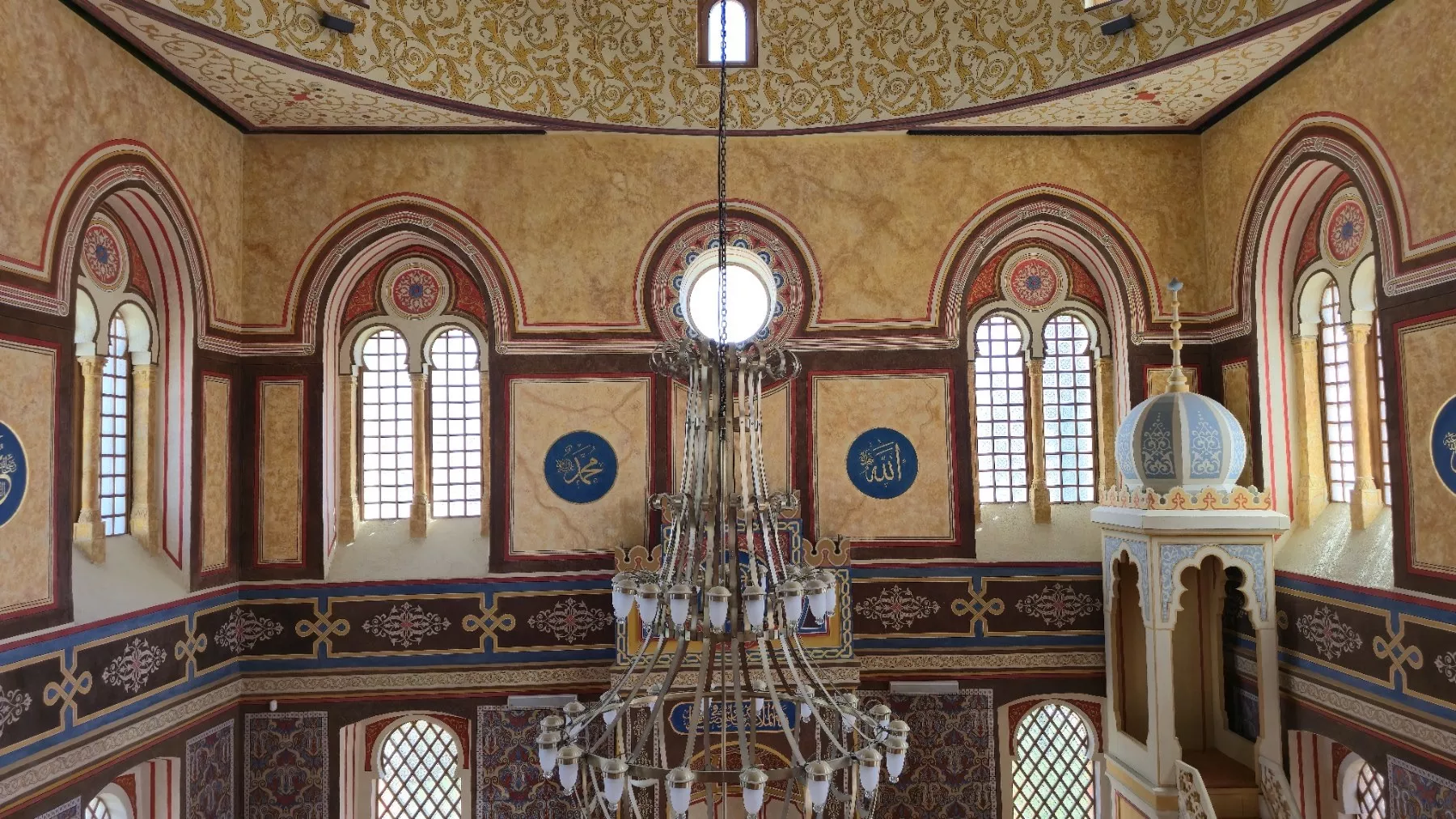
Research and preparation for the project took years. The main fault line of uneven and irregular ground settlement in the old part of the city passed directly under the mosque, which posed a particular challenge for geologists and structural engineers, explained Avdibašić.
- The interior of the mosque has been painted multiple times, and during the restoration, research was conducted on the painted decorations to determine their authentic appearance. The lack of archival material made it difficult to make decisions about the dome and its decoration, but thanks to the expertise of numerous collaborators, all challenges were successfully overcome.
The interior painting was done according to the principles of the Venice Charter; the new colors are natural and a shade lighter than the originals. A specificity of Tuzla, especially this part of the city, is the presence of salt in the soil.
The plasters used during construction drew salt, which led to their fragility. Before the restoration itself, salt was intensively removed using special methods, and only materials from that time were used in the restoration – river sand and lime plaster, without cement – emphasized Avdibašić.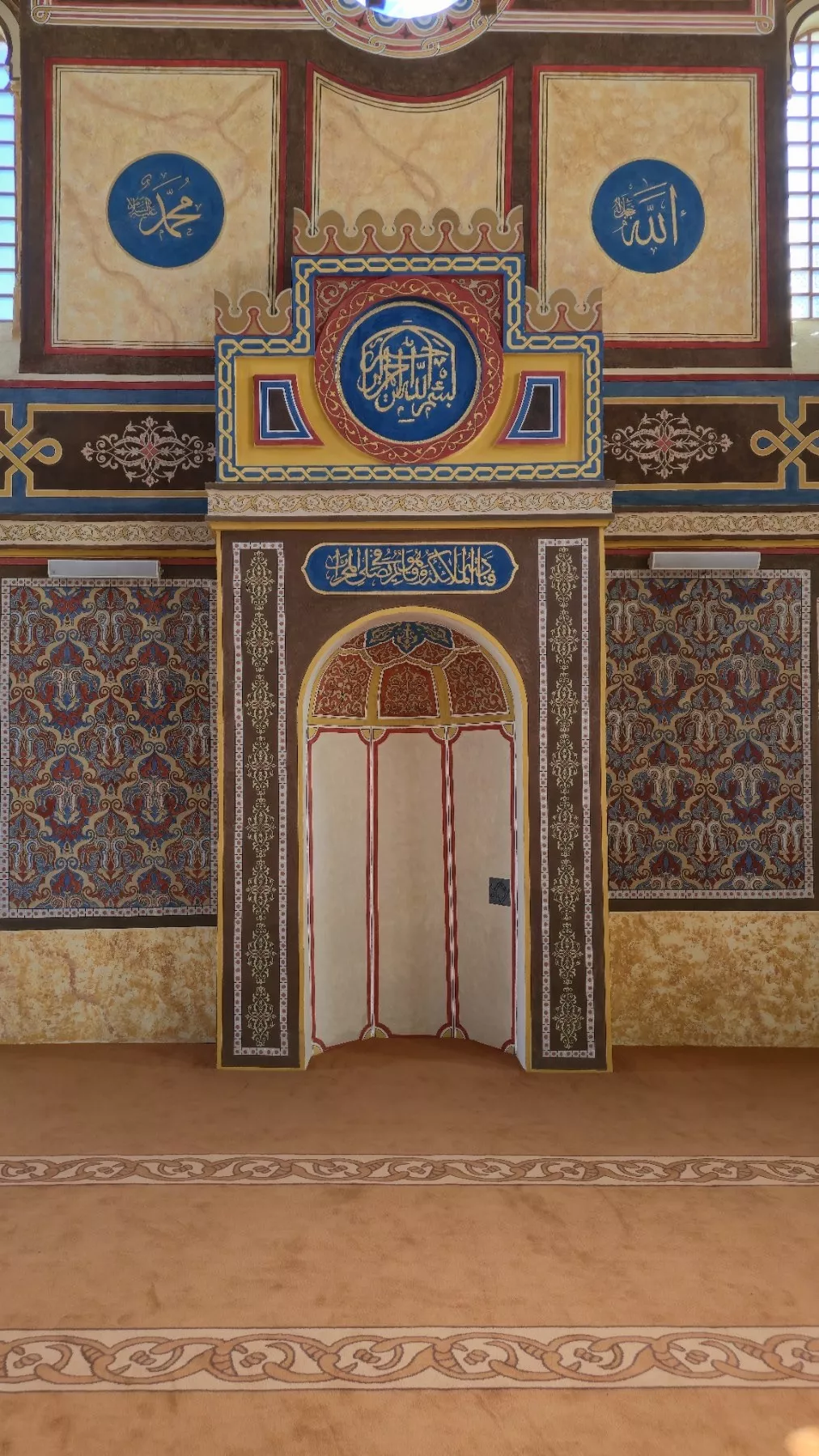
The Painted Mosque is located on a gentle elevation in the Atik mahala in Tuzla. It is first mentioned in 1548, and it is believed to have been built after 1533. The endowment of the Honorable (Atik) Mosque was established in the first half of the 16th century. The mosque, along with the madrasa and mekteb, burned down in a fire on September 10, 1871.
The mosque was designed by Franc Mihanović, while later adaptations were made according to Franc Kuril's design. It is a rare and valuable example of architecture from that era, and its significance is further enhanced by the authentic painted decoration, which – although partially covered – managed to be preserved. Due to its two-tone facade and richly painted interior, it is known in folk tradition as the Painted Mosque.
Komentari (0)
Prijavite se za komentiranje
PrijavaJos nema komentara. Budite prvi!
Minuta
Sve →Iz drugih kategorija

High Representative Not Elected: Germans, French and British Against Americans, New Attempt at End of June

ČOVIĆ WITHOUT MERCY: How Those Who Brought Ademović to Office Created a Political Hell for Him



Sunny Saturday, quite warm



Tragedy in Albanian resort: Two minors drown












