
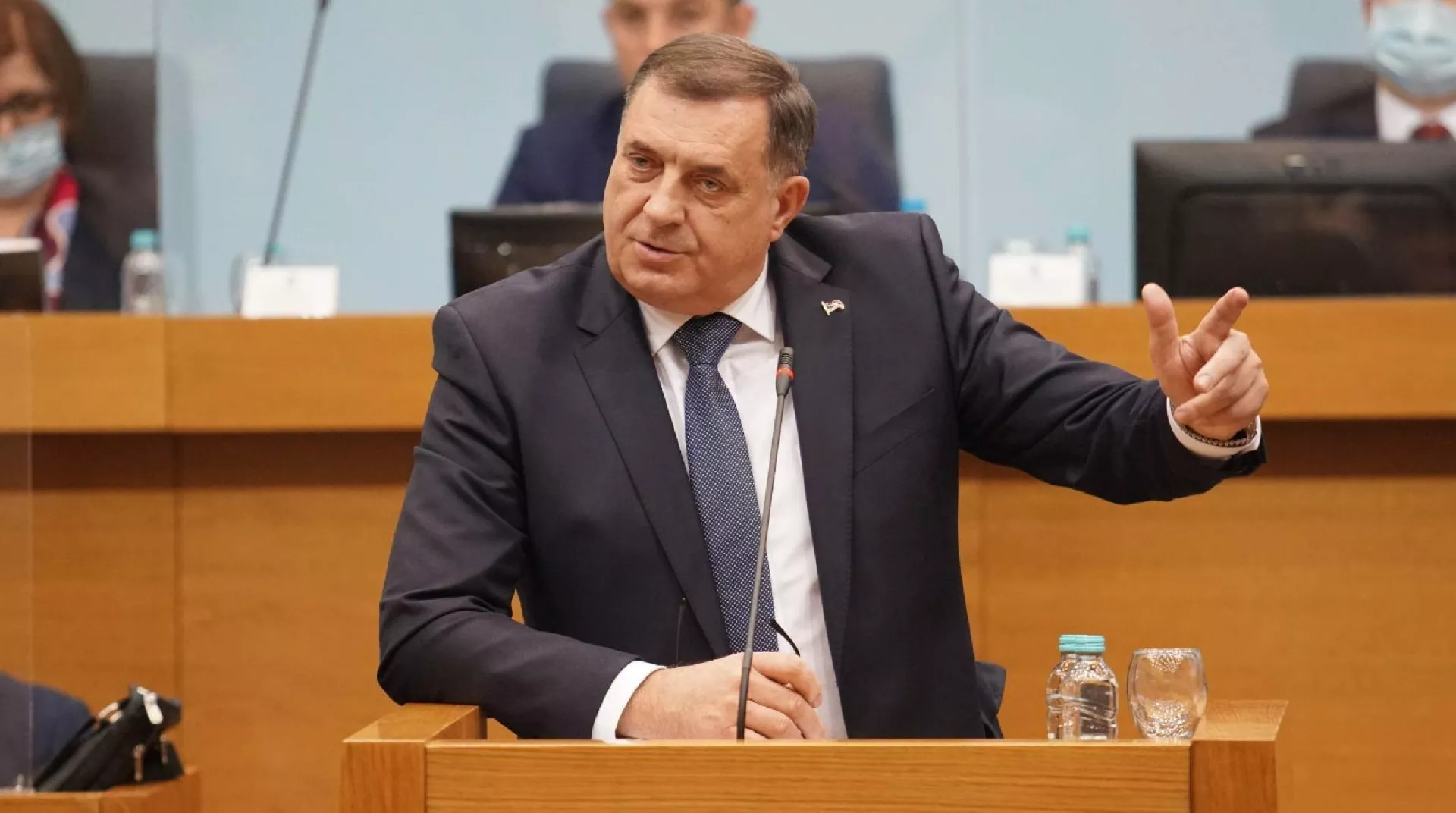
(Patria) - The National Assembly of Republika Srpska (RSNA) adopted at today's session the Report of the so-called Independent International Commission for the Investigation of the Suffering of All Peoples in the Srebrenica Region from 1992 to 1995, which was formed by the Government of Republika Srpska.
This report was presented at the RSNA session in June 2021, and it states, among other things, that "genocide was not committed in Srebrenica," reports RFE/RL.
The International Court of Justice in The Hague characterized the crime in Srebrenica as genocide in 2007, in which more than 8,000 men and boys from the then UN-protected enclave were killed in July 1995.
For these crimes, more than 50 individuals have been sentenced to approximately 700 years in prison.
In Banja Luka today, a series of conclusions were also adopted, including one by which the RSNA "condemns and considers inadmissible and unacceptable the actions of Zlatko Lagumdžija, the permanent representative of Bosnia and Herzegovina to the United Nations, which are aimed at preparing and submitting a Draft Resolution on the Srebrenica genocide to the UN General Assembly."
It adds that this was done "without consultations and consent of the institutions of Bosnia and Herzegovina, the entities, and the constituent peoples, with the aim of demonizing Republika Srpska and the Serbian people as genocidal."
All 73 deputies present in the RSNA voted for the report denying the Srebrenica genocide and the conclusions.
RFE/RL had insight into the draft Resolution on Srebrenica, which, among other things, calls for the unconditional condemnation of any denial of genocide and encourages UN member states to preserve established facts and develop appropriate programs through their educational systems to prevent revisionism and genocide in the future.
The Serbian people, nor collective responsibility, are not directly mentioned in this document.
RSNA deputy Ramiz Salkić said during today's debate that the attempt to deny court verdicts and facts establishing the Srebrenica genocide by adopting the Report on Srebrenica is unacceptable.
- Those who advocate the denial of court verdicts, who glorify war criminals, they make the greatest contribution to spreading the truth about the genocide. If that were not the case, almost nothing would be said about it today. You are focusing international attention on this issue - Salkić stated.
On the agenda of today's RSNA session is also the Draft Election Law of Republika Srpska, which appropriates state competencies in the field of elections in that entity.
The text of the Draft defines that the entity election commission takes over the legal role of the Central Election Commission (CEC) of Bosnia and Herzegovina in organizing local elections in that BiH entity, as well as general elections for the President and Vice Presidents of Republika Srpska and the entity parliament.
Entities in Bosnia and Herzegovina have never had jurisdiction over the conduct of elections in the country since the end of the war in 1995, nor is entity jurisdiction over elections mentioned in the Constitution of Bosnia and Herzegovina.
The Draft Election Law of Republika Srpska was adopted at the end of March, after which representatives of the international community assessed the work on adopting this law as a "direct attack on the state structure of Bosnia and Herzegovina."
The CEC also previously stated that they are the only ones responsible for holding elections in Bosnia and Herzegovina.
All elections since the adoption of the Election Law of Bosnia and Herzegovina in 2001 until today have been organized by the CEC, and elections before that were organized by the Provisional Election Commission, established by the Dayton Agreement.
Local elections in Bosnia and Herzegovina, in which mayors, municipal heads, and local parliaments are elected, have not yet been scheduled, but the law stipulates that they should be held on October 6.
The authorities of Republika Srpska initiated the procedure for adopting this law after the High Representative in Bosnia and Herzegovina, Christian Schmidt, imposed technical amendments to the Election Law of Bosnia and Herzegovina, six months before the local elections scheduled for October.
The amendments, among other things, include the professionalization of polling boards and biometric voter identification, as well as other changes to reduce the possibility of electoral manipulation.
Komentari (0)
Prijavite se za komentiranje
PrijavaJos nema komentara. Budite prvi!
Minuta
Sve →Iz drugih kategorija

High Representative Not Elected: Germans, French and British Sabotaged Americans, New Attempt at End of June

ČOVIĆ WITHOUT MERCY: How Those Who Brought Ademović to Office Created a Political Hell for Him



Sunny Saturday, quite warm



Tragedy in Albanian resort: Two minors drown












