
By: Armin Sijamić
Since his return to the White House in January this year, Donald Trump has prioritized force and disregards any criticism and well-intentioned appeals. Driven by the idea that he is right simply because he is stronger, Trump is destroying what official Washington has been building for decades.
Since Donald Trump entered politics, many have spoken of the United States "returning" and that the world's greatest power is becoming what billions of people have perceived it to be for decades – a place of freedom, a moral role model, a power to be followed out of political conviction.
Trump and his people accepted this premise, although the current US president did not wish to attribute any messianic missions to himself at the beginning of his political career. He spoke of American mistakes and sought a pragmatic approach to fix what could be fixed.
Trump's supporters said that the new president would "Make America Great Again" (MAGA), that the US would regain its reputation worldwide, which was tarnished by Democratic administrations this century, and that the country would once again lead its allies based on values. In advocating this stance, Trump's supporters, as expected, also included the issue of religion, spoke of the promised land, the chosen people, the idea of the founding fathers of the United States, Christian morality, tradition...
Many saw this political platform as a basis on which they could realize their policies, because what Trump's people said sounded so broad, or "inclusive" as his rivals from the Democratic Party would say, that from Latin American right-wingers, through European (neo)fascists, to Balkan and Asian long-standing rulers, all could find themselves in it.
Force Before Values
The problem with this premise arose when the spoken word had to be translated into action. Admittedly, Trump did not promise that this would happen. In the eleven months of his second term, Trump has shown nothing but classic geopolitical tenets – control over territory, people, resources, processes, and the pursuit of his interests at all costs, even at the expense of his closest allies.
Tariffs, sanctions, restrictions, conditioning, and forcing others to submit to his will have marked the first year of his second term. Trump did not use these measures against enemies and rivals, but against his closest allies. One should recall the relationship with European countries, NATO allies, Ukraine, Arab states, and even the almost unthinkable undermining of the UK government's reputation by his closest associates.
Thus, Trump resolved the dilemma that Zbigniew Brzezinski posed to American politicians. This renowned American politician and political scientist raised the question of whether the United States wants to be a "beacon of freedom" or just another "empire." His student, Barack Obama, was aware of this, Trump had some contact with this concept in his first term, and Joseph Biden tried to present the United States as a beacon.
In his second term, Trump clearly chose a side and believes that an empire has the right to do as it pleases. We have seen this in recent weeks off the coast of Venezuela, in Latin America, where the struggle for a fairer relationship from Washington towards this part of the world has been ongoing for decades.
That Trump's decision has long-term consequences, regardless of whether his policies triumph in the short or medium term. The policy of force creates enemies in the long run. It is enough to look at the examples of Vietnam, numerous Latin American countries, Afghanistan, Iraq, Iran..., where America's reputation has been severely damaged. It is not difficult to conclude how Ukrainians and a large part of Europeans will view Washington if a peace deal is struck with Vladimir Putin at Kyiv's expense.
Brzezinski knew this, which is why he proposed that the United States be a role model for other countries, to show by its own example that a better world is possible and that one of the fundamental tenets of such a policy is freedom and security for every individual. In the alternative, the United States, Brzezinski believed, would be a hegemon imposing rules, feared by other countries.
An Era of Insecurity
Trump has also chosen force in politics at home. Many warn that after this term of Trump's, nothing will be the same in the United States. Some warn of violations of laws and regulations by the president, while he deals with dissenters, often with harsh insults.
The strength of American institutions, built to never allow someone's arbitrariness to prevail, is a major obstacle to many of Trump's intentions. Since his first term, Trump has been in constant conflict with state institutions, defending his right to do what those who brought him to power demand. That battle continues today, and it is unclear how it will end.
However, it is already clear that under Trump, the United States does not have a predictable policy, and reversals are possible. This is confirmed by numerous events in recent months. For example, this week, German General Christian Freuding said that the Pentagon did not inform the German Ministry of Defense about the cessation of deliveries of certain types of weapons to Ukraine. Freuding said that there were channels for regular communication between the German and American sides, but not anymore.
This case is not an exception. If we look at the case of the Oil Industry of Serbia (NIS), it can be seen that even the highest officials in Belgrade do not have information about what the Trump administration will do, even after promising lucrative deals to members of his family in the center of the Serbian capital and after, according to the opposition, violating several laws.
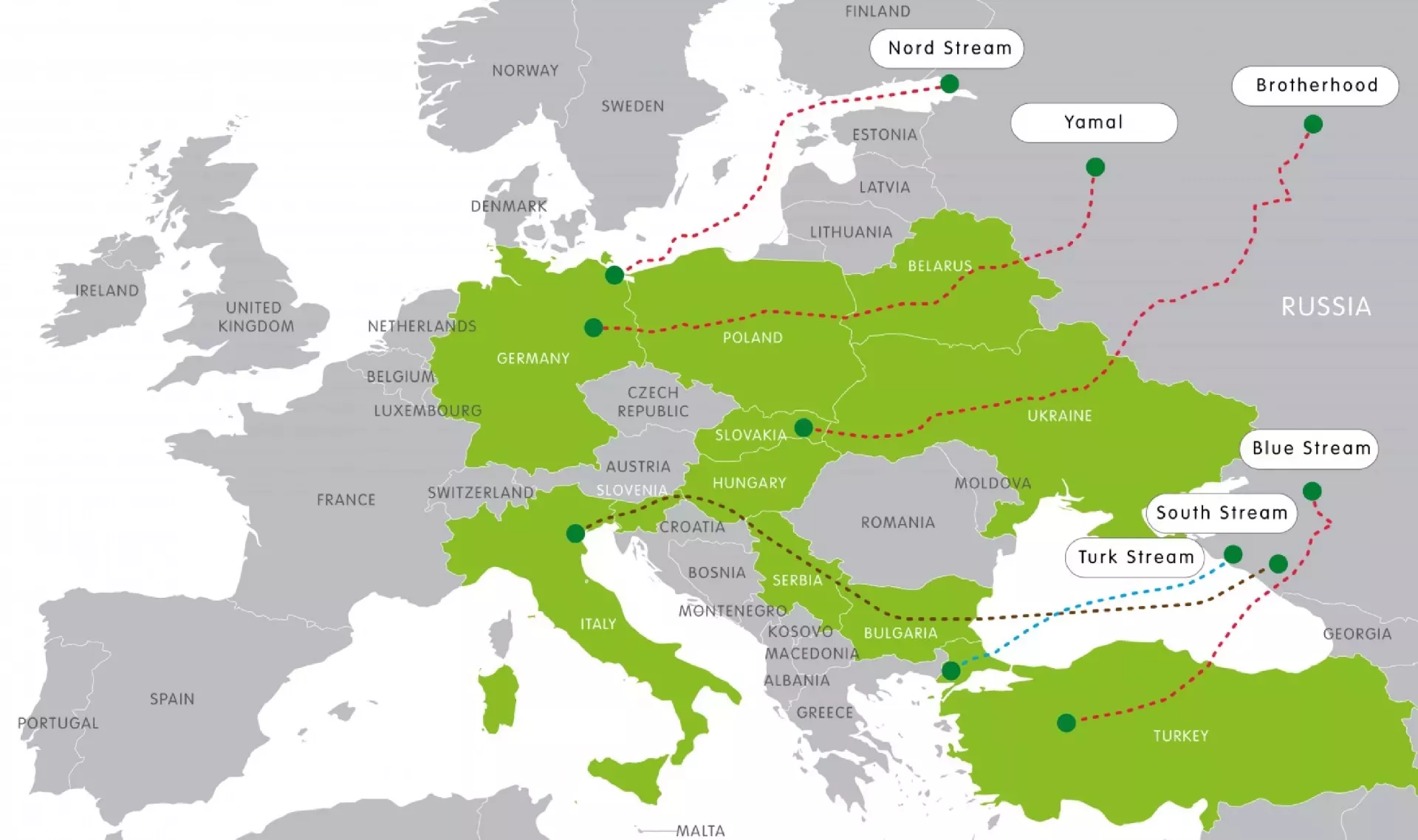
The intention to control energy flows in the region was also expressed in Bosnia and Herzegovina when the US Embassy in Sarajevo gathered local politicians to resolve the issue of the South Interconnection. A few weeks earlier, from a UN Security Council session, it was conveyed to the parties in Bosnia and Herzegovina that Washington would no longer get involved in the internal problems of this country, shortly after the infamous "agreement" between the US administration and people close to Milorad Dodik.
Although Trump's behavior is unpredictable, from the examples of Serbia and Bosnia and Herzegovina, it can be concluded that his administration has expectations of Balkan politicians, and they must fulfill them, even when the demands deviate from what is acceptable to them. Otherwise, they will come under attack like others around the world.
These examples show how much US policy has changed under Trump, whether it concerns global or regional crises. Trump has chosen the policy of empire, as Brzezinski formulated it, setting aside, perhaps only for another time, the policy that Washington has advocated for decades.
Komentari (0)
Prijavite se za komentiranje
PrijavaJos nema komentara. Budite prvi!
Minuta
Sve →Iz drugih kategorija

High Representative Not Elected: Germans, French and British Sabotaged Americans, New Attempt at End of June

ČOVIĆ WITHOUT MERCY: How Those Who Brought Ademović to Office Created a Political Hell for Him



Sunny Saturday, quite warm



Tragedy in Albanian resort: Two minors drown












