
By: Slobodna Bosna
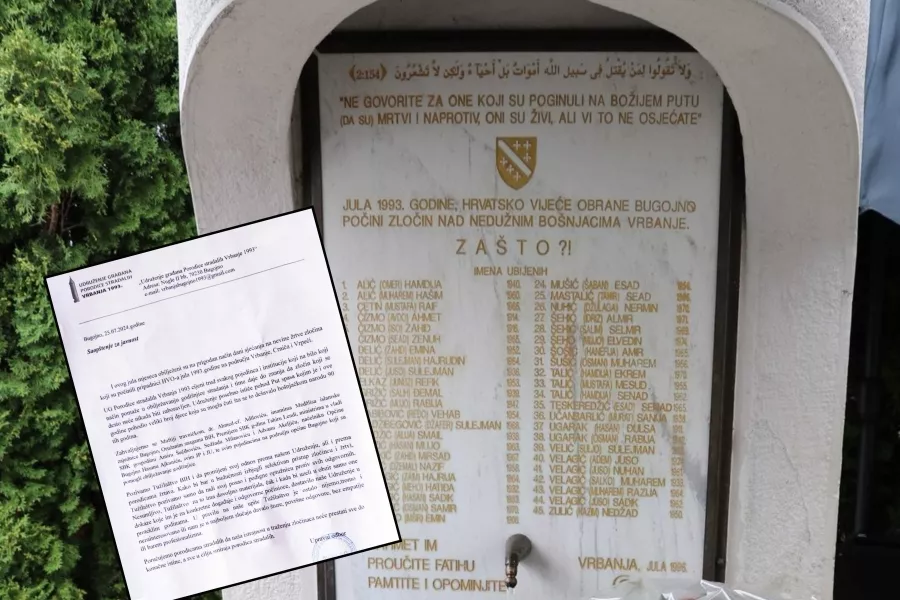
No public media in BiH reported on the recent commemoration of the 31st anniversary of the massacre in the Vrbanja settlement near Bugojno.
Members of the HVO, in the period from July 17 to 28, while intense attacks on Bugojno were underway with the aim of taking control of this Central Bosnia municipality and annexing it to the so-called Croatian Community of Herceg-Bosna, carried out a horrific massacre in the Vrbanja settlement, killing 45 civilians of Bosniak nationality, aged 19 to 82.
The ignorant attitude towards the victims of the crime in Bugojno shown by public media is also reflected in the state Prosecutor's Office. Despite families seeking justice for years, only one person – Slavko Šakić – has been prosecuted so far for the crime committed by HVO members.
Therefore, the Association of Citizens 'Families of the Victims of Vrbanja 1993' publicly called on the Prosecutor's Office this year to finally file indictments for the crime against Bosniaks that occurred in Vrbanja.
"We call on the BiH Prosecutor's Office to change its attitude towards our Association, as well as towards the families of the victims. In order to at least avoid a selective approach to the perpetrator and the victim in the future, we call on the Prosecutor's Office to simply do its job and file indictments against all responsible parties.
Undoubtedly, the Prosecutor's Office has sufficient material for this, even if they were to consider only the evidence that our Association has provided them over the past years regarding specific events and responsible perpetrators.
As a rule, the Prosecutor's Office has remained silent, sluggish, and uninterested in our inquiries, or at best, has provided us with brief, superficial answers, devoid of empathy or even professionalism," stated the public announcement from the Association of Citizens 'Families of the Victims of Vrbanja 1993'.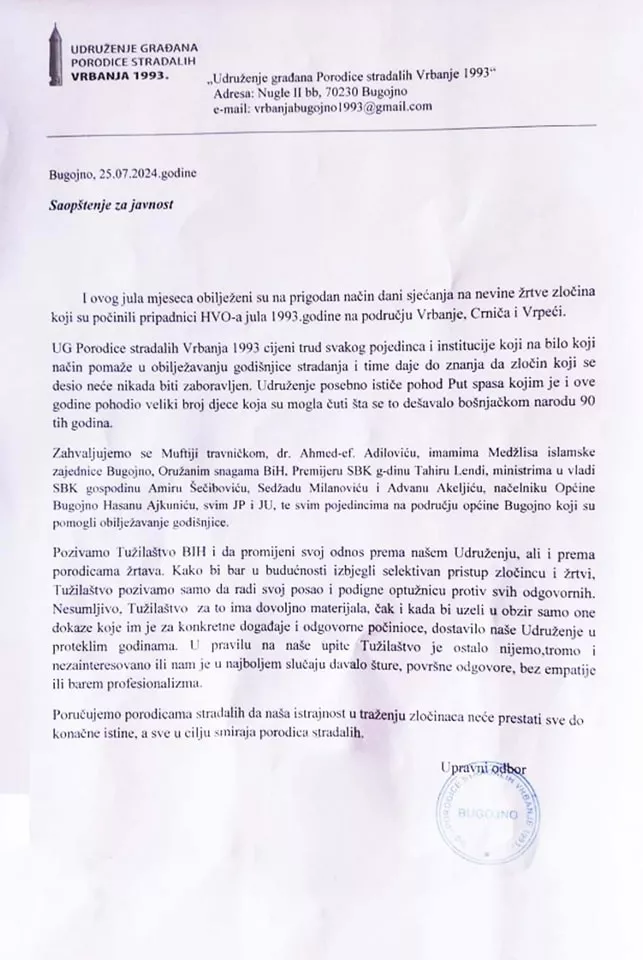
The selective approach mentioned by the Association of Citizens 'Families of the Victims of Vrbanja 1993' was also confirmed by yesterday's reporting by BHRT. The arrival of the Croatian Minister of Foreign Affairs, Gordan Grlić Radman, and the President of HDZ BiH, Dragan Čović, to pay tribute to Croatian victims in Bugojno received significant publicity, while the victims of Vrbanja were completely ignored.
Moreover, the Army of the Republic of Bosnia and Herzegovina, which defended Bugojno at critical moments for the state of Bosnia and Herzegovina, was presented in the BHRT report as an aggressor army that "expelled 15,000 Croats".
BHRT: Armija RBiH iz Bugojna protjerala 15 hiljada Hrvata pic.twitter.com/3cV6N6SvLV
— Slobodna Bosna (@SlobodnaBosna) July 27, 2024
The fact is that after the defeat of the HVO in Bugojno, several hundred Croats were detained in several facilities, as established before the Hague Tribunal in the proceedings against Hadžihasanović and Kubura. The majority of those captured were HVO members, who in many cases were treated inhumanely, including mistreatment, beatings, and killings.
The most infamous was the Iskra stadium, a prisoner camp that was active until March 19, 1994, when the last prisoners were released. On that day, 292 people were still held at the Iskra stadium. More details on this can be found on the Detektor portal at this link.
Several individuals have already been convicted for these crimes, both at the Hague Tribunal and before domestic judiciary. Also, a trial against Selma Cikotić and Dževad Mlaćo is currently underway before the Court of BiH.
What happened in Bugojno in July 1993?
However, the sequence of events in the summer of 1993 is by no means what aggressive Croatian propaganda presents it to be.
Bugojno was, in fact, the last municipality where the HVO attacked the units of the Army of the Republic of Bosnia and Herzegovina, began arresting and killing the civilian population. This occurred in the period from July 17 to July 27, 1993 (when the massacre in Vrbanja took place).
The HVO Eugen Kvaternik Brigade began its attack on Bugojno on July 17, 1993, on parts of the city with Bosniak population, on facilities under the control of the Army of the Republic of Bosnia and Herzegovina, with the aim of finally bringing the city and the entire territory of the Bugojno municipality under its full (political and military) control.
In other words, the goal was to establish the full capacity of the so-called Croatian Community of Herceg-Bosna, eliminate the legal authorities of the Republic of BiH and its armed force – the Army of the Republic of Bosnia and Herzegovina.
In that conflict, the HVO lost, withdrew from the territory of the Bugojno municipality, and took most of the Croatian population with them. Until then, the city was partially surrounded by the HVO.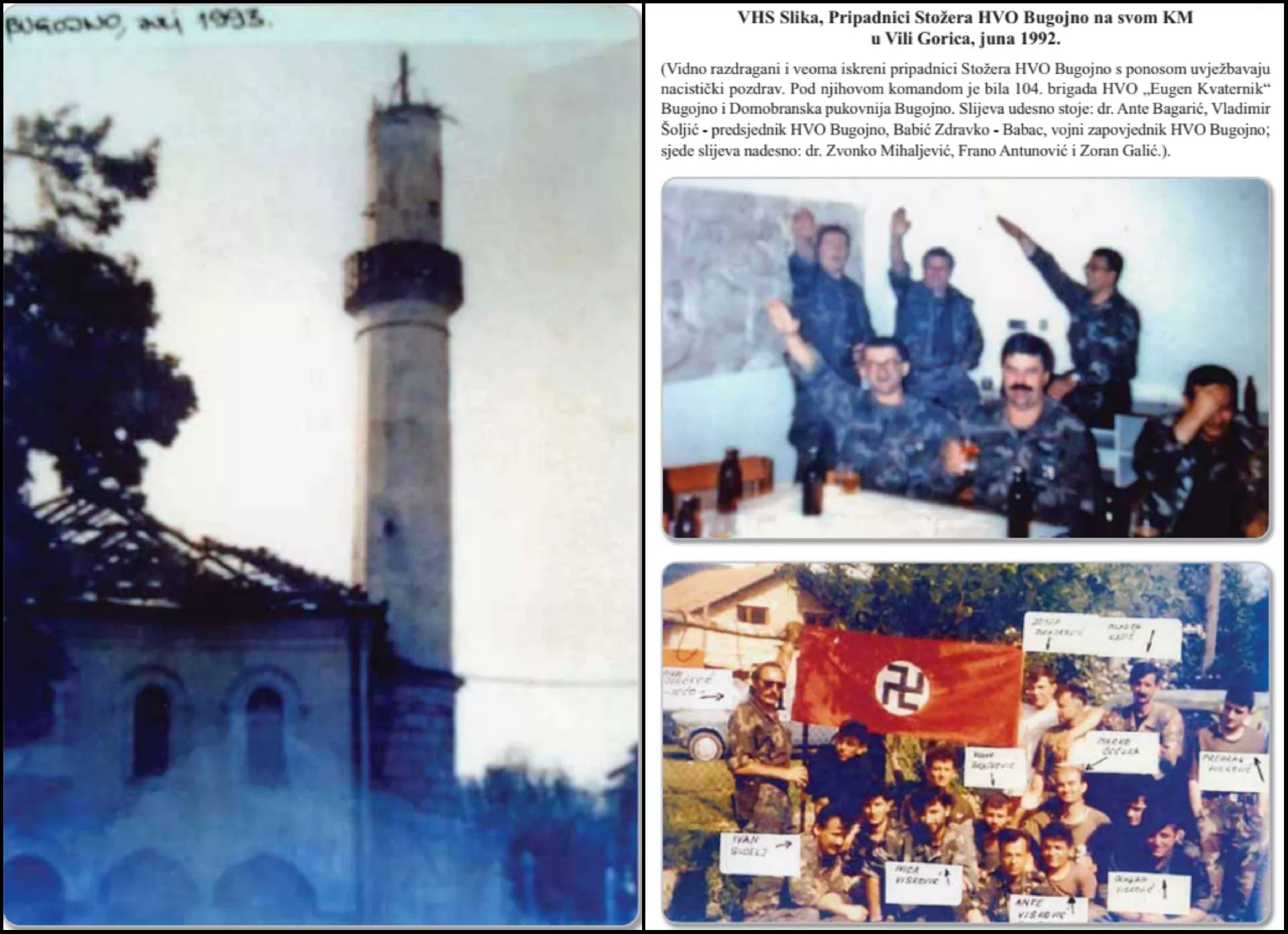
Had Bugojno fallen under HVO control at that time, and given that peace negotiations were underway, the negotiating position of the Bosnian delegation would have been far more difficult, the continuation of the war would have been uncertain, and the very survival of the state of BiH would have been at stake. The objectives of the joint criminal enterprise, as defined by the Hague Tribunal, would have been fully realized.
The nature of the HVO units is best illustrated by footage from that period in Bugojno. One of the most famous photographs from the past war, showing HVO soldiers with a Nazi flag, was taken precisely in Bugojno. The scale of destruction that this city suffered during the HVO attacks is also shown by the destroyed famous Sultan Ahmed Mosque in the city center.
Komentari (0)
Prijavite se za komentiranje
PrijavaJos nema komentara. Budite prvi!
Minuta
Sve →Iz drugih kategorija

High Representative Not Elected: Germans, French and British Sabotaged Americans, New Attempt at End of June

ČOVIĆ WITHOUT MERCY: How Those Who Brought Ademović to Office Created a Political Hell for Him



Sunny Saturday, quite warm



Tragedy in Albanian resort: Two minors drown












