
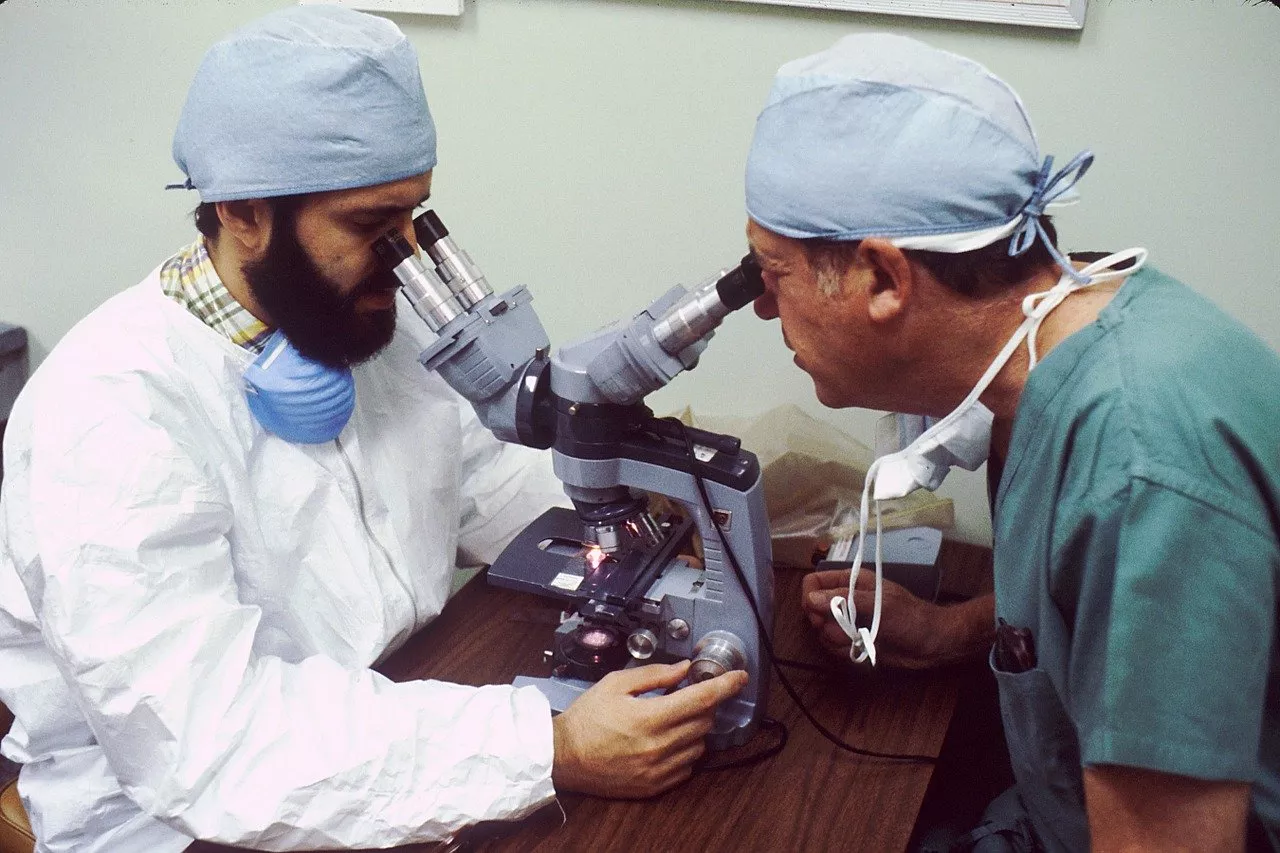
SARAJEVO, (Patria) - The decision not to perform autopsies on bodies of persons who died from coronavirus in the Federation of Bosnia and Herzegovina due to lack of adequate equipment for pathologists may have unforeseeable legal consequences, legal experts say.
Lawyer Tatjana Savić states that time is a key factor in establishing the true facts.
"I fear that the decision to suspend autopsies on persons positive for COVID-19, where there is a real need for an autopsy, also means that evidence is irretrievably lost when it comes to determining the cause of death and other facts," Savić told the Balkan Investigative Reporting Network of Bosnia and Herzegovina (BIRN BiH).
Exhumation of bodies to perform an autopsy later is possible, but in such cases, Savić claims, key evidence can only be collected by an autopsy performed immediately after death.
Milan Tegeltija, President of the High Judicial and Prosecutorial Council of BiH (HJPC), recently pointed out this problem during an online meeting of all prosecutor's offices in BiH.
During extraordinary circumstances, prosecutor's offices face the problem of autopsies being refused, with pathologists justifying it by risk and the absence of appropriate protective equipment for performing autopsies, Tegeltija told BIRN BiH.
"Therefore, we call on the competent executive authorities at all levels in BiH to urgently provide protective equipment that would enable autopsies to be performed during the pandemic, given that this is an investigative action that cannot tolerate delay and which, due to the decomposition of the body over time, can be jeopardized, and this can have huge consequences in a legal sense," says Tegeltija.
The case of Advija Kanlić, the first victim of coronavirus in Sarajevo, is one of the still unresolved cases being investigated by the Sarajevo Canton Prosecutor's Office, due to the lack of an autopsy report. Her son and daughter, Nezir and Ehlimana, insist that an autopsy of their mother's body be performed to determine the cause of death.
The Sarajevo Canton Prosecutor's Office received a statement regarding the issued order for an autopsy from the duty forensic expert in the case of Advija Kanlić, stating that there are currently no conditions for performing autopsies on individuals who tested positive for coronavirus, and in its statement, it referred to the recommendations of the World Health Organization, BIRN BiH was told by the KS Prosecutor's Office.
"We were also informed that pathologists will not perform autopsies on other deceased bodies until testing is done and they are confirmed to be negative for coronavirus. What I was able to determine through internet research from published documents and interviews is that neither Croatia nor Serbia recommend autopsies for patients with COVID-19," said Sabina Sarajlija, Chief Prosecutor of the Cantonal Prosecutor's Office in Sarajevo.
She believes that the opinion of the profession should be respected because experts have never "run away from work" before.
"Of course, everything should be critically examined in terms of determining whether the reasons for not performing autopsies are justified and whether experts are enabled to perform their work in accordance with professional standards, because not performing an autopsy can complicate proof. We will certainly continue to work on the cases by collecting other evidence and medical documentation to determine if there are elements of a criminal offense," Sarajlija told BIRN BiH.
Doctor Rifat Kešetović, a member of the Association of Forensic Medicine Experts of the Federation of BiH, is a forensic expert from Tuzla who has been working on exhumations and identification of missing persons from the war for 25 years. He considers the suspension of autopsies on persons infected with the virus to be a significant problem.
"The longer the period since death, the lower the chances of determining the cause of death. The reason for this is the disappearance of soft tissues. A reasonable period for an autopsy in such cases is usually only a few days. If it is a mechanical death, i.e., violent death, where we have bone fractures and the like, then it is not a problem even when an exhumation is performed," explains Kešetović.
He adds that WHO recommendations are not to suspend autopsies, but to perform them with maximum protective measures.
"Maximum protective measures must be ensured, and I think it should not be a problem to provide such a facility in the Federation of BiH, where this newly created problem would be quickly resolved," says Kešetović.
Does the virus die with the patient, a question that has divided epidemiological experts along entity lines in BiH. According to the Minister of Health of Republika Srpska, Alen Šeranić, there is no fear of the virus after the death of an infected person, while on the other hand, the Assistant Federal Minister for Public Health, Goran Čerkez, claims the opposite.
"It is important to say that the virus does not die with the patient," Čerkez emphasized at a press conference of the Federal Crisis Staff.
Autopsies of deceased persons who tested positive for coronavirus continue to be performed in Republika Srpska.
Komentari (0)
Prijavite se za komentiranje
PrijavaJos nema komentara. Budite prvi!
Minuta
Sve →Iz drugih kategorija

High Representative Not Elected: Germans, French and British Against Americans, New Attempt at End of June

ČOVIĆ WITHOUT MERCY: How Those Who Brought Ademović to Office Created a Political Hell for Him



Sunny Saturday, quite warm



Tragedy in Albanian resort: Two minors drown












