
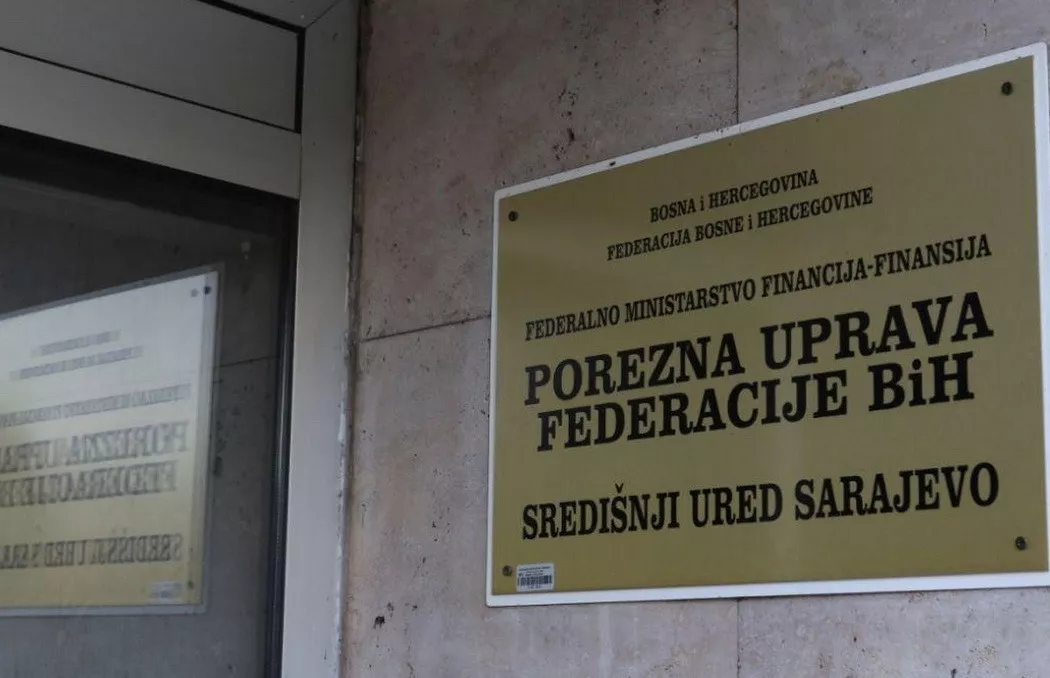
(Patria) - At the Economic and Social Council of the Federation of BiH last week, Finance Minister Toni Kraljević presented the Draft Law on Fiscalization of Transactions in the Federation of BiH. The law that has been much talked about, but now public interest seems to have waned.
Yesterday, the Draft was also presented to members of the FBiH Government at a session in Mostar. However, the wider public has not yet had the opportunity to see the text of the law, which will largely determine the future of the economy in the Federation of BiH.
And the fact that at the same time the Trade Union Committee of the Tax Administration of Bosnia and Herzegovina is awaiting approval to initiate a warning strike procedures gives a special dimension to this problem.
According to Patria's information, out of a total of 1,100 employees, 700 have already signed a statement to go on strike.
This means that the current situation within the FBiH Tax Administration clearly shows that the implementation of such an important law in practice is not possible!?
The Administration has been facing serious personnel, organizational, and technical problems for a long time, which prevent it from fulfilling even its existing legal obligations, let alone the significantly more complex and demanding fiscalization system that is being announced.
"The FBiH Tax Administration currently does not have a legally elected director. The duties of authorized signing of acts are performed by Admir Omerbašić, head of the Cantonal Tax Office Tuzla, although he has not been appointed through the prescribed procedure.
The deputy director's term expired in May 2025, which further confirms the fact that the Administration is currently functioning without a fully staffed management team," Patria's sources from the FBiH Tax Administration state.
At the same time, according to the current systematization, the Tax Administration is short of about 500 employees, while existing officials have already announced a strike due to a series of irregularities, inadequate working conditions, and the long-term neglect of their status and needs.
In such an environment, it is difficult to expect the implementation of even existing laws, let alone a new comprehensive fiscalization system.
An additional problem is the current information system of the Tax Administration, which has not been able to fully support the previously established fiscalization models even so far.
"Those models were significantly simpler than the new, ambitiously announced legal solution, which would require modern digital capacities, stable databases, and constant technical support, all of which are currently lacking. All of the above raises the question of whether the announcement of the new law on fiscalization of financial transactions is just another in a series of scandals that will impose additional obligations on the economy, without previously prepared institutional, technical, and personnel infrastructure, and without a clear assessment of the purpose and benefit of such a system," the workers state.
Until the key problems within the FBiH Tax Administration itself are resolved, the adoption of such a law looks more like a political maneuver than a serious reform step.
Incidentally, as reported by the media, in four months, or 120 days, only eight business entities have participated in the public debate on the law, out of nearly 67,000 registered companies in the Federation of BiH.
We note that this is a law that will directly affect the way of doing business and the fate of the economy in the Federation of BiH in the coming years, and even decades.
(A.Č.Z.)
Komentari (0)
Prijavite se za komentiranje
PrijavaJos nema komentara. Budite prvi!
Minuta
Sve →Iz drugih kategorija

High Representative Not Elected: Germans, French and British Against Americans, New Attempt at End of June

ČOVIĆ WITHOUT MERCY: How Those Who Brought Ademović to Office Created a Political Hell for Him



Sunny Saturday, quite warm



Tragedy in Albanian resort: Two minors drown












