
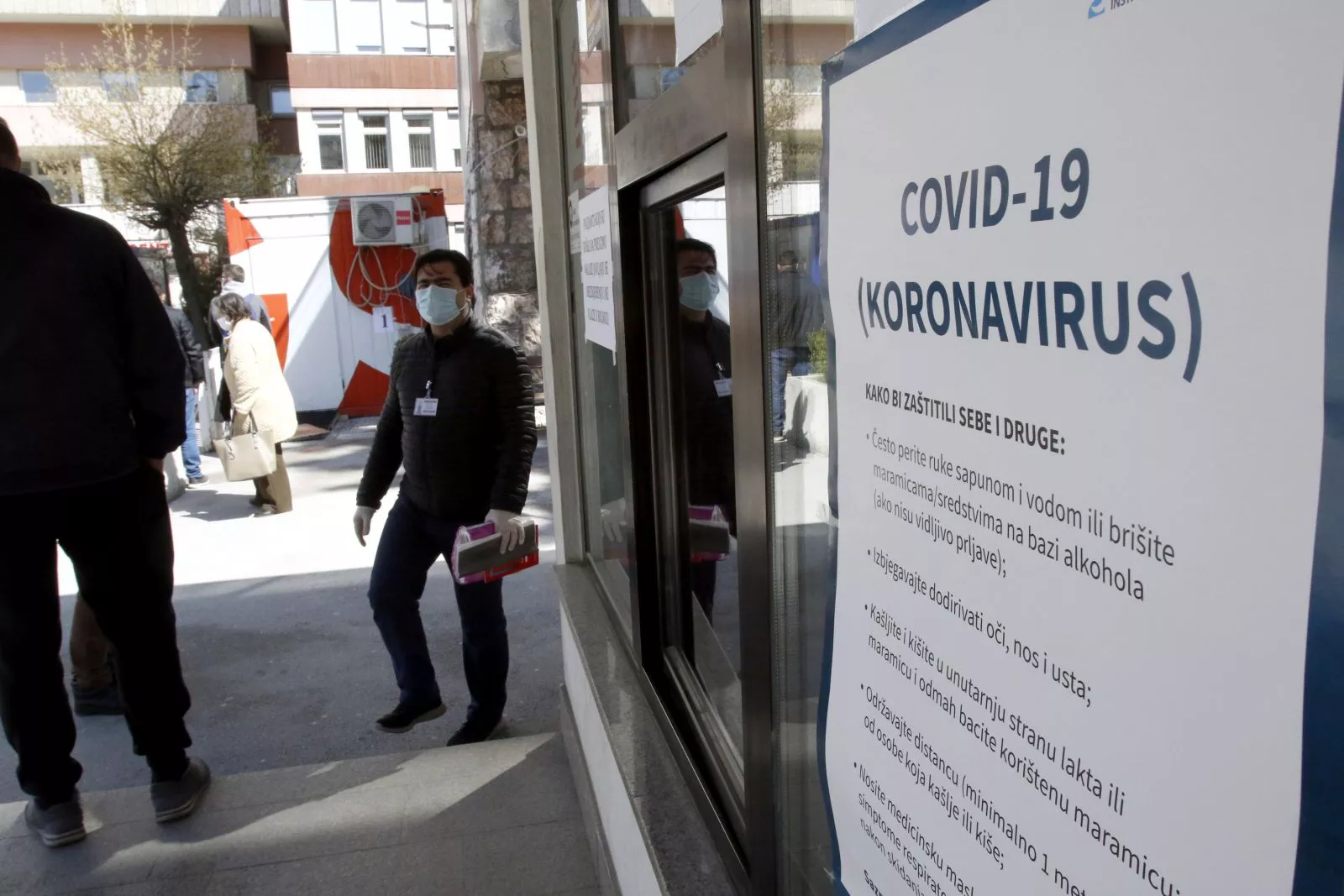
(Patria) - The scientific body of the Sarajevo Canton Ministry of Health and the Crisis Staff of the Sarajevo Canton Ministry of Health for monitoring and analyzing the situation caused by the new Coronavirus (SARS CoV-2) during the COVID-19 pandemic was formed on April 10, 2020. The first meeting of the Scientific Body was held on April 14, 2020, where the dynamics, processes, methodology, and dissemination of work results were agreed upon. The Scientific Council proposes the establishment of a systemic framework for COVID-19 control in Sarajevo Canton through the following 10 proposals and requests:
1. The primary mission of the established Scientific Council for monitoring and analyzing the situation caused by the SARS-COV-2 virus will be the analysis of current and future scientific facts and trends in this area, their application within the scientific and professional community of Sarajevo Canton, assessment and optimization of capacities for the inclusion of the scientific community of Sarajevo Canton in global scientific trends related to the fight against the SARS-COV-2 virus pandemic, in accordance with the guidelines of the World Health Organization (WHO) and the global scientific community. Furthermore, the Scientific Council is mandated to provide scientific and professional suggestions to the Ministry of Health, the Government of Sarajevo Canton, and the Civil Staff of Sarajevo Canton to optimize current activities in the Canton aimed at slowing the spread of SARS-COV-2, based on new available scientific knowledge.
Finally, the Scientific Council will monitor and systematize scientific publications related to SARS-COV-2 research and submit them to all interested parties in BiH, with the aim of rejecting panic, improvisation, and misconceptions about the epidemic itself and the activities undertaken to combat it. We also propose formal contacts of the Scientific Council with media representatives in the form of short weekly informational updates of a popular science nature, which would inform the general public about actual scientific studies and results, thereby avoiding the spread of panic, fake news, and anything that essentially hinders timely and accurate information for the residents of Sarajevo Canton about the COVID-19 pandemic! We propose that the Scientific Council become a "scientific hub" for decision-making support.
2. Epidemiological surveillance, as a key activity for understanding the disease and evaluating the effects of control measures, involves the continuous and systematic collection, analysis, interpretation, and dissemination of epidemiological data, while also considering their temporal and spatial representation. The ultimate goal of surveillance is the application of this data for disease prevention and control. The surveillance system requires functional capacities for data collection, analysis, and exchange. The existing system urgently needs to be simplified and made functional, transparent, easily understandable, and implementable. In this regard, we propose the use of an expert system for monitoring, prevention, and coordination of COVID-19 spread control (Epidemiological Location-Intelligence System) developed by the expert team of ANUBiH. The system is primarily intended for experts and healthcare professionals and serves for epidemic monitoring, biostatistical analysis, proposing measures for infection spread control and their evaluation, and reporting for better decision-making. It would be used to assess the existing epidemiological surveillance system and provide recommendations for its improvement. It is crucial in the coming period to regularly evaluate epidemiological surveillance (passive-routine surveillance, laboratory surveillance, hospital surveillance, and surveillance through health centers, contact tracing).
3. Diagnostic testing practices, as one segment of epidemiological surveillance, have so far only partially met the initial WHO recommendations. It is encouraging that the number of tests in Sarajevo Canton is somewhat increasing. However, the current recommendations of the same institution are clear – the scope and range of testing must be significantly increased! In this regard, the mobilization of all available resources in Sarajevo Canton that can participate in this testing must be carried out without delay! The target number of tests for the population of Sarajevo Canton should be 20,000+ in the next three weeks. The proposed method of testing the suggested number of samples within three weeks will allow for a more realistic epidemiological picture in the canton (incidence and prevalence) and significantly prevent the spread of the disease through asymptomatic and presymptomatic cases, which is crucial at this stage of the epidemic's spread. Consistent application of this system along with other physical distancing and isolation measures will provide data and information with which the further course of the epidemic can be predicted with greater certainty and the effectiveness of past measures can be assessed. Complex predictive models, which propose solutions based on local parameters, are of utmost importance. At this stage of the epidemic (increasing incidence), it is necessary to continue testing all individuals who meet the case definition criteria of the World Health Organization (WHO).
However, we propose the immediate introduction of regular screening of healthcare professionals and staff in the healthcare system, as well as individuals potentially exposed to infection due to their work activities. Vulnerable populations (e.g., refugee camps, safe houses, and especially nursing homes) require enhanced surveillance (e.g., the current questionnaire does not include questions related to the aforementioned), education, etc.
4. Furthermore, scientific research (ecological, animal, and human) must be initiated. For example, research that would include individuals not clearly linked to existing hotspots, in order to establish the presence and transmission of the SARS-COV-2 virus in the population or parts thereof that could not be detected by the existing system. In this regard, we propose the urgent provision of funds for genetic and serological testing, which could screen the population in a relatively short period – national studies aimed at assessing the currently acquired "population immunity," sentinel groups, etc. It is very important to include veterinary surveillance in regular surveillance and to address the issue of potential exposure of pets, insects as disease vectors, virus transmission through food, and the possible presence of the virus in domestic and wild animals.
5. We propose the organization of diagnostic testing as follows: • urgent testing (organized 24/7) of all individuals according to the WHO case definition for COVID-19 and all patients requiring emergency and other hospital treatments, who may be at risk as potential sources of infection for staff and other patients in hospital complexes. • epidemiological testing (organized during regular working hours) for the purpose of screening detected hotspots and individuals directly and indirectly related to them (asymptomatic and presymptomatic cases) to prevent exposure of healthy individuals and reduce the spread of infection. • scientific research testing (humans, animals, environments, food) to determine the characteristics of the pathogen and propose more effective measures and further prevention, as well as the effectiveness of diagnostic tests appearing on the global market, which, due to the urgency of their application, do not undergo scientific validation.
6. Continuous cooperation and coordination of diagnostic laboratory activities are necessary to ensure operational continuity and the exchange of information and resources. The public must have confidence in the diagnostic testing system, and tested individuals must receive timely information about the results. The central laboratory for COVID-19 at present is the KCUS laboratory, and its role in the Federation of Bosnia and Herzegovina system is defined by federal legislation. In Sarajevo Canton, we propose the following laboratory system: • urgent testing to be carried out exclusively through KCUS and the General Hospital Abdulah Nakaš; • epidemiological testing to be carried out through the official laboratories of KCUS, the General Hospital, and the Faculty of Veterinary Medicine of the University of Sarajevo, which are fully equipped to conduct WHO-recommended methods. • scientific research testing to be urgently supported through scientific funds for all interested scientific institutions in Sarajevo Canton. It is necessary to work on obtaining the complete sequence of the virus isolated from patients throughout Bosnia and Herzegovina as quickly as possible, in order to determine the possible existence of different strains, as well as the origin of the agent in the territory of Bosnia and Herzegovina.
7. We propose that the system for collecting all epidemiological data, including diagnostic results, interpretations of test results, and further actions with positive cases, be established based on the experiences and practices from Croatia, Austria, and Germany. The collection of data and samples for epidemiological testing is initiated by the family medicine clinic and Emergency Services. The role of private healthcare organizations should also be carefully and clearly considered. Epidemiological services of the Cantonal Health Center and/or the Public Health Institute will organize the completion of questionnaires, collection, and delivery of samples to the laboratory in three ways: home visit; outpatient (if the patient is already there for another reason); and the establishment of a drive-in system. Test results (for samples delivered to the laboratory in the morning) should be available to the doctor who initiated the test and the epidemiologist monitoring the case or group within a maximum of 24 hours. Further procedures for positive results will be handled by the responsible epidemiologist. Regarding scientific population research, the system for collecting randomly selected voluntary donors would be designed by the project leader in cooperation with the scientific institution that would implement the project. All questionnaires should be urgently updated in accordance with international standards. We appeal: protect, equip, and diagnose healthcare personnel in a timely manner; if they get infected, everyone else is in danger.
8. Infection with SARS-COV-2 has a relatively long incubation period compared to other viruses with similar symptomatology, but the evolution of the disease is surprisingly rapid on a certain day of infection, even though the clinical picture does not show it and does not give the impression of disease severity. Secondary infections, which develop relatively quickly after the fourth to fifth day of fever symptoms, add to the severity of the disease, and these also do not have clear manifestations in the clinical picture at that time. Certain laboratory-radiological parameters can help, as they deviate from normal even in this early period and indicate a forthcoming faster progression. Therefore, in order to timely diagnose COVID-19 infection, assess the condition of patients, and save lives (late hospitalization is the cause of increased mortality), it is necessary:
- to conduct intensive clinical monitoring on the first line, with the checking of certain parameters, deviations from which will help in the decision for hospitalization and timely initiation of adequate therapy.
- Therefore, it is important to separate febrile patients, classify them by day, and refer those who have been highly febrile (≥38) for 4-5-6 days to an infectious disease specialist for checking blood parameters and chest X-rays.
- others should be tasked with measuring their temperature (morning/evening) for 4 days, and on the fifth day, they should report for a check-up if the fever persists along with the appearance of other symptoms.
9. We believe that during this period, it is necessary, in cooperation with existing public and private healthcare institutions, to ensure the continuity of routine biochemical and molecular genetic tests, which have been significantly reduced in scope in the laboratories of KCUS, the General Hospital, and Health Centers due to the state of emergency. Furthermore, we must be aware of the insufficient number of epidemiologists employed in public healthcare institutions, and we propose an urgent clear assessment of the situation, training of technicians for sample collection and surveying, and data storage in the available information system. Retired doctors (and psychologists, psychiatrists, veterinarians, and other professionals) can be voluntarily activated and provide telephone services, thereby relieving the burden on the healthcare system.
10. If we want to maintain the system, a smooth supply of necessary reagents, consumables, and protective equipment must be ensured. So far, the focus of procurement has been on reagents for testing, less on reagents for RNA isolation, and the procurement of plastics and other consumables has been completely neglected. We suggest making an assessment of the situation, consumption, and needs of laboratories to maintain a continuous testing process. It is necessary to ensure the compatibility of procured reagents and consumables with existing instruments and practices. Therefore, we believe that an expert body should provide an opinion on orders and the compatibility of consumables with existing equipment.
Komentari (0)
Prijavite se za komentiranje
PrijavaJos nema komentara. Budite prvi!
Minuta
Sve →Iz drugih kategorija

High Representative Not Elected: Germans, French and British Sabotaged Americans, New Attempt at End of June

ČOVIĆ WITHOUT MERCY: How Those Who Brought Ademović to Office Created a Political Hell for Him



Sunny Saturday, quite warm



Tragedy in Albanian resort: Two minors drown












