
Written by: Armin Sijamić
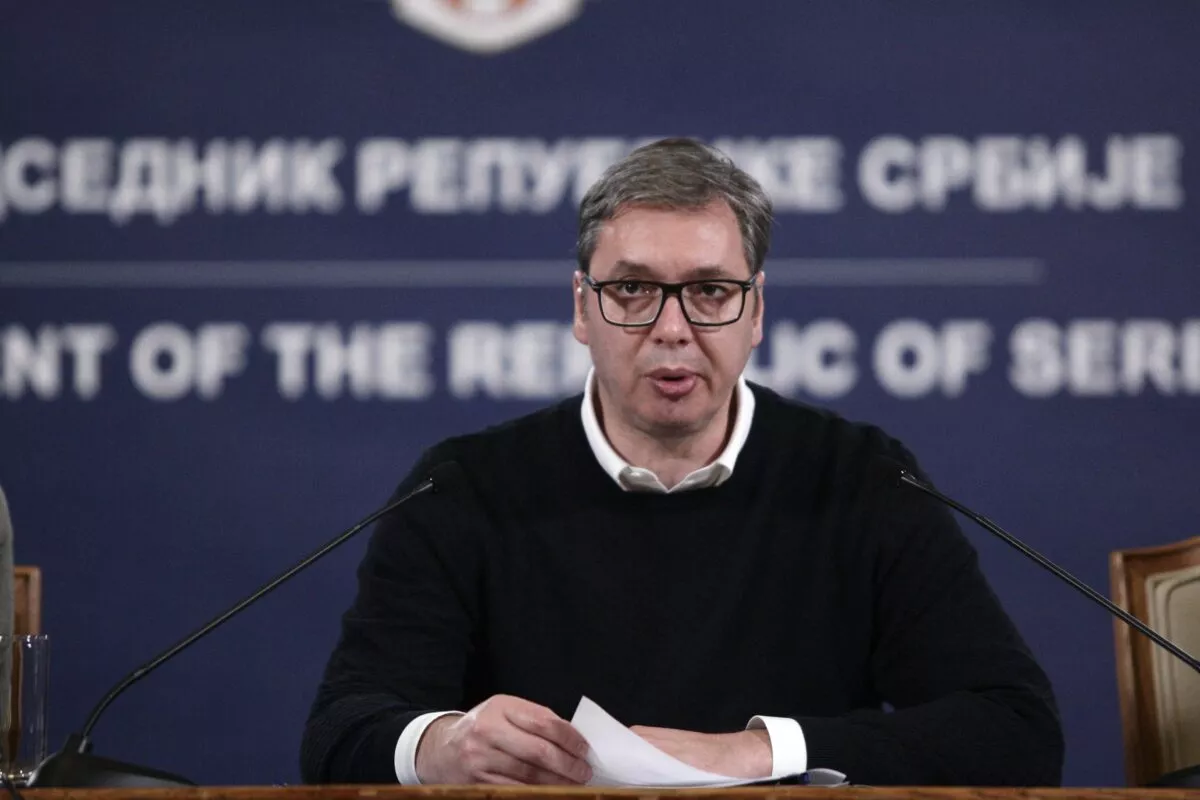
Official Washington is trying to get Serbia under Aleksandar Vučić to move away from Russia and turn towards the West. Since the beginning of this month, this approach has failed several tests, just as in previous months, and this time neighbouring countries are again involved.
At the beginning of the month, on his profile on X (formerly Twitter), the US Ambassador to Belgrade, Christopher Hill, shared an unusual video.
I agree: Serbia’s future is in the west. pic.twitter.com/CVjT11zSoe
— Ambassador Christopher R. Hill (@usambserbia) August 1, 2023
The video features, alongside Hill, Prime Minister Ana Brnabić, owner of TV Pink Željko Mitrović, Serbia's Ambassador to Washington Marko Đurić, military analyst Aleksandar Radić, President of the American Chamber of Commerce in Serbia
Stefan Lazarević and political analyst Darko Obradović, who say that Serbia is in the West, or is heading there, or that it should be there.
The video does not include Vučić, the most powerful political figure in Serbia, nor does it cite any statement of his confirming Serbia's intention to align with the West and turn its back on Russia. That is why, for example, Sputnik Serbia could make a similar video featuring the Russian Ambassador to Serbia Aleksandar Bocan-Harčenko, Deputy Prime Minister and Minister of Foreign Affairs Ivica Dačić, the owner of Informer (or some other pro-Russian media close to the government) and analysts who would claim that Serbia remains loyal to Moscow and that the golden age for Belgrade's
nationalist elites will come when Russia breaks Ukraine's resistance.
As proof of loyalty to Moscow, intelligence chief Aleksandar Vulin could say that he is under US sanctions because of his ties with the Kremlin, and some analyst might note that on July 11, Minister of Economy Rade Basta was dismissed because he called for imposing sanctions on Russia.
Also, it could be noted that part of the opposition believes, like the New Democratic Party of Serbia and the Oathkeepers, that the sanctions against Vulin can be understood as praise for a job well done. This is a unique example of the opposition defending someone they have accused of oppression, and the political leadership of betraying state interests. Two years ago, the opposition in Serbia, with the mediation of the
European Union, negotiated with the authorities to return to parliament and participate in political life. As a reason for the boycott, they cited irregularities using the state apparatus.
This is happening while Serbia is supposedly heading towards the West. At the same time, Vučić can form a government without other political parties, which he does not do, although most parties in Serbia could not cross the parliamentary threshold of five percent, so it was lowered to three percent.
From these few snippets from Serbia's political life, one can see what its path to the West might look like, which was shown to the citizens of Bosnia and Herzegovina and Croatia by the marking of the anniversary of Operation "Storm", a few days after the publication of the mentioned video.
Relativisation and "agreement on the past" in Prijedor
Prijedor as a place to mark "Storm", with the presence of "pro-Western" Vučić, indicates that the agreements of "regional leaders" and Western officials have entered a phase where it will be possible to agree on anything, as long as the countries, which are an hour's flight from Vienna, do not turn into territories where leaders determine what is truth and where one governs without any (moral) responsibility.
After concentration camps, mass graves, white ribbons, ethnic cleansing, attacks on returnees and refusal to erect a monument to murdered children, the Bosnian-Herzegovinian town of Prijedor witnessed a commemoration for victims from a neighbouring country, an EU and NATO member.
The commemoration showed the outlines of an imagined provisional state where nothing is true, everything is relative and everything is possible except for the "pro-Western" Vučić to tell the truth about Prijedor and "Storm". In the 1990s, he was involved in the politics of Belgrade and the Krajina Serbs, and now that the archives of Serbia are available to him, he could provide answers to numerous questions about "Storm", at least for the Serbian civilians
who perished in the military operation that Zagreb had the right to carry out.
The President of the entity of Republika Srpska, Milorad Dodik, said that "Storm" was a joint criminal enterprise of the United States of America and Croatia, and the agency "Positive MVP" from Belgrade, which deals with "integrated marketing and corporate communications" and creating "functional marketing solutions", took responsibility for why photographs of Bosniak refugees from Žepa were presented as victims of "Storm".
Mistakes happen, they said, although it is clear that the photograph was chosen because it fit the marketing, communications and sending effective (political) messages. Serbian victims are just a pretext. The reaction of domestic and international officials to the event in Prijedor and the "mistake" was mild.
Export of crises
The best illustration of the manipulation with the victims of "Storm" is that there were few "legitimate" Serbs from Croatia, in the language of Dragan Čović, at such commemorations. Many of them spoke about how the para-state entity was wiped out in just a few hours, i.e., about the role of Belgrade.
For decades, they have been asking the same questions. How is it possible that tens of thousands of soldiers of the Croatian and Bosnian armies prepared for a major operation without the services in Belgrade knowing about it? How did the Croatian forces reach Knin from behind, penetrating through the territory of the army commanded by war criminal Ratko Mladić, an officer of the Yugoslav Army? What was Mladić doing and what is his guilt for the fact that the Croatian army stopped only where Franjo Tuđman told it to? What was
Tuđman's close associate Hrvoje Šarinić doing in Belgrade a few days after the operation?
If Belgrade cares about the victims of "Storm", then these and other questions need to be answered. For almost thirty years, official Belgrade has not done so, because the Serbs from Croatia are just another card they play when they "export" crises from Serbia, preventing others from getting out of the hole that the Belgrade political elite started digging before the breakup of Yugoslavia.
The event in Prijedor is a question of our future, not just our past. If this kind of relativisation is accepted, everything else will follow. It becomes absurd that Belgrade will have de facto support from part of the West in this, because it is not wise to interfere with them while they are supposedly turning their backs on Russia.
Hill is not asking Vučić to distance himself from the policies of the 1990s that brought almost all the peoples of this region to the bottom of European rankings in economy, demography, education and to the top of the rankings for corruption, emigration and insecurity. Hill has been witnessing this for decades.
Waiting for official Belgrade to acknowledge responsibility for genocide, concentration camps, sieges, mass graves, persecution and mass rape, we have reached a stage where any Belgrade is desirable to the West, if it means turning its back on Moscow. It is illusory in such circumstances to expect Vučić to deal with the policies that have destroyed his own people as well.
Appeasing Serbia is an option on the table. Therefore, nothing can be expected except the continuation of the current crises. Official Belgrade will not miss that opportunity, as the event in Prijedor proved. Creating crises in Bosnia and Herzegovina, Kosovo and Montenegro will remain the modus operandi, because official Belgrade lacks the strength to admit its mistakes and does not want to abandon its policies. For the de-escalation of the crises it produces, it expects concessions from the West.
The thought that such a political elite can bring Serbia to the West and become acceptable as such, bringing its fantasies, myths, nationalism and desire to destroy other peoples into the new order, is also worrying. The West, on whose money Serbia lives, seems to have given up on what it had demanded for decades from countries on their path to the EU and NATO.
In return, there are no guarantees that Serbia will turn its back on Russia. This approach could cost the countries of the former Yugoslavia dearly, although enormous damage has already been done.
Komentari (0)
Prijavite se za komentiranje
PrijavaJos nema komentara. Budite prvi!
Minuta
Sve →Iz drugih kategorija

High Representative Not Elected: Germans, French and British Sabotaged Americans, New Attempt at End of June

ČOVIĆ WITHOUT MERCY: How Those Who Brought Ademović to Office Created a Political Hell for Him



Sunny Saturday, quite warm



Tragedy in Albanian resort: Two minors drown












