
By Armin Sijamić
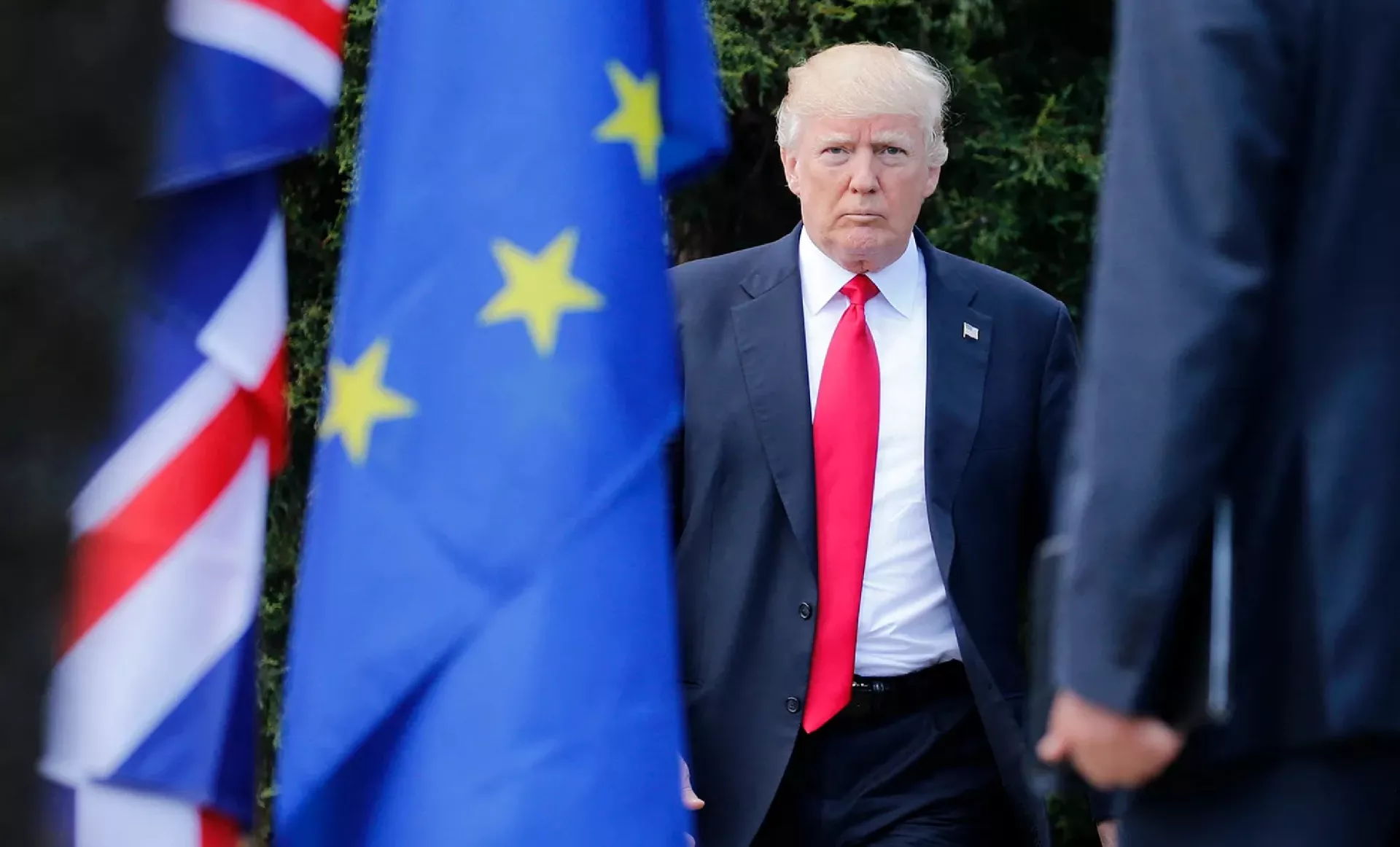
Donald Trump's return to the White House is a catastrophe for many politicians in Europe. Long before the US presidential elections, most European leaders supported Joseph Biden, and then after his withdrawal from the race, Kamala Harris. After three weeks of Trump's new term, it became clear why they held such a stance.
In the past few days, many public figures, commenting on Trump's moves and his policies, have said almost the same thing – we are only at the beginning of the term, four years remain.
In Europe, where most of the American allies are located, they would certainly say something similar if they didn't fear the White House's reaction. This particularly applies to officials of the European Union, to which Trump has never shown much respect. From his first term, there is the alleged conversation with Angela Merkel, when he repeatedly asked the Chancellor why Washington and Berlin couldn't strike a trade deal, and her response that it was only possible with the European Union, of which Germany is a member.
The policies of the new US President should be answered, above all, by the Estonian politician and High Representative of the European Union for Foreign Affairs and Security Policy, Kaja Kallas. The extent to which Trump values Kaja Kallas's opinions is evident in the fact that there is no confirmation that they have spoken since his return to power. In the meantime, Trump has also spoken with the President of Russia, Vladimir Putin.
The case of Denmark, a NATO ally of Washington for decades, also shows that he does not overly value small European countries. In the first days of his term, Trump threatened the member of the European Union and NATO to hand over Greenland or he would not rule out the use of military and economic measures.
Aligning with Trump
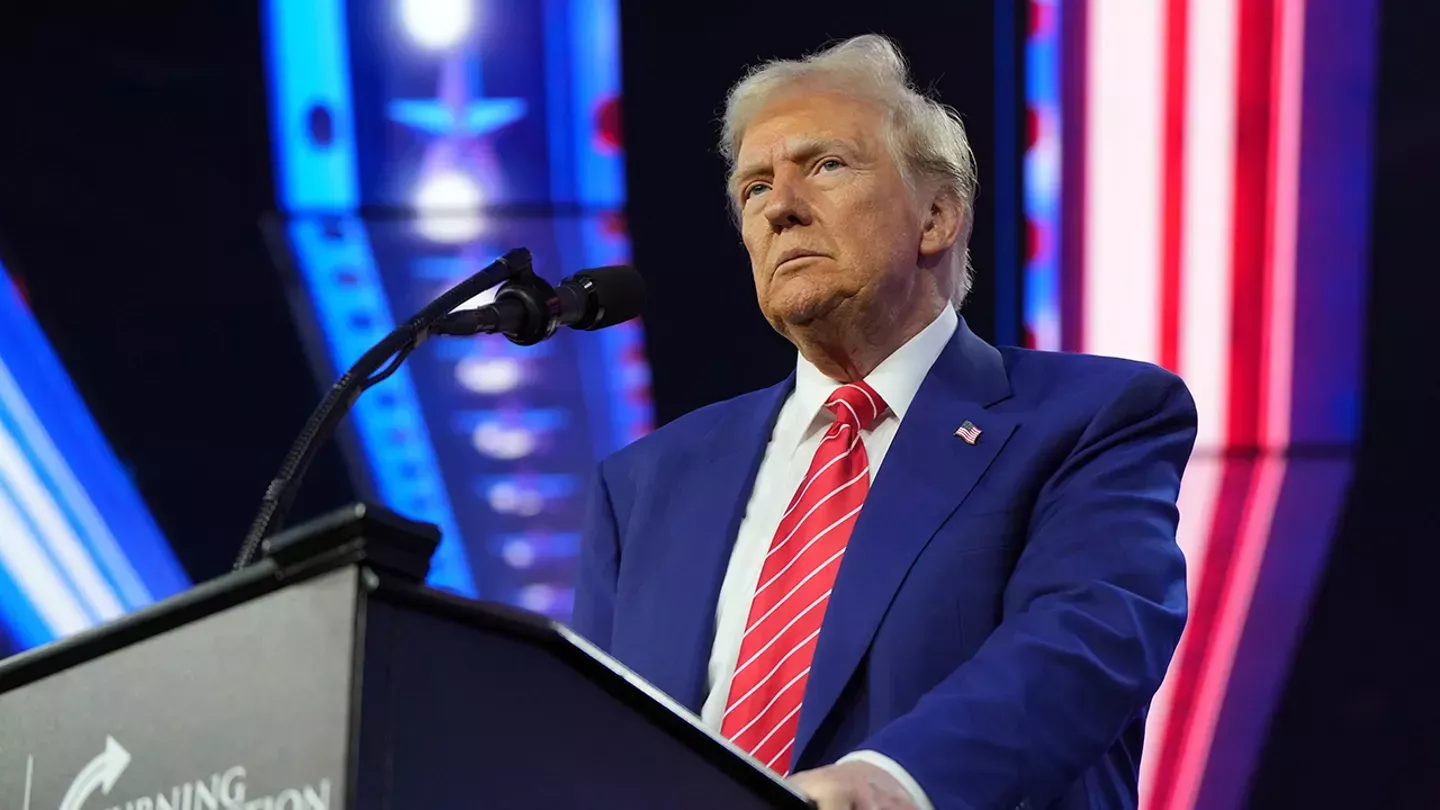
Such a stance from Trump towards Europe is expected. It is clear to Trump that Europe depends on Washington, and that European allies sometimes act as if this is not the case. This primarily concerns European security, which Washington takes care of, while Europeans refuse to even do what they signed up for by joining NATO – allocate two percent of their gross domestic product for the military. In his first term, Trump reminded Europeans of their obligations and threatened not to defend them for free. Then things started to move, and during his and Biden's terms, almost all countries are making the required allocations.
But that is not enough, because most European armies, by their own admission, are not ready for war. Polish President Andrzej Duda, who maintained communication with Trump even when he was facing prison in US courts, spoke last summer about allocating at least three percent of GDP. Now some are talking about five percent, testing public opinion.
Massive investment in the military by European allies could soften Trump, especially in light of his threats to impose tariffs, as the US economy has a trade deficit with Europe. This investment would not necessarily mean war. There are similar examples in other parts of the world. For instance, some wealthy Arab monarchies buy weapons they will never use, while the US guarantees their security. Such examples were also recorded during Trump's first term.
Buying weapons from the United States also gives Trump an important leverage in his dealings with Russia and the war in Ukraine. It is not difficult to imagine that Trump would agree to US companies continuing to arm Ukraine, directly and indirectly, if European allies paid for it.
Musk's Hammer
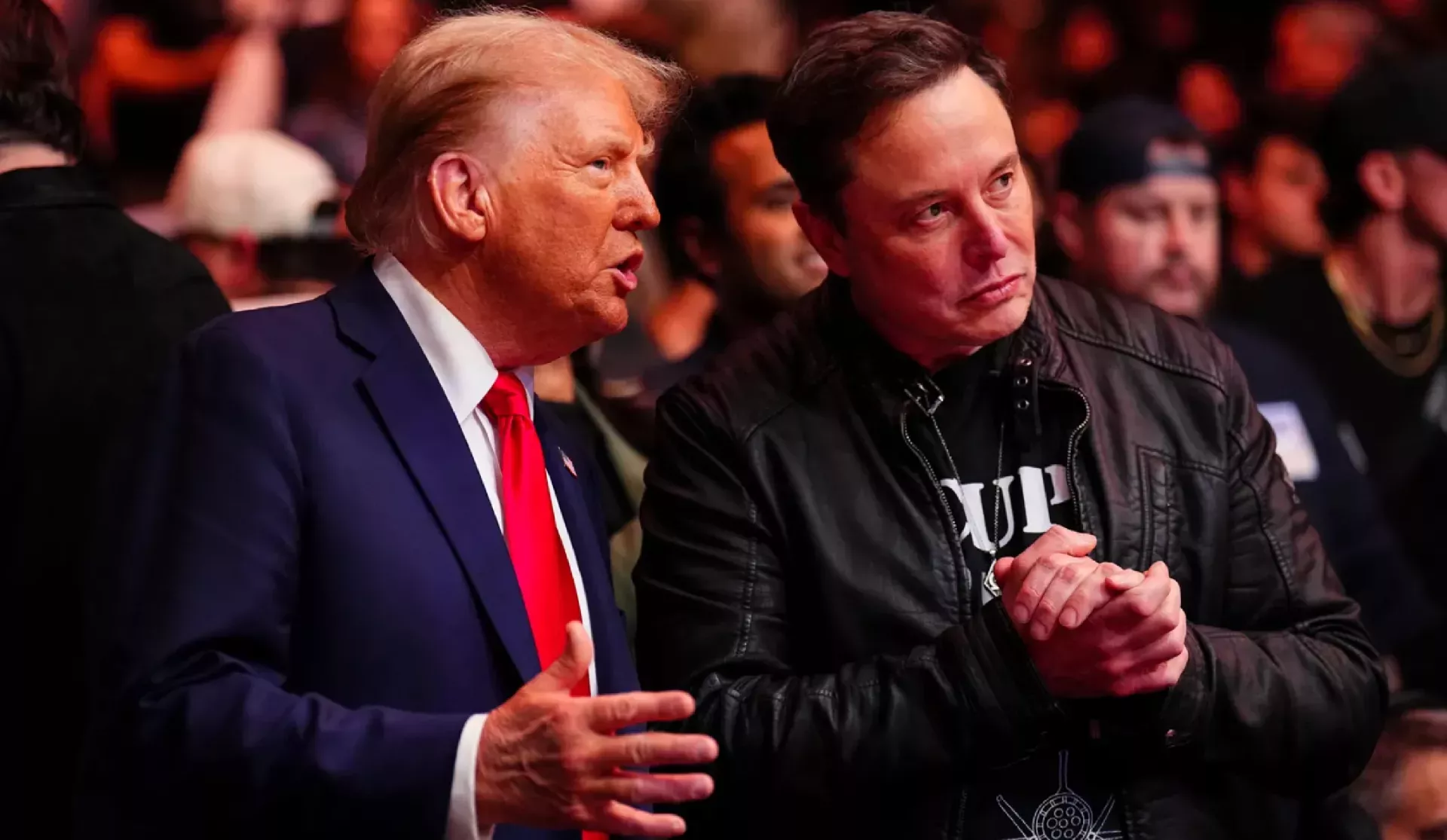
But that is not the end of Europe's problems with Trump. The richest man in the world, Elon Musk, has also been waging an ideological war against some European countries for months. Musk, whom Trump's critics call the "real" US president, has recently targeted the United Kingdom and Germany. The former is a nuclear power and outside the European Union, while the latter is the economic engine of that same union and a country with enormous influence from the Baltics to Turkey.
Musk particularly dislikes some tenets of the modern left, which have no connection to its roots. Musk targets illegal migrants and transgender policies, which he called "neo-Marxism" in an interview in October 2022. In early February this year, he shared a post on the social network X by J. K. Rowling, who wrote, among other things, that "gender ideology has undermined free speech, scientific truth, gay rights, and the safety, privacy, and dignity of women and girls." He commented on the British writer's rather long post with "absolutely".
Musk's ideological war with Europeans, after confronting the policies of American Democrats, also has a personal dimension. The issue of (il)legal migration is at the core of his success, because in addition to being an immigrant himself to the United States, he employs experts from all over the world in his companies, which some criticize as a way to pay workers less. Furthermore, his son Alexander transitioned, and his child, now Vivian Jenna Wilson, refuses contact with him.
For weeks, British Prime Minister Keir Starmer has been under attack from Musk. Musk accuses him of protecting gangs of rapists, predominantly of migrant origin, during his time as a prosecutor. Musk claims that Prime Minister Starmer protects illegal immigrants in the United Kingdom, prevents their deportation, and imposes censorship in public discourse. In one of his many posts on the social network X about Starmer, Musk asked his followers in a poll, "Should America free the British people from their tyrannical government?"
Musk's target is also the current German government. Although he has a huge company in Germany, Musk is not satisfied with the government there. Yesterday, he wrote on the social network X that "the AfD is the only hope for Germany." In recent weeks, he has supported the Alternative for Germany in various ways, even by speaking at their rallies, as they prepare for general elections and other parties refuse to cooperate with them.
Trump's Strategic Advantage and Lack of European Leadership
Those who study Trump's moves say that the US President often says something just to improve his position, preparing for negotiations. In other words, Trump sometimes bluffs. But in the case of Europe, he doesn't have to do that, because the old continent is now even more dependent on the United States than before. This particularly applies to Germany.
Namely, since the beginning of the Russian aggression against Ukraine, Europeans have begun to cut off energy corridors with Moscow, putting themselves in a situation of dependence on the United States and its liquefied gas, which is more expensive than Russian gas. Trump has Moscow and Brussels in a passive position on this issue. If he wants to impose new sanctions on Russian energy sources and if Europeans follow him, as allies, the price of oil and natural gas will rise. At the same time, Trump has ordered the extraction of oil and gas across the United States, disregarding environmental standards that the previous administration sometimes invoked. Thus, Washington can now set the price of oil and gas, and there are no guarantees that prices will not rise, which could lead to inflation across the European Union, especially Germany.
Europeans have fallen into this double trap by siding with Biden against Russia, assuming that Washington would always have the same stance towards the European continent. Now that ties with Russia have been severed, restoring them would cost the current European leadership their political careers.
But European unity is also a prerequisite for better relations with Russia, which under Trump will not exist if it means resisting his policies. The aforementioned Duda, Italian Prime Minister Giorgia Meloni, Hungarian Prime Minister Viktor Orbán, the Freedom Party in Austria, Spain's Vox, France's National Rally... are just some of Trump's supporters. This unification on the new right has been acknowledged by Argentine President Javier Milei, who, alongside some of the aforementioned, has included himself and Israeli Prime Minister Benjamin Netanyahu in the same group. All of them, Milei says, stand with Trump.
There is a way out of this deadlock for all European politicians who disagree with Trump, as a battle plan to be fought and whose outcome will not be known until the very end. The idea of common European defense without Washington's participation, for example, advocated by Emmanuel Macron's France, will be topical again in the coming period, as will the issue of relations with China, international trade, the development of modern technologies, access to energy sources and rare metals, the development of artificial intelligence...
In another generation of European politicians, this plan would be more achievable. However, Europe has long lacked politicians of the caliber of Helmut Kohl, Jacques Chirac, Margaret Thatcher... But if Musk is right and if those he supports are "the only hope" for Germany, and consequently for Europe, then Europe has nothing to hope for in a confrontation with Trump and the billionaires behind him.
Komentari (0)
Prijavite se za komentiranje
PrijavaJos nema komentara. Budite prvi!
Minuta
Sve →Iz drugih kategorija

High Representative Not Elected: Germans, French and British Sabotaged Americans, New Attempt at End of June

ČOVIĆ WITHOUT MERCY: How Those Who Brought Ademović to Office Created a Political Hell for Him



Sunny Saturday, quite warm



Tragedy in Albanian resort: Two minors drown












