
Written for NAP by: Alija Behram, journalist and publicist
All those civilized, well-dressed, conspicuously loud and sweet-talking statements about "European Mostar", about the "example of harmony" in the only truly multi-ethnic city in BiH, about the potential crown of "European Capital" which, lo and behold, is just about to knock as a heavenly gift on Mostar's door (and which the inhabitants of the city on the Neretva have, of course, never received), have been falling like dominoes in recent days and weeks in the heart of Herzegovina, created and suppressed by a series of unpleasant events that made many Mostar residents blush and wonder, react vehemently seeking justice, and the majority with unease, grumbling, and disgust turned their heads. Let's be honest to the end; there were not a few people by the Neretva who, in the series of dangerous, aggressive, and uncivilized events, with threatening messages heard in the city and its immediate surroundings, recognized even open threats to peace and security.
The series of laudatory speeches "about civilized, European Mostar", crafted in recent months and years in the political kitchens and headquarters of the leading parties and blocs in Mostar and Sarajevo – which have been ruling the Mostar political landscape since the war – have dissipated like soap bubbles in the face of traumatic events that have undoubtedly shown that Mostar is, in fact, a place of never-achieved peace and tranquility, of never-answered or clarified traumatic questions, as well as a place of never-overcome divisions and a malicious desire for ethnic homogenization and, above all, aggressive domination. But what has so recently driven Mostar residents mad, unsettled, and made them question things?
The chaotic and almost fatal event on Tuesday, March 24th of this year at the entrance to the city (Potoci settlement), when a group of masked attackers on the busiest regional main road M17, in front of dozens of silent, shocked passengers-witnesses, blocked all traffic – intercepted and then brutally attacked a car driver with sticks – confirmed that violence has actually become legalized as a way of life in Mostar. According to the video footage, which was fortunately taken by one of the passengers-witnesses and immediately shared via social networks, at least five individuals with white balaclavas on their heads, armed with sticks, methodically, sadistically, and coldly, in the middle of the main road and in front of hundreds of stunned witnesses, coldly and systematically smashed the car, and then attacked the driver with sticks. Pyrotechnic devices were also used during this reckless attack, after which the vehicle was set on fire. It is difficult to explain now how the driver even saved his life, emerging from that monstrous and certainly fatal act with severe head and body injuries. In police and media reports, the attack was most often described as a "serious incident" or a "brutal assault", while – based on everything I have seen and heard, I can honestly agree with the few comments that characterized this event – it can only be described as a classic terrorist attack and a hate crime.
The police later announced that they had identified one of the attackers, who was previously known to the authorities, while searches for the others were ongoing. The public welcomed these initial findings of the investigation, expecting the case to be successfully investigated and brought to a conclusion, and the perpetrators of the vandalism to be judicially prosecuted. A version could be heard in public that it was allegedly about "unsettled accounts" between local fan groups. If this definition is even remotely accurate, then Mostar must seriously consider whether fan rivalries and the numerous conflicts of warring groups have now reached the most dangerous point where fatalities can be expected. Just a day later, while the city was buzzing about the case of terrorism and attempted murder on the main road in Potoci, Mostar, video footage from a camera in a convenience store (Zalik settlement) testified to the brave act of a female cashier who, with her bare hands, attacked a masked robber who was attempting to rob the store at gunpoint. Like scenes from Hollywood movies, the cashier – risking her life, literally bravely wrestled with the attacker, and despite a burst of gunfire from his automatic rifle and dozens of blows to her head and body, she ultimately stood up as a victor while the robber fled in panic.
These two described cases, as confirmed to me by dozens of Mostar residents with whom I spoke in detail about this, deserved, at the very least – an urgent session of the City Council, cantonal authorities, police, and judiciary on the topic of security in Mostar and the region. Especially since these are only the most radical cases in a series of almost identical examples that the media have recorded in recent weeks and months on the Mostar – Stolac – Čapljina route. And a serious circle of fellow citizens, as well as the citizens of Stolac and Čapljina, openly point out that this is almost legalized violence that we are getting used to and which is perceived and interpreted as a way of life throughout the long post-war years. The other day, at a public session of the Mostar branch of Forum Neretva (Krug 99 Sarajevo) on the security situation in Herzegovina, it was concluded that the "security situation in Herzegovina is such that it can get out of control any day."
"This affects both citizen security and the economic environment. Organized crime, systemic corruption within security agencies, and numerous unsolved murders represent key obstacles to stability in Herzegovina, while judicial institutions remain under the control of political oligarchies," believes security expert Semir Šarić.
- The debate warned about the influences of power center structures, certain policies, and criminal structures, as well as the influence of hybrid activities of intelligence services from the region. For years, a dangerous trend of manipulating fan groups has been occurring. Riots in the streets of Mostar, which have not been lacking in recent months and years, are often a projected tool. It is activated at moments when information about major corruption scandals leaks to the public or when pressure needs to be exerted on political opponents. This keeps Mostar in a constant state of alert and fear, which ultimately prevents the normalization of relations and the integration of the city - Šarić believes.
Participants in the debate were almost unanimous that the current security situation in HNK is in a state of "continuous paralysis" (Edin Batlak). It was stated that for years, the "appointment of independent police bodies and commissioners has been obstructed, creating a legal vacuum in which no one is held accountable." Such a situation is not a result of administrative laziness and irresponsibility, but a conscious strategic choice of political elites who do not want an independent police apparatus. Criticism was also directed at centers that hide behind "false patriotism" because national interests are most often used as a cover for ordinary crime. "While they convince us that they are fighting for national rights, behind the scenes, resources, concessions, and control over the black market are being divided through classic "nepotistic deals" - one of the conclusions of the security session.
There are not a few people in Mostar who argue that the unpleasant events even have shadowy patronage, while the remark that violence in Mostar for all the past 35 years, and even today, has operational protection from politics is quite appropriate. How else to interpret the devastating fact that after the signing of the Washington Agreement (in March 1994), 29 murders of Bosniaks and Croats occurred in the western part of Mostar and its immediate surroundings, which have never been solved or prosecuted. All these traumatic events took place between 1994 and 2003, and despite the unprecedented interest of domestic and foreign media at the time in bringing the murder cases to light, the ruling policies, in cooperation with police investigative and judicial bodies, managed only to cast a veil of oblivion over this series of the most tragic events in Mostar and the region. This is no longer news or a topic that is openly discussed. Everything has been pushed to the margins by political will. But what can be said today to the closest relatives who – as long as they are alive – will not give up on finding out who, why, and how it was even possible – with impunity – killed our fellow citizens: Mensur Škaljić, Zejna and Jusuf Piragić, Asim Mustafić, Edin Kasumačić, Sead Kadić, Malik Alajbegović, Esad Đuliman, Ambrudin Suhonjić, Seyed Husein Nevab, Vahida Hadžiomanović, Zulejha Šiširak, Šefik Sulejmanović, Jadranka and Jasminka Bilopavlović, Željko Ljubić, Alan Muštović, Jasminka Đukić, Rukija Bejtović, Adem Muminagić, Mustafa Pajević, Cvijeta Raguž, Smail Hrnjičić, Blaško Knezović, Emina Ćatić, Husein Đelilović...
Does this grim picture even need to add the never-solved case of two mass graves at the city landfills Uborak and Sutina – on the northern approaches to Mostar, where 114 civilians – Bosniaks and Croats of Mostar – were brutally killed during the Serbian-Montenegrin occupation of Mostar. On that June 13, 1992, they were forcibly taken from their homes, apartments, and public shelters by members of Serbian paramilitary formations and, with the help of former Yugoslav Army forces, brutally liquidated at the aforementioned execution sites. Only by a stroke of unfortunate circumstances, by escaping at dawn from the shelter in Zalik, did the author of these lines avoid certain execution with his former neighbors.
Almost three and a half decades later, only unconvincing judicial explanations from Sarajevo reach the media, stating that "the progress made by the BiH Prosecutor's Office in this case is not sufficient for indictment..." "The feelings are always difficult, it is not easy to wait for justice for so many years" - Adnin Hasić tells me, who lost both his mother and father at the Ubork and Sutina execution sites in June 1992 as an 11-year-old boy. They were killed – for no reason, for nothing, just because they had different names and surnames! - says the disappointed interlocutor. The relatives of the murdered civilians more or less know who the killers from Ubork and Sutina are (and where they are). But, while waiting for some form of judicial satisfaction for the most serious unprosecuted war crime in Mostar and BiH, they face the bitter realization that some of the killers have met natural death instead of earthly justice. What then to say about almost two hundred Mostar families who lost loved ones during the wars of the nineties? For more than three decades after the war, their names are listed in the sad and tragic statistics as - missing persons. There is a great, almost conspiratorial silence about these numbers and the tragic fates of Mostar residents of all nationalities. I have already written that there were promises to more thoroughly search the pits on the western outskirts of Mostar, where, shortly after the war, the bones of several dozen liquidated civilians and soldiers were found. I also heard promises from some leaders that "if necessary, the state army would be engaged to clear some of the pits where, under piles of concrete to hide war crimes, there are very likely still skeletons of murdered Mostar residents." But nothing came of it! Even when the consequences of the war were inevitably mentioned in some ceremonial circumstances, I testify that as a journalist, on numerous occasions, I felt discomfort, even reacted sharply, because the murdered and missing from the execution sites around Mostar are most often not even mentioned. The reader of these lines will rightly ask what the cantonal police are doing and have done in this regard, what role the prosecutor's offices and the judiciary have played. These are actually the right questions, but – with honorable exceptions, the media public no longer asks them, nor are interested political parties. Questions of this kind have been literally extinguished, most likely by political agreement.
Mostar and many of its citizens continue to live burdened by unhealed war and post-war traumas, painful injustices, and numerous, serious, and never-answered questions. Under such pressure, in an atmosphere of growing mistrust and deteriorating security, unprepared for a serious confrontation with the past and divided by policies that – in the absence of sincere dialogue – think diametrically differently about the city and the prospects of the country they live in, Mostar residents are slowly but surely facing the fact that they live in a literally divided city. It is true that Mostar is formally reluctantly united, but this primarily applies to city bodies and government services, as well as numerous activities financed from the common city budget. Therefore, there are not a few who walk freely from one side of the city to the other, meet, talk, and live with respect with their neighbors, not allowing anything to disrupt the previous harmony and neighborliness they have built for decades. For them, Mostar was and remains one unique city. But I meet serious people who tell me that the majority of Mostar citizens go to the other side only when they have to for some obligation – whether to the police, health insurance, or pension fund, for shopping, or just out of spite to themselves and others, they persistently make their Mostar rounds to breathe in the city and to satisfy their desire. But when incidents like the one in Potoci occur, walks will usually be interrupted or reduced to the bare minimum.
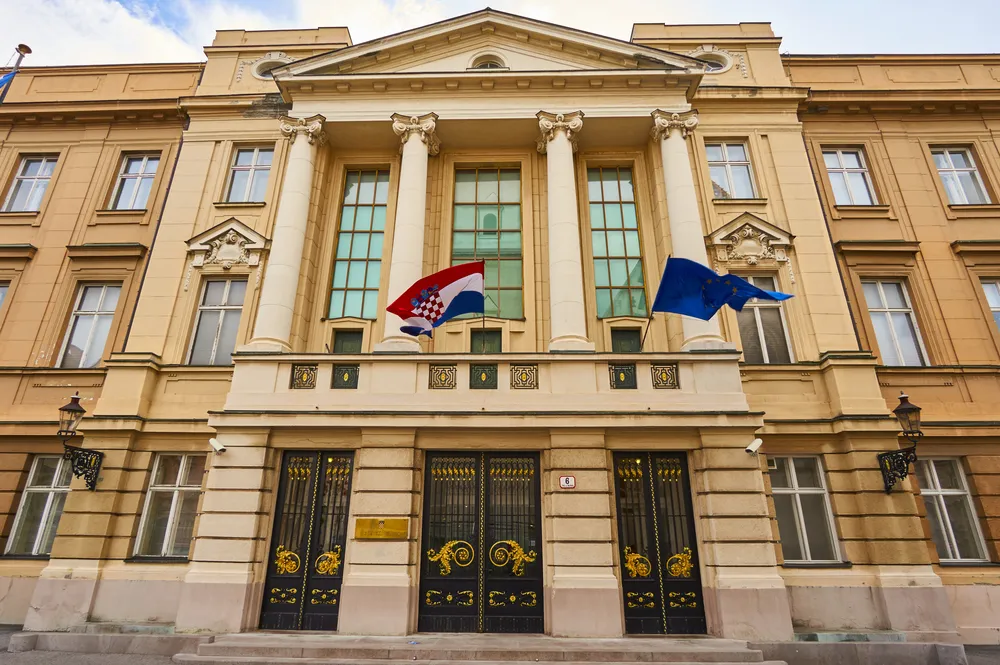
With the most serious unease, persistent efforts are being experienced in Mostar these days to – as Dragan Čović (HDZ) would say – "finish what was started" in Mostar and Herzegovina. The scandalous conference in Zagreb, titled "BiH: A Failed State and the Necessity of a Third Croatian Entity," is allegedly supposed to contribute to this goal. Besides hearing old, bitter, and worn-out triades about the "endangerment of Croats", and how BiH could – even become a prosperous state only if a third – Croatian entity is incorporated into its structure, it has exposed to the bone the role of the state leadership of Croatia and HDZ BiH, which openly and without gloves encourages such a goal. Besides "European neighbors" dealing a resounding slap to Bosnia and Herzegovina by even declaring it a "failed state", the organizers of this scandalous, rigidly right-wing gathering, emboldened by American radicals from the margins of society and well-paid global lobbyists, have also offered a new territorial reconstruction of Bosnia and Herzegovina as well as a memorandum on the so-called "Croatian entity". What the response of official Sarajevo and all those who care about the state of BiH will be to this shameful step by Croatia remains to be seen. We are only witnessing a new escalation and destabilization of the already sensitive political relations in the region.
Komentari (0)
Prijavite se za komentiranje
PrijavaJos nema komentara. Budite prvi!
Minuta
Sve →Iz drugih kategorija
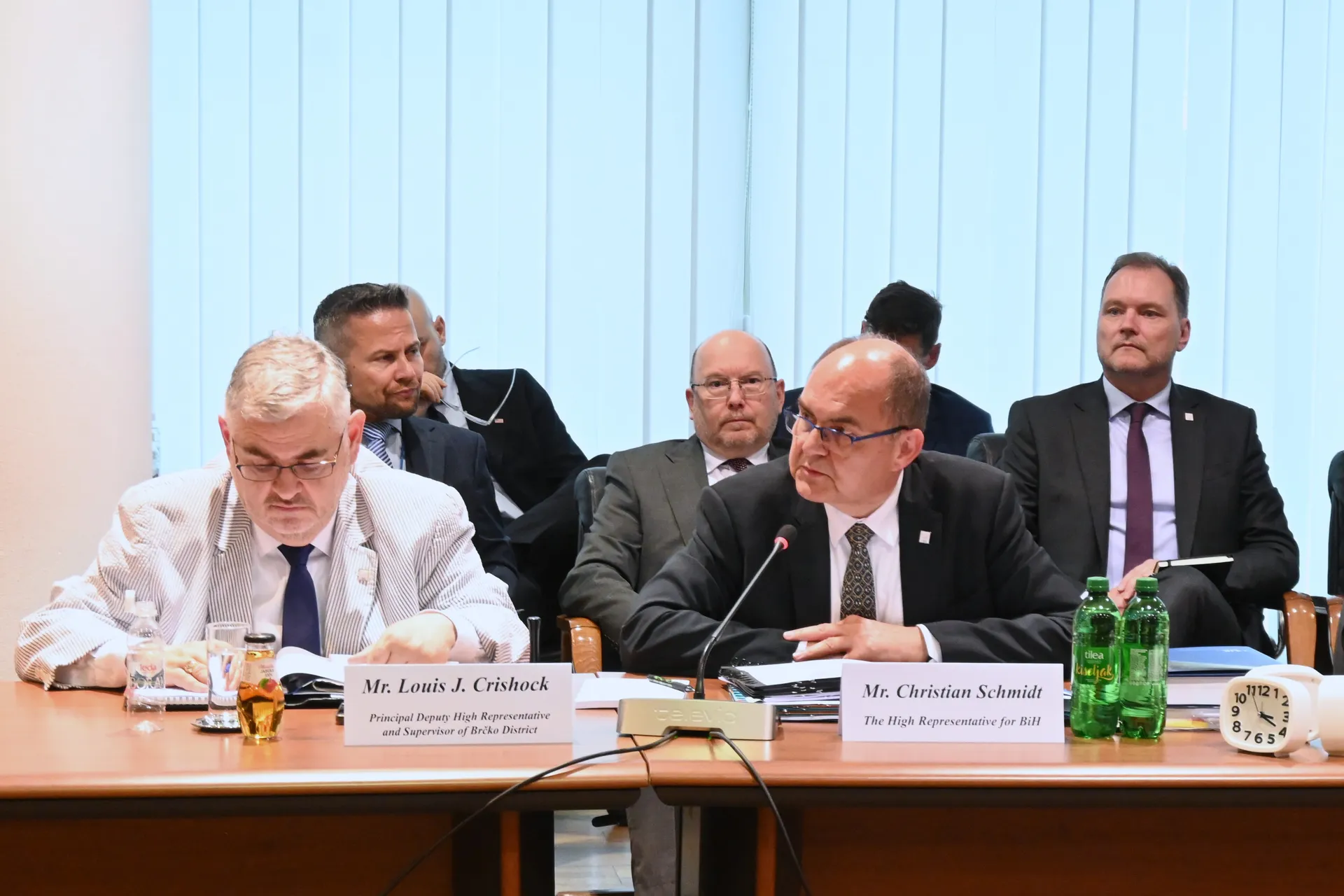
High Representative Not Elected: Germans, French and British Sabotaged Americans, New Attempt at End of June

ČOVIĆ WITHOUT MERCY: How Those Who Brought Ademović to Office Created a Political Hell for Him

Sunny Saturday, quite warm
Tragedy in Albanian resort: Two minors drown