
(Patria) - The European Commission today adopted its annual assessment of the implementation of reforms in the Western Balkans and Turkey and recommendations on the steps these countries should take, thereby confirming that a credible enlargement policy represents a geostrategic investment in peace, stability, security and economic growth throughout Europe.
Western Balkans
A clear and credible accession perspective for the Western Balkans remains key to driving change, fostering reconciliation, spreading stability in the region and promoting EU values, norms and standards. The Commission's Western Balkans Strategy of February 2018 re-energised EU and Member State activities and resonated positively in the region. Today, a year later, partner countries have made concrete progress and shown their commitment to the European perspective, although the response from all partners has not been equally strong.
Albania and North Macedonia have wholeheartedly embraced the opportunity offered and implemented reforms, primarily in the key areas identified by the Council in June 2018. Given the significant progress made and the relevant conditions met, the Commission today proposed that the Council open accession negotiations with Albania and North Macedonia.
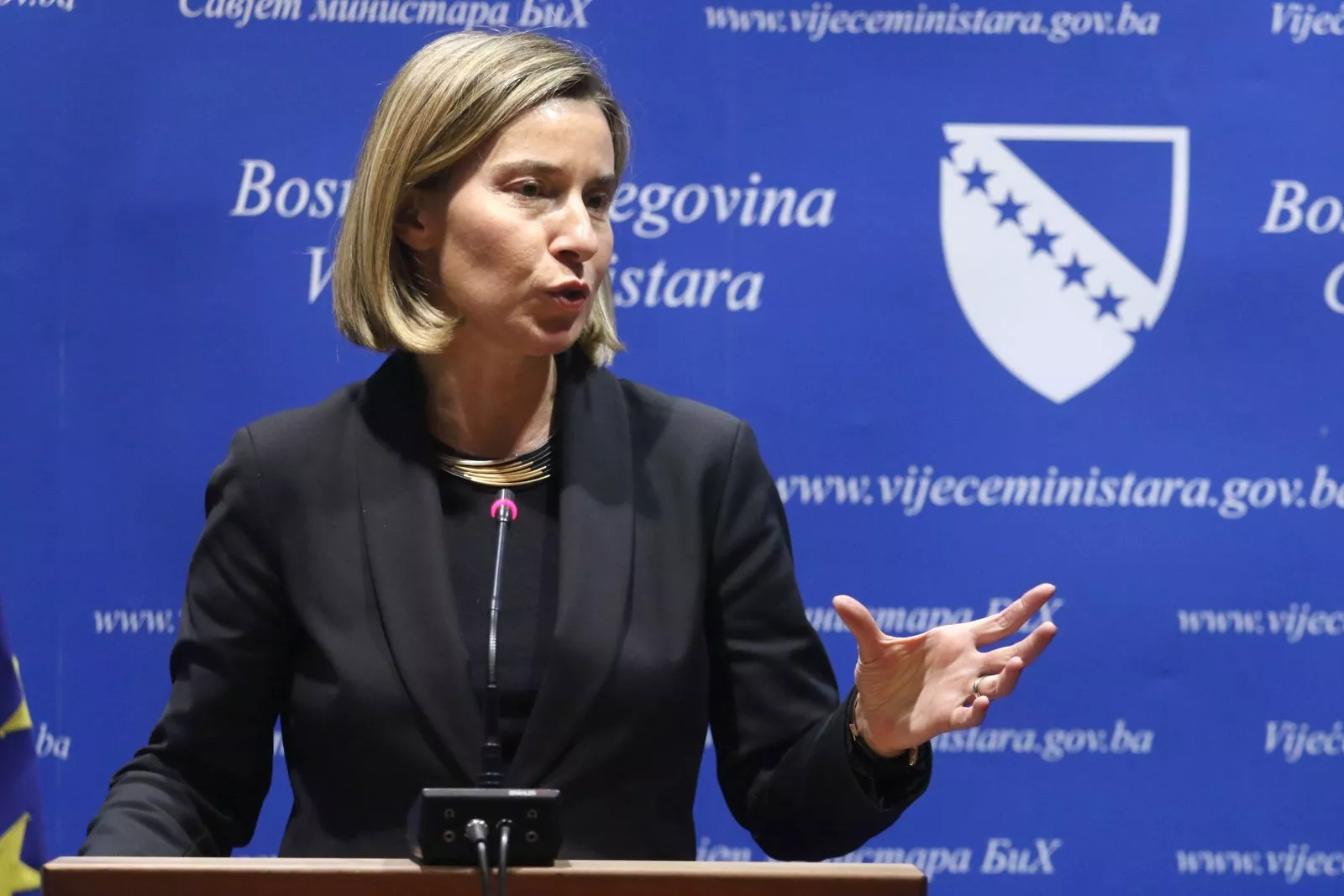
The High Representative for Foreign Affairs and Security Policy and Vice-President of the Commission, Federica Mogherini, stated:
"The Western Balkans is Europe and will be part of the EU's future, part of an even stronger, stable and united European Union. The past year has been a year of positive change across the region. Albania and North Macedonia are determined on their path towards the EU, and the results they have achieved are concrete and must be preserved. Therefore, today we propose that the Council open accession negotiations with Albania and North Macedonia. The European Union's enlargement policy means investing in peace, security, prosperity and stability in Europe.
The Commissioner for European Neighbourhood Policy and Enlargement Negotiations, Johannes Hahn, said: Albania and North Macedonia have seized the opportunity to engage in the renewed enlargement agenda and have implemented reforms. North Macedonia has continued to implement its comprehensive reform plan, and has also reached a historic agreement with Greece, resolving a 27-year-old name dispute. This can serve as an example for the entire region and beyond. Albania is implementing thorough reforms, particularly in the judicial system. All of this demonstrates the attractiveness of the European Union.
The Commission also published today its opinion on Bosnia and Herzegovina's application for EU membership and an analytical report which, for the first time, examines the country's situation in relation to all standards applicable to EU member states. The Commission believes that accession negotiations should be opened once Bosnia and Herzegovina achieves the necessary level of alignment with the membership criteria, particularly with the political criteria of institutional stability, which guarantees democracy and the rule of law. Bosnia and Herzegovina will need to thoroughly improve its legislative and institutional framework to achieve a series of precisely defined priorities in the areas of democracy, rule of law, fundamental rights, and public administration reform. The Commission's opinion, which also serves as a roadmap for comprehensive reforms in these key areas, is an important step in EU-Bosnia and Herzegovina relations and serves as an impetus for further steps in the EU accession process.
Turkey
Turkey is an important partner of the EU and a candidate country. Dialogue and cooperation continue, including at the highest levels, in key areas of mutual interest, including through effective cooperation on migration and support for refugees. However, Turkey continues to move away from the European Union and is seriously regressing in the areas of the rule of law and fundamental rights, and the constitutional changes have weakened the system of checks and balances in the political system. In June 2018, the Council unanimously stressed that accession negotiations with Turkey have therefore been effectively frozen and that no new chapters can be opened or closed. The facts that led to this assessment remain unchanged.
Next steps
The Council must now consider the Commission's recommendations and decide on the next steps.
Enlargement Process
The current enlargement agenda covers the Western Balkan partner countries and Turkey. Accession negotiations are open with candidate countries Montenegro (2012), Serbia (2014) and Turkey (2005). North Macedonia has been a candidate country since 2005, and Albania since 2014. Potential candidate countries are Bosnia and Herzegovina (application for EU membership submitted in February 2016) and Kosovo (Stabilisation and Association Agreement entered into force in April 2016).
The accession process continues to be based on established benchmarks, fair and strict conditions, and the principle of own merits. EU accession requires the implementation of complex reforms in a challenging environment, a goal that can only be achieved in the long term. For the accession process to proceed, candidate countries are expected to achieve tangible and sustainable results more quickly in key areas, namely the rule of law, judicial reform, the fight against corruption and organised crime, security, fundamental rights, the functioning of democratic institutions and public administration reform, and economic development and competitiveness.
Furthermore, progress must be made in the Western Balkans in reconciliation, good neighbourly relations and regional cooperation, as demonstrated by the historic agreement reached between North Macedonia and Greece.
The Western Balkans Strategy has given new momentum to relations between the EU and the region. It focuses on areas where Western Balkan partner countries need to implement further reforms and make additional efforts, and on increased EU support for the region, which includes a series of specific commitments divided into six main initiatives.
Since the adoption of the strategy, the EU has focused on fulfilling its commitments through increased political engagement, strengthening security cooperation, and enhancing operational links between the Western Balkans and the EU and its agencies, facilitating access to financial and technical assistance, and redirecting EU financial assistance under the Instrument for Pre-Accession Assistance (IPA), whose annual amount for the Western Balkan countries alone exceeded EUR 1.1 billion in 2018.
Komentari (0)
Prijavite se za komentiranje
PrijavaJos nema komentara. Budite prvi!
Minuta
Sve →Iz drugih kategorija

High Representative Not Elected: Germans, French and British Against Americans, New Attempt at End of June

ČOVIĆ WITHOUT MERCY: How Those Who Brought Ademović to Office Created a Political Hell for Him



Sunny Saturday, quite warm



Tragedy in Albanian resort: Two minors drown












