
(Patria) - NATO member states have agreed in a "confidential tone" and "without official announcements" on "red or final lines of patience" that they cannot cross in case of a strong Russian advance in Ukraine, and threats that Russia would "issue" to frontline countries in such a scenario.
The possibility of a direct intervention by the North Atlantic Alliance in the war in Ukraine, or a possible direct conflict with Russia, was also discussed at that meeting, writes the Italian newspaper La Repubblica, citing its confidential sources, reports Jutarnji list.
Conceptual Plan
However, it is noted that "NATO is not developing any operational plans" in this regard. But, according to this "conceptual plan," the mention refers to the threat of a Russian advance in Ukraine, or a possible "defeat of Kyiv," with a special emphasis on a "third country" entering the war, namely Belarus.
Let us recall that Russia has deployed its forces there, is deploying its nuclear weapons, and has targeted locations in Ukraine from Belarusian territory, and it is constantly speculated/predicted that an attack on Kyiv or Kharkiv could be launched from Belarus, possibly with the participation of the Belarusian army.
It was stated at that meeting that the Ukrainian army does not fully control the border with Belarus, which could allow Russian forces to create a corridor between Ukraine and Belarus.
Recently, in his address to the nation, Putin said he wanted to create a "sanitary zone" between Russia and Ukraine, and given the importance of Belarus for Moscow, this is not excluded either.
According to La Repubblica, "Minsk will then be directly involved in the military conflict," and "its troops and arsenal will be of decisive importance for Moscow."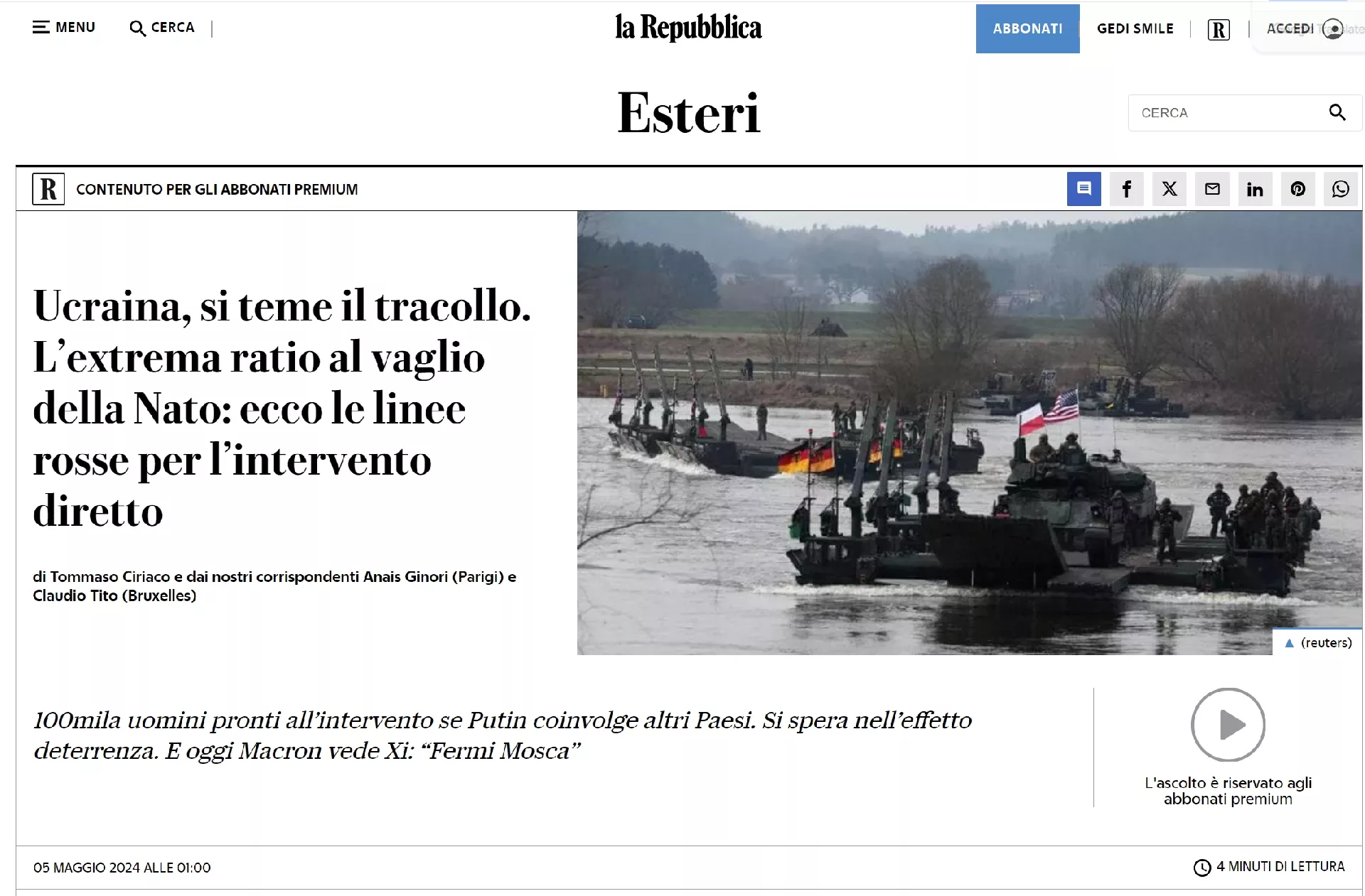
Therefore, such a "scenario" could intensify NATO actions in favor of Ukraine, the article states.
The long "border of patience" can be divided into two "lines" - the first is a possible Russian provocation against the Baltic states and Poland (which gives the whole matter a more dramatic tone as these are NATO members that are now the most important segment of NATO's northeastern flank), and the second is a "targeted attack on Moldova," i.e., threatening that small post-Soviet republic.
Russia has already directly threatened Moldova several times, i.e., the current pro-European government and president (let us recall, Brussels has opened membership negotiations), and constantly accuses it of "threatening" the security of the pro-Russian para-state entity of Transnistria.
Indeed, one of Russia's priority goals in the war against Ukraine is the capture of Odesa, as this would not only give it control over the entire Black Sea coast but would also bring it to the border with Moldova, thus posing a direct threat to the most important southeastern NATO members - Romania and Bulgaria.
This was also echoed by an interview with Hakeem Jeffries, leader of the Democratic minority in the House of Representatives, on CBS, who said that the US has an obligation to continue supporting Ukraine because in the "event of its defeat" they would have to intervene directly.
The US would also have to intervene
- We must not allow Ukraine to fall, because in that case, there is a real possibility that America would have to get involved in the conflict, not just with our money, but with our military forces - said Jeffries.
According to him, the problem is that Vladimir Putin's goal is to re-establish the USSR, which means he has become a direct threat to post-Soviet states, especially those that are in NATO or want to become its members.
Jeffries warns that if Putin succeeds in Ukraine, he will certainly not stop there and therefore one must be prepared.
Let us recall that Great Britain recently "allowed" Ukraine to use its weaponry to attack military targets on Russian territory, especially since Russia has recently been targeting Ukrainian energy and utility infrastructure.
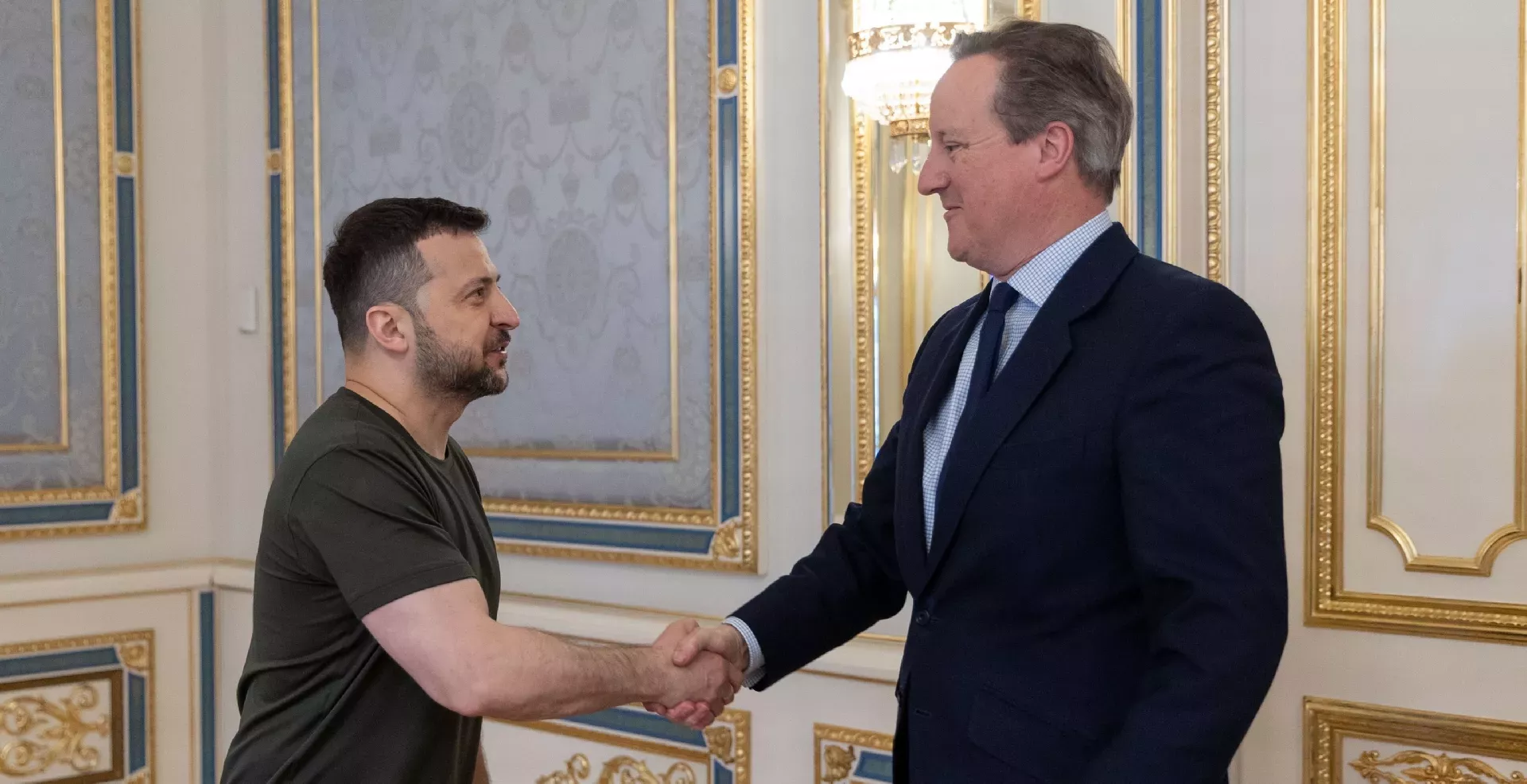
Immediately after these announcements, Russian President Vladimir Putin ordered his General Staff to begin preparations for exercises of "Russian nuclear forces," or, as the pro-regime agency Ria Novosti writes, the maneuvers are being prepared to test the "combat readiness of Russian non-strategic or tactical nuclear forces in fulfilling military tasks".
The exercises, according to the Russian Ministry of Defense, are being conducted "in response to provocative statements and threats from Western officials," and in addition, statements by French President Emmanuel Macron are mentioned, who said he would allow the deployment of French forces to Ukraine if a request came from Kyiv.
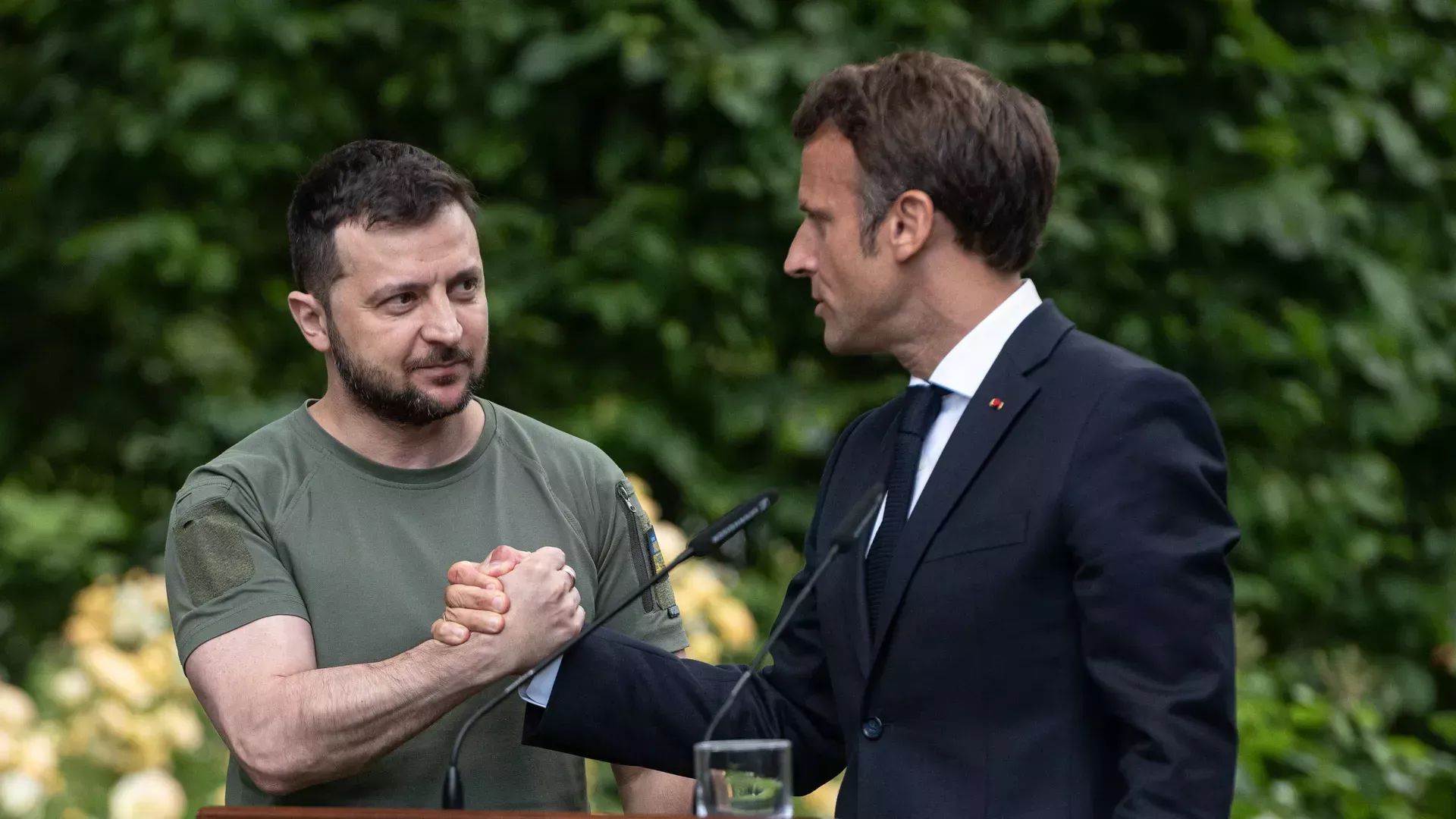
However, many member states of the Alliance, including Germany, immediately rejected this "idea," and NATO Secretary General Jens Stoltenberg also rejected the possibility of sending NATO combat forces to Ukraine.
Putin's spokesperson Dmitry Peskov explained that the nuclear forces exercises are linked to an "unprecedented surge in tension escalation" due to the conflict with Ukraine, Moscow's Kommersant reports.
Let us also recall that large military exercises have begun in Eastern Europe (the largest since 1988) practicing defense against Russian attacks on allied territory.
Komentari (0)
Prijavite se za komentiranje
PrijavaJos nema komentara. Budite prvi!
Minuta
Sve →Iz drugih kategorija

High Representative Not Elected: Germans, French and British Against Americans, New Attempt at End of June

ČOVIĆ WITHOUT MERCY: How Those Who Brought Ademović to Office Created a Political Hell for Him



Sunny Saturday, quite warm



Tragedy in Albanian resort: Two minors drown












