
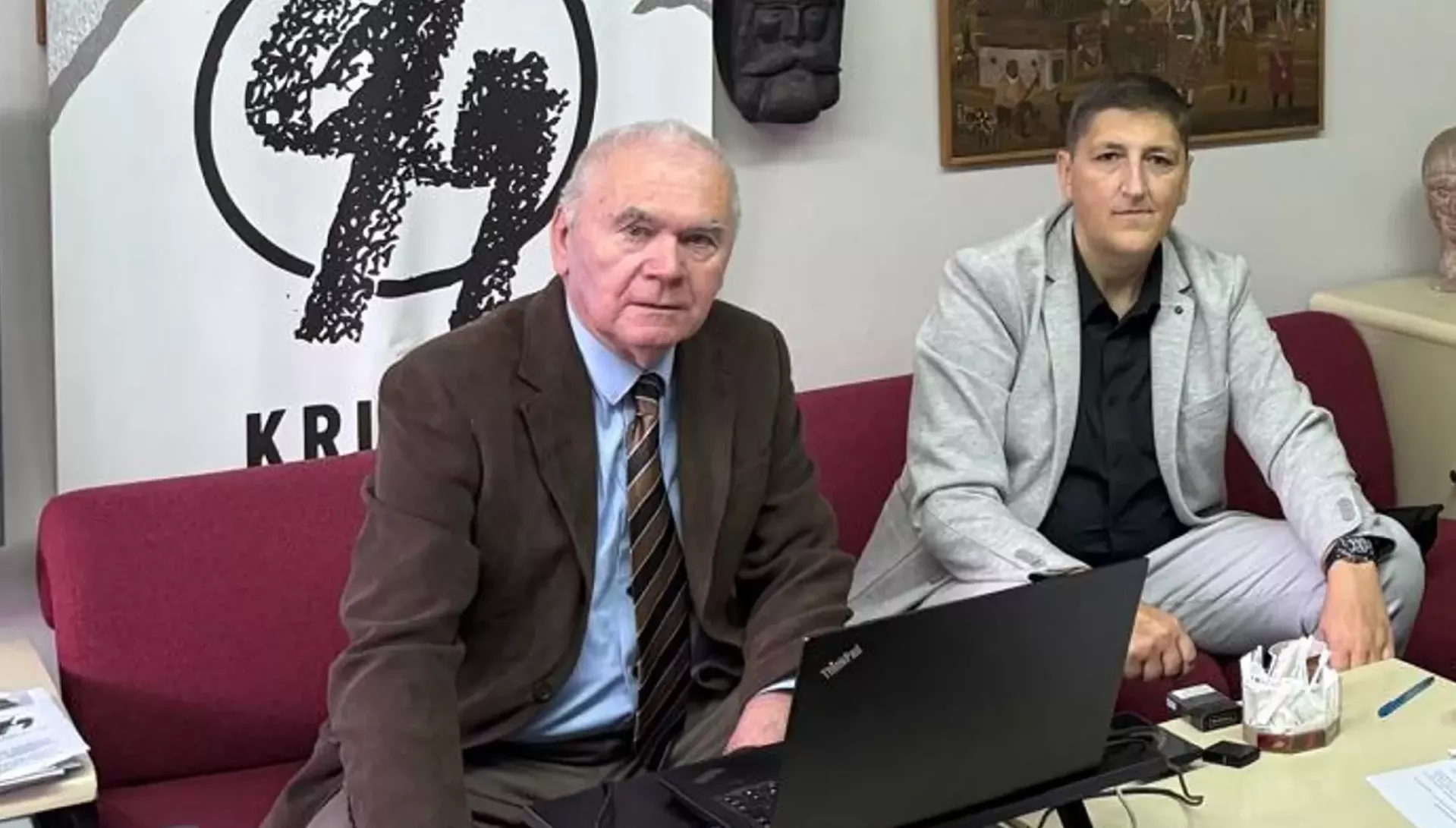
(Patria) - President of Krug 99 Adil Kulenović, in the introduction to today's regular session on the topic "Defending Sarajevo from Demonization," emphasized the need for an active approach to the phenomena and bearers of the demonization of Sarajevo as a community of citizens, a symbol and metaphor of the Bosnian state.
By the number of introductory speakers, Kulenović added, the aim is to emphasize collective resistance and a call for the voice of all those who discern the insidious methods and means of demonizing such a Sarajevo. And likewise, he added, recognizing the ultimate goals of their producers - the destruction of Bosnian social fabric and the state.
The introductory speakers, besides Kulenović, were Prof. Dr. Enver Halilović, Prof. Dr. Hazim Bašić, diplomat and publicist Fuad Đidić, and Patria journalist and president of the NGO "Čuvari Bosne" Rasim Belko.
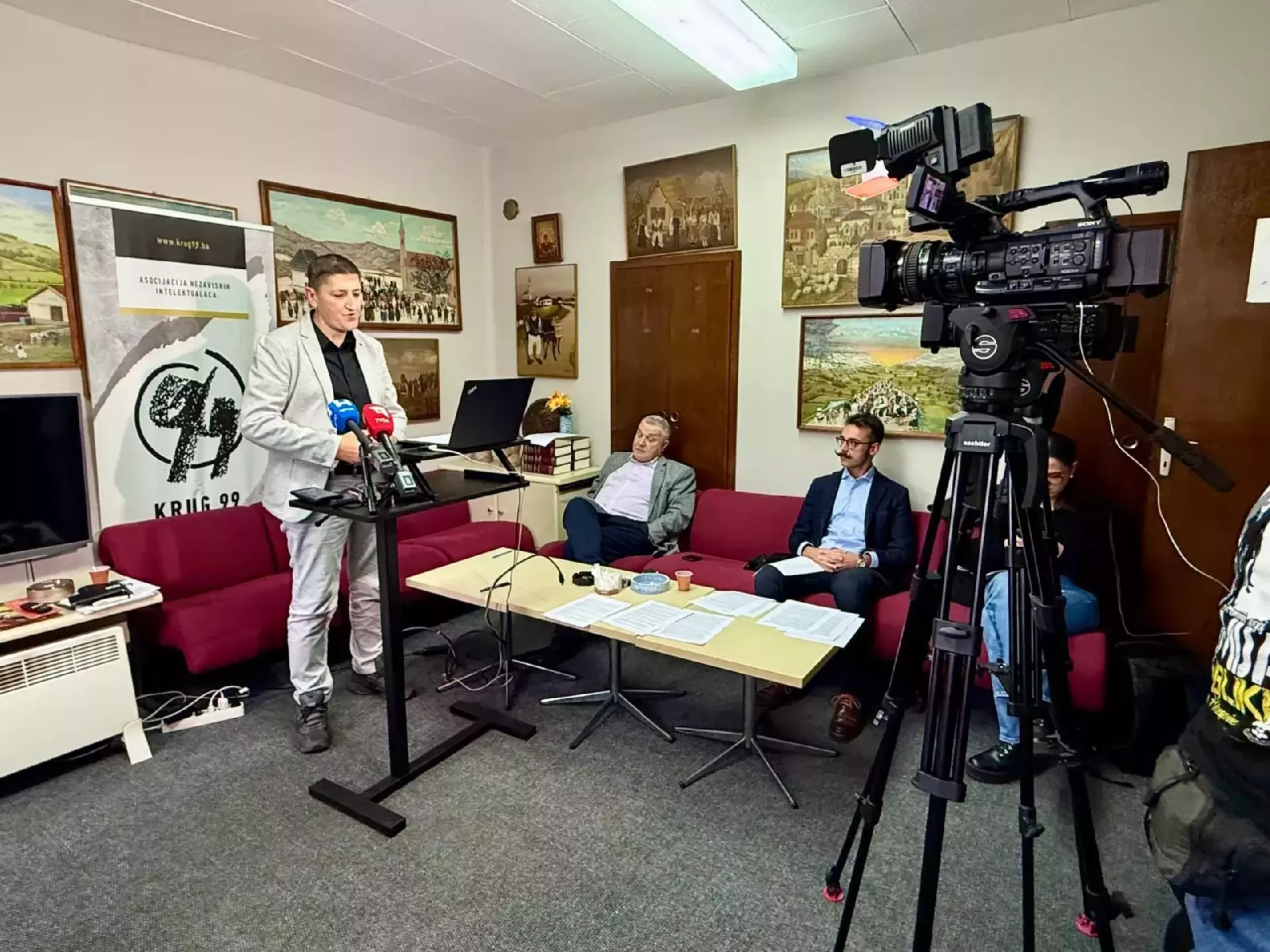
- It is obvious that we live in a time when it is not enough to know that Sarajevo is a hero city, whose status is ingrained in the consciousness of the majority of humanity, but that we need to develop resistance to the toxic narrative of demonization.
Despite the fact that Sarajevo showed, in the most difficult, borderline situations for its survival, a civilizational difference from those who were enchanted by the SANU Memorandum, the songs of Radovan Karadžić, following the monstrous call "let's go to the cities to beat the scoundrels."
Songs that were created and published right in Sarajevo, long before the war. Just as the smell of gunpowder could be felt in the already forgotten pre-war aggressive propaganda and absurd interpretation of the name of the Olympic Hall "Zetra" as the so-called starting point of a green, Islamist transversal from Sarajevo to Istanbul and Jakarta.
Even a metaphor about the smell of incense was skillfully given the meaning of anti-Serb hatred and planned expulsion. And all this and much more, at a time when war plans were practically being prepared, for the creation of a Greater Serbia in all areas where there are Serbian graves. And while the Gazimestan breakup of Yugoslavia was taking place and the "battles that can be armed" were announced - said Kulenović.
According to his words, the demonization of Sarajevo during the war in Bosnia and Herzegovina, up to the present day, seeks to be transformed into a toxic narrative, a story that leaves an impression on the public, media and international political actors involved in the events.
Kulenović emphasizes that the side that carried out the siege and shelling of the city still persistently relativizes and denies its siege and mass crimes.
- Wartime claims that the siege was not a siege in the full sense, that responsibility for the suffering of involved military actors and civilians was shared, that Sarajevo was ethnically or religiously homogenized by Bosniaks both before and during the war, have had resonance in sympathetic public media around the world to this day.
Despite the fact that international courts have established facts about the calls, organization and orders of the SDS to even dig up the graves of ancestors during the voluntary departure from the city after the DMS.
The multi-ethnic tradition and presence of other peoples during the siege and defense of the city is a fact. Insinuations that the government of the Republic of Bosnia and Herzegovina staged attacks (such as the Markale massacre) on its own citizens, in order to gain international sympathy and intervention, is unfortunately one of the more successful methods still used in other parts of the world, and in Palestine especially.
Presenting Sarajevo as a "terrorist nest" or extremist center, even the headquarters of Hamas, is a demonizing narrative that seeks to dehumanize citizens and justify both wartime military and contemporary actions against the city of Sarajevo and state-building political forces.
Sarajevo is in the focus of the narrative for an alleged security threat to Serbs and alleged oppression of Croats. Highlighting the events in Dobrovoljačka Street and the crimes at Kazani, which are not only exaggerated but also taken out of the context of tens of thousands of killed and wounded citizens of Sarajevo, served and still serves to justify and relativize crimes, the former blockade of the city, but also attempts at historical revision after the war.
It is important to note that these narratives are contrary to the findings of international courts, journalistic reports and testimonies, which have confirmed that Sarajevo was under the longest siege in modern history and that Karadžić's Serb forces systematically shelled and sniped civilians.
Contemporary demonization of Sarajevo, unlike wartime propaganda, often does not focus directly on war crimes, because the facts established by the Hague Tribunal are difficult to refute and are documented.
It uses more refined and multi-layered narratives that can be observed in political discourse and the media, especially in the Republika Srpska, Serbia but also Croatia.
In short, the narrative about Islamic/Bosniak nationalism and radicalism, portraying Sarajevo as "Tehran in the heart of Europe", "Muslim kasaba", "fundamentalist and extremist center", "danger for Serbs and Croats", "connection with global terrorism/radicalism", "source of regional instability", "Sarajevo as a political swamp", "oppressor of legitimate representation", etc.
These contemporary narratives of demonizing Sarajevo are used for political purposes not only in neighboring countries, but also by secessionist forces in BiH, in order to delegitimize the constitution of central authority and the state, polarize the population and destabilize both the state and society.
When one adds to this the hegemonic vocabulary in the Western Balkan region used for political manipulation, destruction and establishment of dominance over Bosnia and Herzegovina, in political, ethnic, territorial or cultural terms, the scope of the created toxic narration is a reason for programmed and greater political and media literacy of both citizens and political structures - concluded Adil Kulenović in his address.
Komentari (0)
Prijavite se za komentiranje
PrijavaJos nema komentara. Budite prvi!
Minuta
Sve →Iz drugih kategorija

High Representative Not Elected: Germans, French and British Against Americans, New Attempt at End of June

ČOVIĆ WITHOUT MERCY: How Those Who Brought Ademović to Office Created a Political Hell for Him



Sunny Saturday, quite warm



Tragedy in Albanian resort: Two minors drown












