
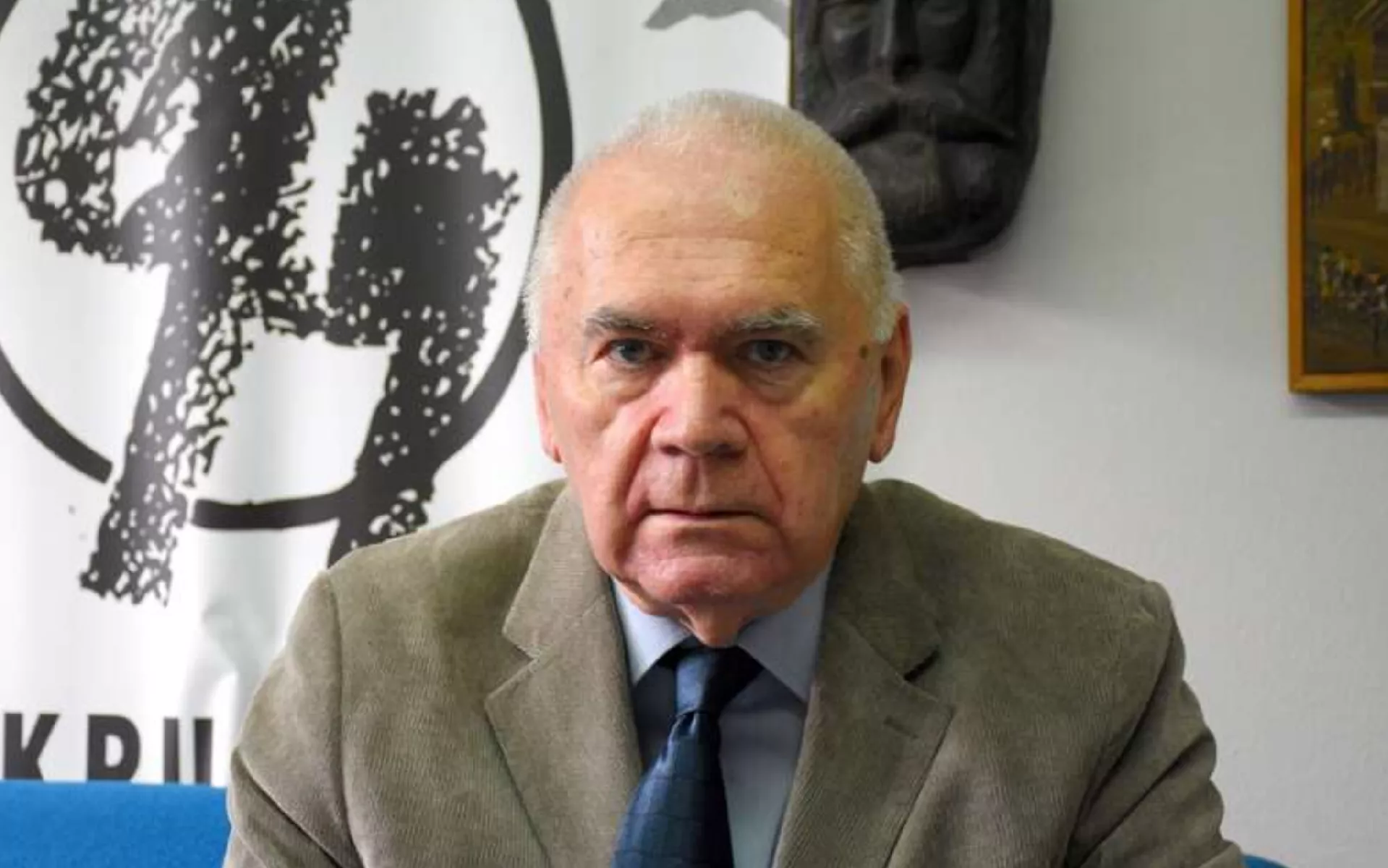
(Patria) - President of the Association of Independent Intellectuals Circle 99 Adil Kulenović addressed the beginning of today's regular session on the topic "Croatia and Bosnia and Herzegovina: Traps and Causes of Growing Suspicion", at which the introductory speaker was Prof. Dr. Sead Alić, a writer who lives and works in Croatia.
Alić has published an impressive number of texts from various philosophical disciplines, especially the philosophy of media. In the past year, he has attracted greater public attention, including in BiH, after the promotion of his book "Palestine and (SADism)", in which he discusses the suffering of the Palestinian people, was banned.
The ban came at the initiative of the "Jewish Community of Zagreb".
- This is the first time a book has been banned in an attempt to present it to the public. To put it even more clearly: to stop any reflection on Palestine and the Golgotha of the Palestinian people. The genocide that is taking place before the eyes of the entire world. The roots of evil in Gaza - says Kulenović.
According to him, the very title of the book "Palestine and (SADism)" reveals the ponerological roots of sadism in politics. But also SADism, a concept that, by the necessity of global realities, new imperialism, colonialism, and the emerging world order based on brutal force and power, demands submission from the weaker.
- The powerless are thus merely a mob outside any ethical values of SADism. The devastated Gaza, the freshly scattered bones of the innocent are mere fields for profitable investments, new Mediterranean rivieras, casinos, Epstein-style orgies of the elites, and the colonization of the Middle East with values outside the existing international order. That is the face of the moral norms of the new order.
Ominously perhaps, I hope only as a wrong feeling, that the fate of Palestine is being followed in Bosnia and Herzegovina as well - towards the metaphor of Gaza. We once made a mistake during the war with the thought of the Palestinianization of Bosnia. But, after the proclamation of the policy of Christian endangerment, the rejection of building a Bosnian nation, the demonization of its most numerous people and their religion, the embargo on democracy...
This necessarily places us before the question of the responsibility of intellectuals for defining paths of resistance to crises, strategies, and possibilities of non-partisan state-building unity. But, without understanding the key substances in relations between states, not only politics and economics, but also culture, and the public in general, interstate relations cannot be understood in their entirety, in their full truth.
They predominantly remain in the sphere of perceptions imposed by education systems, media, artistic production, and pop culture - says Kulenović.
Our dominant belief, he adds, is that Croatia is pursuing an open hegemonic policy towards Bosnia and Herzegovina. And not only it.
- We have often held discussions about this and brought our mutual positions closer. Especially after the Declaration of the Croatian Parliament on the Position of Croats in Bosnia and Herzegovina from December 2018.
At that time, we directly addressed the "democratic public and the Parliament of the Republic of Croatia regarding the Declaration of the Croatian Parliament on the Position of the Croatian People in Bosnia and Herzegovina". This concerns the "Memorandum of Understanding of Circle 99", which represents an expression of the civic public and the state-building political will of Bosnia and Herzegovina.
In the Memorandum, we gave our agreements and disagreements with the positions from the Declaration of the Croatian Parliament. The Memorandum was created as an attempt to establish an open dialogue on all defined positions of the Declaration.
We believed that dialogue leads to understanding of positions and internationally acceptable solutions. Despite its public publication in Croatia, it was followed by ignorance not only from parliamentary actors but also from intellectuals from Croatia.
Perhaps it is inappropriate to make a comparison with the Serbian liberal intellectual elite, which has never refused this type of dialogue. Nor did the Croatian elite, both during the war and long after the war.
Therefore, the discussion on the topic "Croatia and Bosnia and Herzegovina: Traps and Causes of Growing Suspicion" has purpose and meaning - added Kulenović.
Komentari (0)
Prijavite se za komentiranje
PrijavaJos nema komentara. Budite prvi!
Minuta
Sve →Iz drugih kategorija

High Representative Not Elected: Germans, French and British Against Americans, New Attempt at End of June

ČOVIĆ WITHOUT MERCY: How Those Who Brought Ademović to Office Created a Political Hell for Him



Sunny Saturday, quite warm



Tragedy in Albanian resort: Two minors drown












