
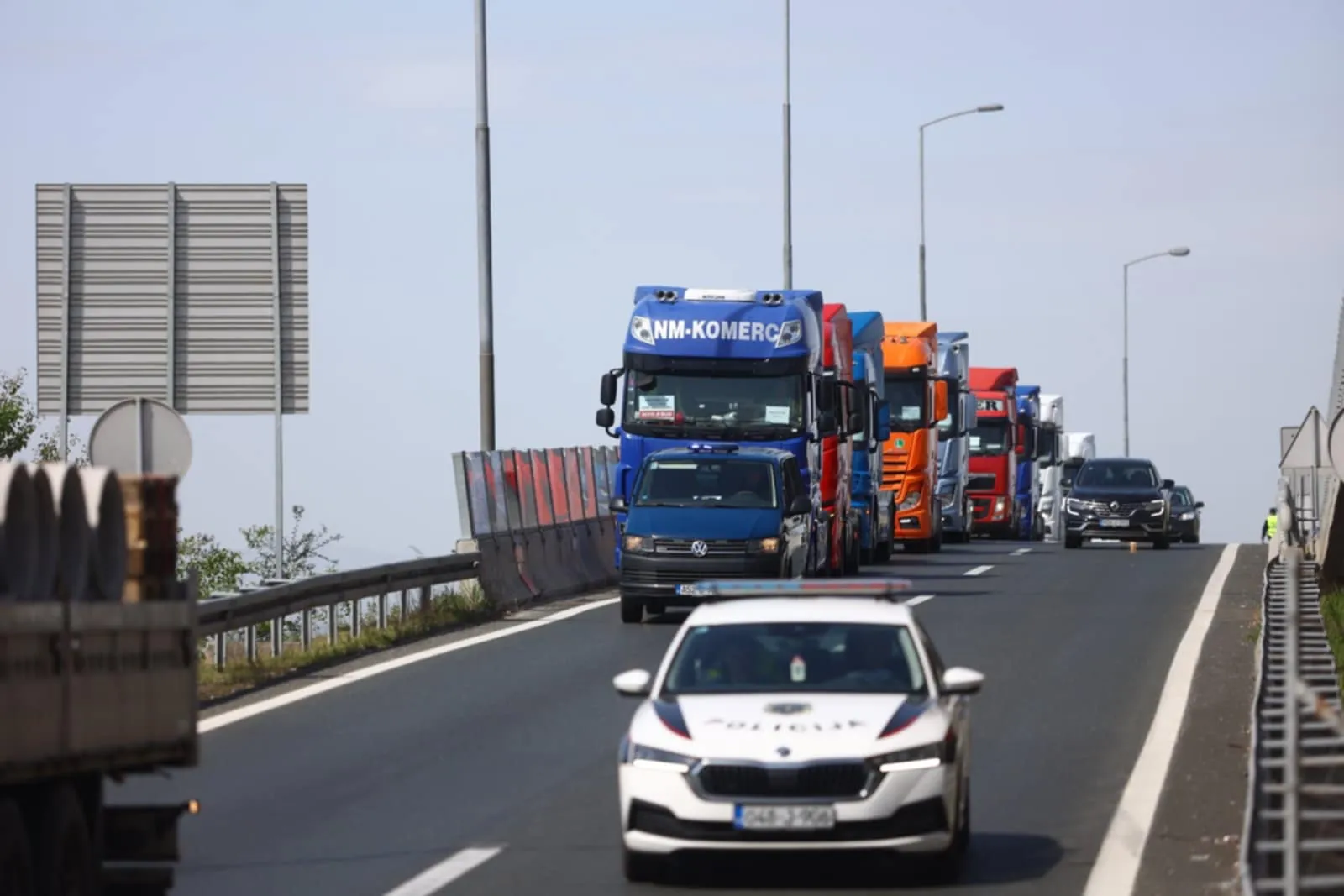
(Patria) - In recent days, we have witnessed reactions to the full implementation of the ICS2 system, new European procedures, problems at borders, lack of infrastructure, and rising operating costs for transport companies. And almost always the same pattern repeats. An official sends an email and the message reads: "We are ….." Okay. But the question is not whether you warned. The question is what you did. For the past twenty years, we have been warned that new procedures, new systems, and new requirements from the European Union are coming, announced the Logistics Consortium of Bosnia and Herzegovina.
For the past ten years, we have been hearing announcements about digitalization, NCTS, eCMR, eFTI, ICS2, and other processes. At first, the deadlines were far away. Then they became annual. Then monthly. Then weekly. In the end, we were counting down the days. And again, we met the deadline completely unprepared. Almost as if we were surprised by snow on December 22nd on Bjelašnica, Vlašić, or Jahorina. As if we live in California, not in a country where winter appears every year.
The same happened with ICS2. The same happened with digitalization. The same is happening with numerous other reforms.
For years, we had the opportunity to prepare. For years, experts from the European Union, Austria, and Slovenia worked with our institutions. For years, trainings, workshops, presentations, and projects were organized. So let's go back a few years. Experts and advisors from Austria and Slovenia helped develop customs systems in the region. Bosnia and Herzegovina was once among the leaders in the process of developing and implementing the NCTS system. Our experts participated in educating colleagues from Montenegro, Serbia, and North Macedonia.
Today, the situation is completely different.
While the countries to which we transferred experiences implemented new development phases, integrated procedures, and prepared their economies for digital transformation, Bosnia and Herzegovina remained trapped in slow procedures, endless discussions, and shifting of responsibilities.
Today, we again hear the same questions: EORI number? Will the deadline be extended? Will the European Union show understanding? Will someone else solve the problem? No.
The European Union does not operate on the principle of waiting for those who are not ready. ICS2 did not appear yesterday. NCTS was not introduced overnight. eFTI, eCMR, security declarations, and digital customs systems have been developed for more than ten years. Today, we are only seeing the results of long-term planning, investment, and responsible work.
As in the old song:
"Travel on, Europe, do not wait for us."
And that is exactly what is happening today. Europe is moving forward. It will not stop because we have not completed our preparations. It will not delay processes because we have not resolved procedures. It will not wait for us to agree on what should have been finished many years ago.
The biggest problem of Bosnia and Herzegovina is not ICS2. ICS2 is only a consequence of years of lack of systemic preparation. Digitalization is no longer a matter of choice. It is a condition for survival on the European market. While Europe develops eFTI, eCMR, ICS2, NCTS, and new digital procedures, Bosnia and Herzegovina still bases a large part of its processes on paper, stamps, and manual procedures. There is talk about digitalization. There is talk about modern systems. There is talk about efficiency. But many procedures still function as they did twenty years ago. And then we are surprised by the results.
It is always someone else's fault. As it is often said that intelligence is evenly distributed in Bosnia and Herzegovina, the habit of almost never blaming ourselves is equally evenly distributed. It is always someone else's fault. The European Union is to blame. The neighbors are to blame. The carriers are to blame. The freight forwarders are to blame. Only we are never to blame.
The Council of Ministers of Bosnia and Herzegovina adopted decisions related to the development of new BIP border crossings. However, if we speak seriously and responsibly, it is difficult to expect that before 2027 any new fully functional BIP crossing that could significantly change the current situation will be opened.
The example of Svilaj shows that it is not enough to make a decision. It is necessary to provide personnel, facilities, equipment, procedures, and financing. Only then does the system function.
Meanwhile, other countries are working. North Macedonia has developed digital procedures and integrated border controls. With Serbia, it is developing models of joint crossings that reduce the number of stops and speed up the flow of goods. Montenegro is successfully implementing digital projects in the transport sector. NCTS was implemented years before Bosnia and Herzegovina. The results are visible today. This is not a matter of luck. It is a matter of work, planning, and responsibility.
We especially remind that as early as March 23, 2026, we warned that problems in the transport sector cannot be solved by force, administrative pressure, or shifting responsibilities between different levels of government. And, what is the result of coercion?
If it is already possible to give orders, then we propose: to immediately open ten new BIP crossings, to immediately abolish all delays at borders, to immediately resolve infrastructure deficiencies, to immediately resolve the shortage of personnel, to immediately eliminate years of delays.
Unfortunately, reality works differently. Problems are not solved by orders. Problems are solved by work.
How much does unpreparedness cost? How much does waiting cost? How much does indecision cost?
The Logistics Consortium of Bosnia and Herzegovina has been warning for years that every hour of vehicle detention has its price. Today, it is completely realistic to talk about at least 40 EUR per hour of waiting. If a vehicle loses 12 hours due to administration, delays, inefficiency, or poor procedures, the cost amounts to at least 480 EUR. This is no longer an estimate. This is an economic fact.
Therefore, we believe that every day of unjustified vehicle detention must have its price. If administration, procedures, or an inefficient system produce an additional day of waiting, market logic dictates that the transport price be corrected by at least 480 EUR per vehicle per day. This is not a penalty. This is not a protest. This is not a political message. This is a simple economic calculation of the cost that carriers today bear alone.
Because while we look for culprits, others build systems. While we wait for exceptions, others introduce new generations of digital procedures. While we expect delays, others plan the next phase of development. And when the consequences come due, someone else will again be to blame. Perhaps it is finally time for responsibility to replace excuses.
Komentari (0)
Prijavite se za komentiranje
PrijavaJos nema komentara. Budite prvi!
Minuta
Sve →Iz drugih kategorija

High Representative Not Elected: Germans, French and British Against Americans, New Attempt at End of June

ČOVIĆ WITHOUT MERCY: How Those Who Brought Ademović to Office Created a Political Hell for Him



Sunny Saturday, quite warm



Tragedy in Albanian resort: Two minors drown












