
(Patria) - Chairman of the Presidency of Bosnia and Herzegovina Željko Komšić gave a speech today in the House of Parliament of the United Kingdom at a reception on the occasion of the celebration of the Statehood Day of Bosnia and Herzegovina.
The reception was hosted by the All-Party Parliamentary Group for Bosnia and Herzegovina (APPG for BiH), led by Chair Alicia Kearns, and the BiH-UK Network.
The reception was attended by numerous British parliamentarians, members of the All-Party Parliamentary Group for Bosnia and Herzegovina, representatives of the diplomatic corps, the Bosnian-British community, and organizations working to strengthen relations between BiH and the United Kingdom.
In his address, Komšić emphasized the significance of Statehood Day for the historical continuity and identity of Bosnia and Herzegovina, and highlighted the strong ties between our two countries and the continuous support of the United Kingdom for Bosnia and Herzegovina.
At the beginning of his address, Komšić thanked for the organization of this event, which aims to mark BiH Statehood Day, as well as the thirtieth anniversary of the conclusion of the Dayton Peace Agreement.
- These days, we in Bosnia and Herzegovina are marking two historical events that have marked and shaped the lives and destinies of generations of citizens of Bosnia and Herzegovina. These are events whose impact will certainly be felt in the future, and similarly affect future generations.
The restoration of Bosnia and Herzegovina's statehood did not happen in 1992. The restoration of my country's statehood happened on November 25, 1943, during World War II, in the midst of occupied Europe, during the fight against Nazis and quislings.
The first session of ZAVNOBiH, which had all the elements of a parliament of Bosnia and Herzegovina, was attended by the leadership and members of the National Liberation Movement, who were members of all peoples of Bosnia and Herzegovina, as well as members of various political options.
At that first session, and then at the second, decisions were made that defined Bosnia and Herzegovina as an equal republic within Yugoslavia, but more importantly, the essence of internal relations in Bosnia and Herzegovina was defined - said Komšić.
He emphasized that at the first session, Bosnia and Herzegovina was defined as a republic of equal peoples, while the second defined equal political rights for all citizens, as individuals, in the future republic.
- If we were to go into a more detailed analysis of the content of the decisions made at those two sessions, we could come to very interesting conclusions that the decisions of the first session had their ideological basis in the Soviet communist model of organizing relations between different peoples and ethnic groups in multi-ethnic states, while the decisions of the second session on the equality of citizens have their basis in the democratic traditions of Western countries - stated Komšić.
He noted that similar principles of organizing relations in Bosnia and Herzegovina were retained in the Dayton Peace Agreement, especially in Annex IV, which is actually the current Constitution of Bosnia and Herzegovina.
- Why such solutions once worked in Bosnia and Herzegovina, and today function poorly or not at all, is a special question - Komšić pointed out.
Speaking about the thirtieth anniversary of the conclusion of the Dayton Peace Agreement, or the end of the war and aggression of neighboring countries against Bosnia and Herzegovina, he said he would be a bit personal.
- In those days, when the Dayton Peace Agreement was being negotiated and signed, I, as a member of the Army of BiH, was in snow so deep that it was almost impossible to move through it, in positions on the only mountain in Bosnia and Herzegovina where there were never any human settlements.
When the news of the end of the war reached us, the first emotion I felt was that it wasn't true. I couldn't believe the war was over. Therefore, when we speak critically about the Dayton Peace Agreement and the solutions it contains, we must never forget the fact that the conclusion of peace had an impact on the lives of people who had survived the war until then and continued to live in peace.
That agreement is not perfect, it is not even just, but it still left open the possibility that it can be improved or even changed in accordance with the democratic principles of state organization, especially in the area of fundamental human rights - were Komšić's words.
Finally, he thanked all our allies and friends who helped us both in World War II and in stopping the war in Bosnia and Herzegovina at the end of the last century.
- Also, I want to thank all those who are still interested in Bosnia and Herzegovina today and in this way help us to hear the truth about our country, that Bosnia and Herzegovina truly becomes a democratic state and society, that it becomes a full member of Euro-Atlantic integrations. You are certainly among them, among our friends.
Once again, to all citizens of Bosnia and Herzegovina - Happy Statehood Day of Bosnia and Herzegovina. We cherish our homeland, as well as the peace we have! In today's world, that is something precious and very significant - concluded Željko Komšić his speech.
Komentari (0)
Prijavite se za komentiranje
PrijavaJos nema komentara. Budite prvi!
Minuta
Sve →Iz drugih kategorija
High Representative Not Elected: Germans, French and British Sabotaged Americans, New Attempt at End of June
ČOVIĆ WITHOUT MERCY: How Those Who Brought Ademović to Office Created a Political Hell for Him


Sunny Saturday, quite warm
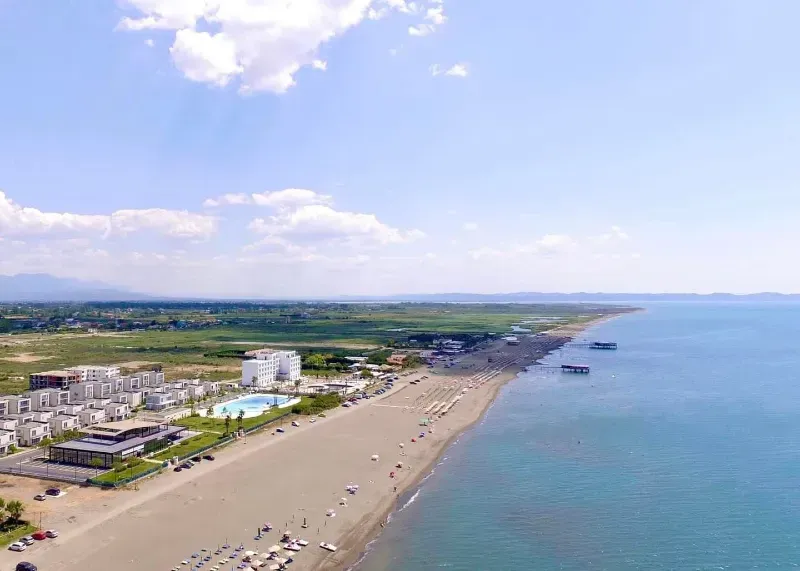
Tragedy in Albanian resort: Two minors drown