
By Armin Sijamić
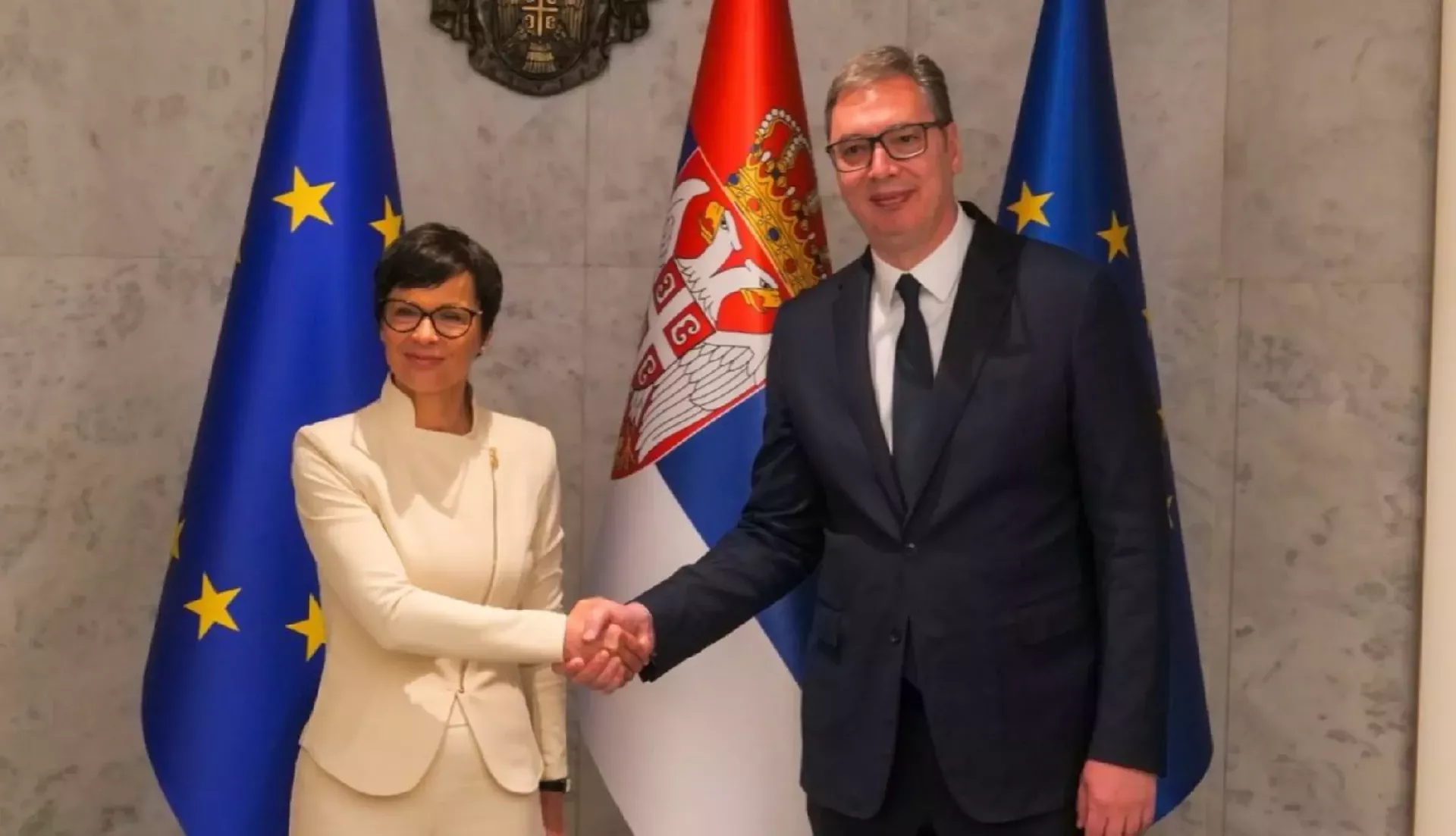
European Commissioner for Enlargement Marta Kos visited Serbia this week. The visit was intended to show Belgrade's commitment to Brussels. Shortly before that, the Patriarch of the Serbian Orthodox Church Porfirije (Prvoslav Perić) asked Vladimir Putin for Serbia to be in Russia's political orbit.
Student protests in Serbia, which have been ongoing for six months, are not just a problem for President Aleksandar Vučić. These protests have also shaken Western policy towards Serbia and the Balkans in general. The "European path" of several Balkan countries has thus been completely exposed and rendered meaningless. The simple demands of the students, who are not asking Belgrade to align with Brussels or Moscow, cannot be met because they undermine the entire policy of the great powers towards this part of the world.
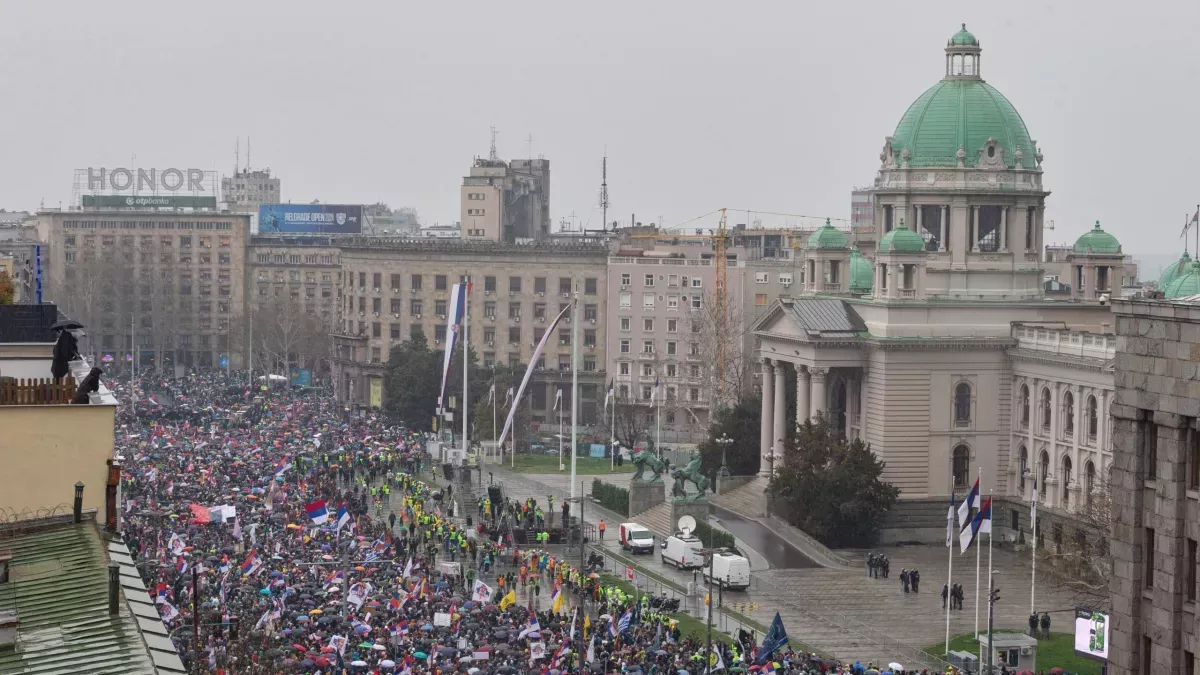
The collapse of the railway station canopy in Novi Sad led to the narrative that Vučić, or any Balkan politician, is a guarantor of stability in the Balkans during the EU accession process. Kos's visit to Serbia and Porfirije's stance in Moscow show how Brussels and Moscow view the inhabitants of the Balkans and how some Balkan leaders treat the people they rule.
Distant Russian and Brussels Worlds
In mid-February, former Serbian President Boris Tadić, while attending the Munich Security Conference, wrote on social media X that his interlocutors in that German city told him that "representatives of the Serbian delegation are feeding Western politicians information that Russian services and interests are behind the student protests in Serbia" and added that it is "absurd to simultaneously claim that a color revolution is happening and that Russia is behind it, especially considering that the progressive government has signed an agreement on the status of Serbia as an observer in the Russian defense alliance CSTO and formed a working group with Russia to combat color revolutions.”
Two months later, a complete reversal. Porfirije, whom many in Serbia see as Vučić's man, told the President of Russia that a "color revolution" is happening in Serbia and expressed hope that "this ordeal will be overcome." He asked for Serbia to become part of the "Russian world" and thanked Putin for supporting Serbia. He conveyed Vučić's greetings to Putin, adding that the Serbian president would come to Moscow on May 9th to mark the victory over Nazism in World War II.
This statement by the head of the Serbian Orthodox Church bothered some in Serbia. The majority of criticisms relate to the accusation that the students and citizens protesting are, in fact, mercenaries of Western intelligence services.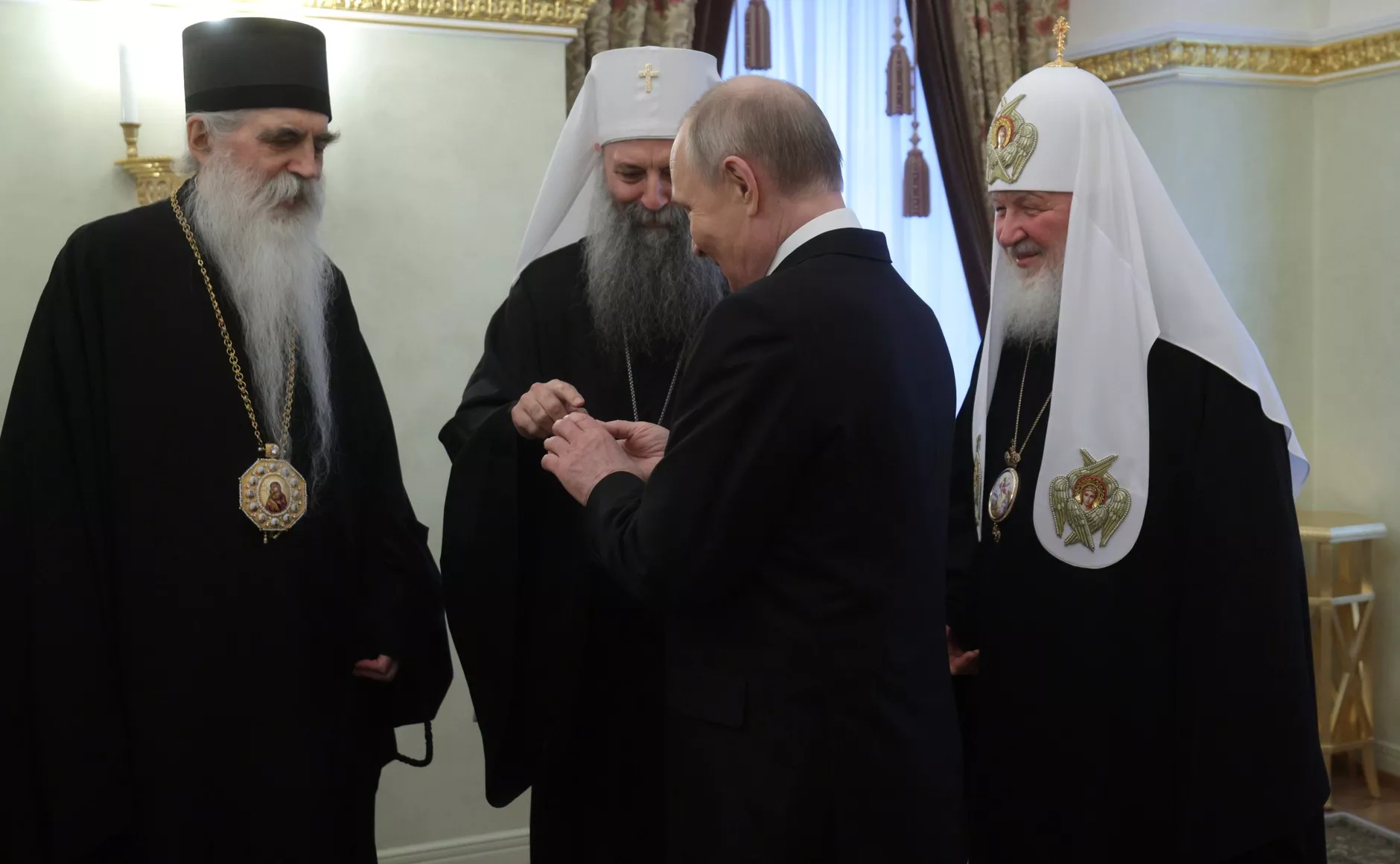
Putin with Kirill and Porfirije
This alignment with Vučić's camp and the repetition of claims by members of the Serbian Progressive Party (SNS) bothered the opposition. One of those who believes that the clergyman is conducting propaganda in favor of the regime in Serbia is MP Radomir Lazović, a member of the Green-Left Front. On his Facebook profile, commenting on the patriarch's statement, he wrote that he had asked the new Serbian ambassador to the United States, Dragan Šutanovac, a former president of the Democratic Party (DS) which Vučić blames for everything bad in Serbia, about the protests at the Foreign Affairs Committee.
“To my question about how he would present the students' fight for justice to his interlocutors in the US, the former president of the DS, and now a progressive ambassador, replied with memorized sentences from the SNS protocol for slandering student protests. He immediately started talking about the influence of Russian security services and, like a parrot, repeated the prepared example that all progressives repeat, that there are no EU flags at the protests,” Lazović wrote.
An important part of what was said in Moscow escaped the public in Serbia. Thanking Putin for supporting Belgrade's policy towards Montenegro, Kosovo, and the smaller entity of Bosnia and Herzegovina, Porfirije said that "without Kosovo and without Republika Srpska, I can say, the Serbian people have no perspective." Serbian nationalists, who are usually close to the church, did not object to the assessment that the Serbian people have no perspective without a part of Bosnia and Herzegovina that was never part of Serbia.
Porfirije did not stop there. Serbs "sometimes" place more hope in Russia than in Serbia, "centers of power from the West want to break the identity and culture of the Serbian people," and "the Serbian people see the Russian people as one." He confirmed the words of Russian Patriarch Kirill that "love for Russia... is perhaps even embedded in the genes of the Serbian people" and that what is happening with morality in the West is "demonic."
All of this was said after Putin's opening remarks in which he expressed support for the so-called "Serbian world," which is essentially an attack on the sovereignty of several states. "We know that the situation in the Balkans is not simple, and we know about your efforts to strengthen Serbia's position, including the significance of the All-Serbian Assembly you held," Putin said.
A View from Brussels
The meeting in Moscow served as preparation for Commissioner Kos's visit. Upon her arrival, official Belgrade adopted a different tone, expressing a desire to move closer to the West, meaning distancing itself from the "Russian world" and the Kremlin, which is isolated in Europe after the aggression against Ukraine, a predominantly Orthodox country that was not mentioned by the "brothers in faith" at the Moscow meeting.
Foreign Minister Marko Đurić, on the day Kos arrived in Serbia, said that Belgrade wants to fulfill the conditions for membership in the Union "by 2026." Vučić wrote on Instagram after meeting with the commissioner: "I emphasized our full readiness to accelerate reforms – not because of bureaucratic requirements, but because we believe they bring a better life to our citizens." Speaker of Parliament Ana Brnabić, after meeting with Kos, said that "Serbia's membership in the EU remains Serbia's foreign policy goal." Kos also met with Prime Minister Đuro Macut.
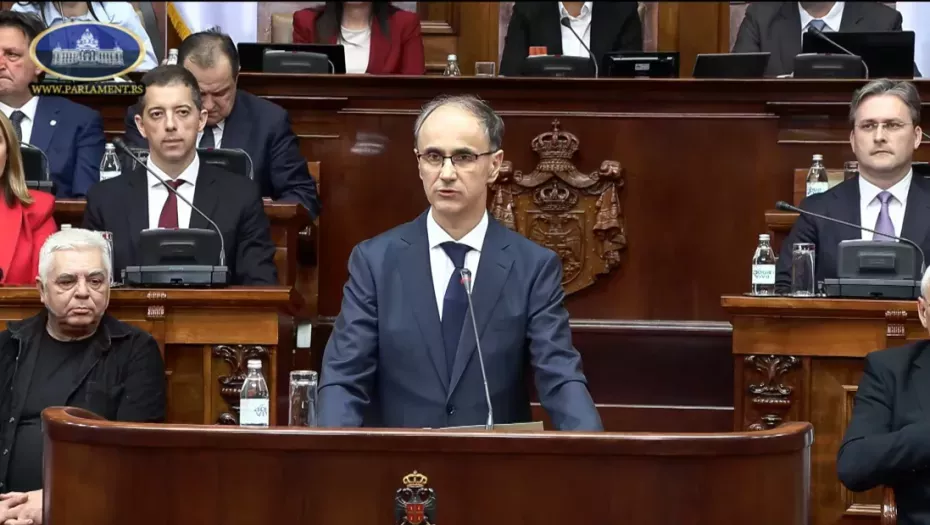
Kos spent two days in Serbia and met with various political actors, laying flowers in Novi Sad for the victims of the canopy collapse. She also met with representatives of "students who want to study." The meeting was held at the EU Delegation building in Belgrade, although there were announcements that Kos would visit the camp set up by this group in front of the Parliament and Presidency buildings of Serbia.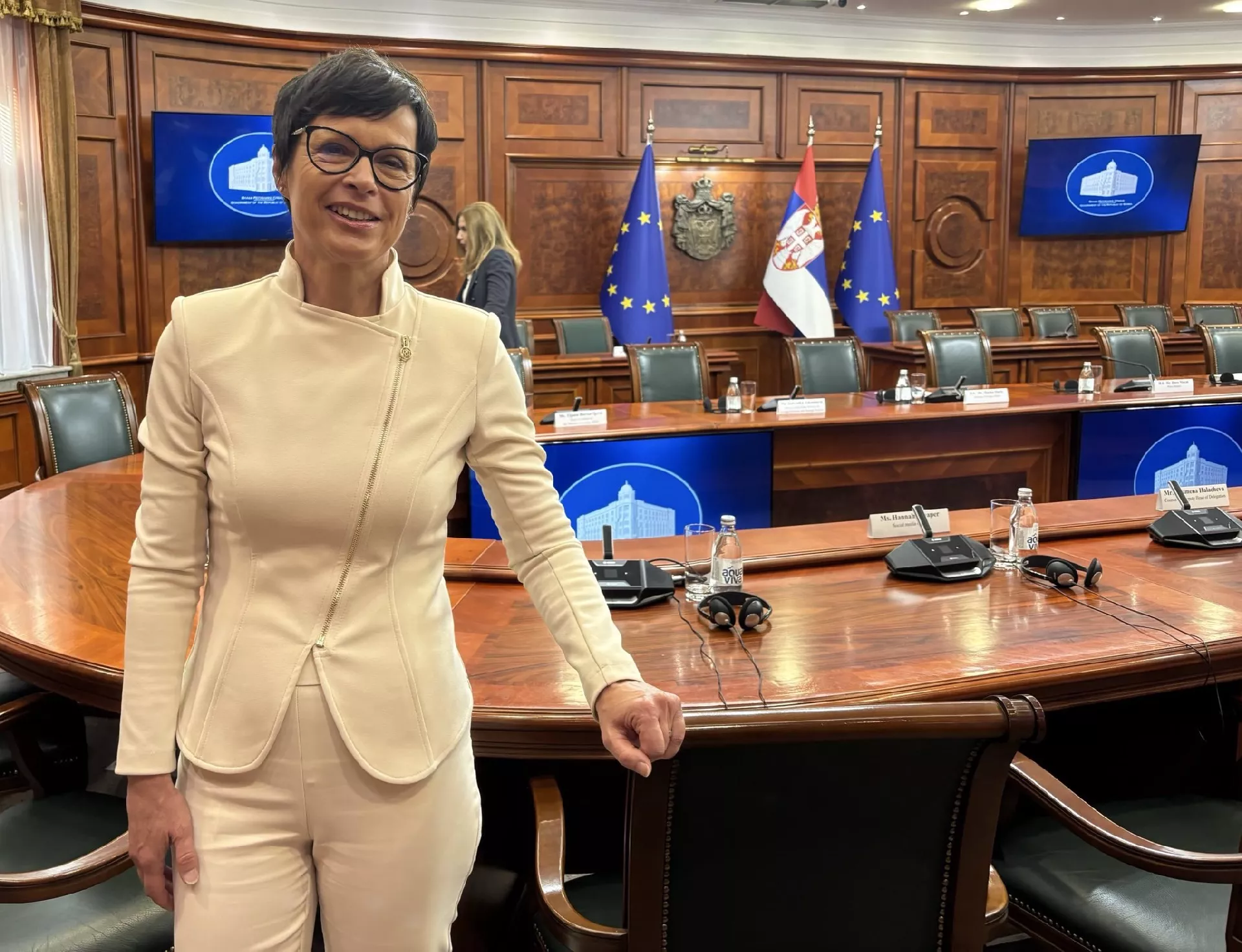
Kos: Numerous meetings in Serbia
Kos also spoke with the leader of the DS, Srđan Milivojević. After the meeting, he said that the guests from Brussels were "appalled" by what they saw in front of the parliament. Serbian media have been reporting for months that there are few students in the camp and that some of them are criminals. Also, former members of Serbian military units that fought in Croatia and Bosnia and Herzegovina are present there.
Ahmedin Škrijelj, a member of parliament from the Party of Democratic Action of Sandžak, also attended the meeting with Milivojević. He told the commissioner that Bosniaks in Serbia are not realizing their constitutionally guaranteed rights and requested mechanisms of protection for Bosniaks, as the current government is a remnant of Slobodan Milošević's regime. He called for the demilitarization of Sandžak, the conversion of military facilities in Sandžak into higher education institutions, student campuses, or sports and recreational facilities, especially regarding the planned construction of a military facility in Priboj, right on the border with Bosnia and Herzegovina, expressing support for Serbia's membership in the European Union and NATO.
Serbia on the European or Russian Path?
After the meeting with Vučić, Kos said that the "momentum" for enlargement is real and that the European Union wants Serbia to seize the opportunity. "A timely meeting with the President of Serbia. The momentum for EU enlargement is real, and we want Serbia to seize this once-in-a-generation opportunity and complete our Union," she wrote on X. To achieve this, "concrete steps on democratic principles and reforms" need to be taken, and "the time for action is now," she wrote.
What kind of reforms is Brussels demanding from candidate countries? Kos stated that Serbia is expected to have free and democratic elections, improve the media situation, and that Brussels' demands align with the students' demands. Otherwise, Kos said during her visit to the Dr. Zoran Đinđić Foundation, Serbia's European path will be halted.
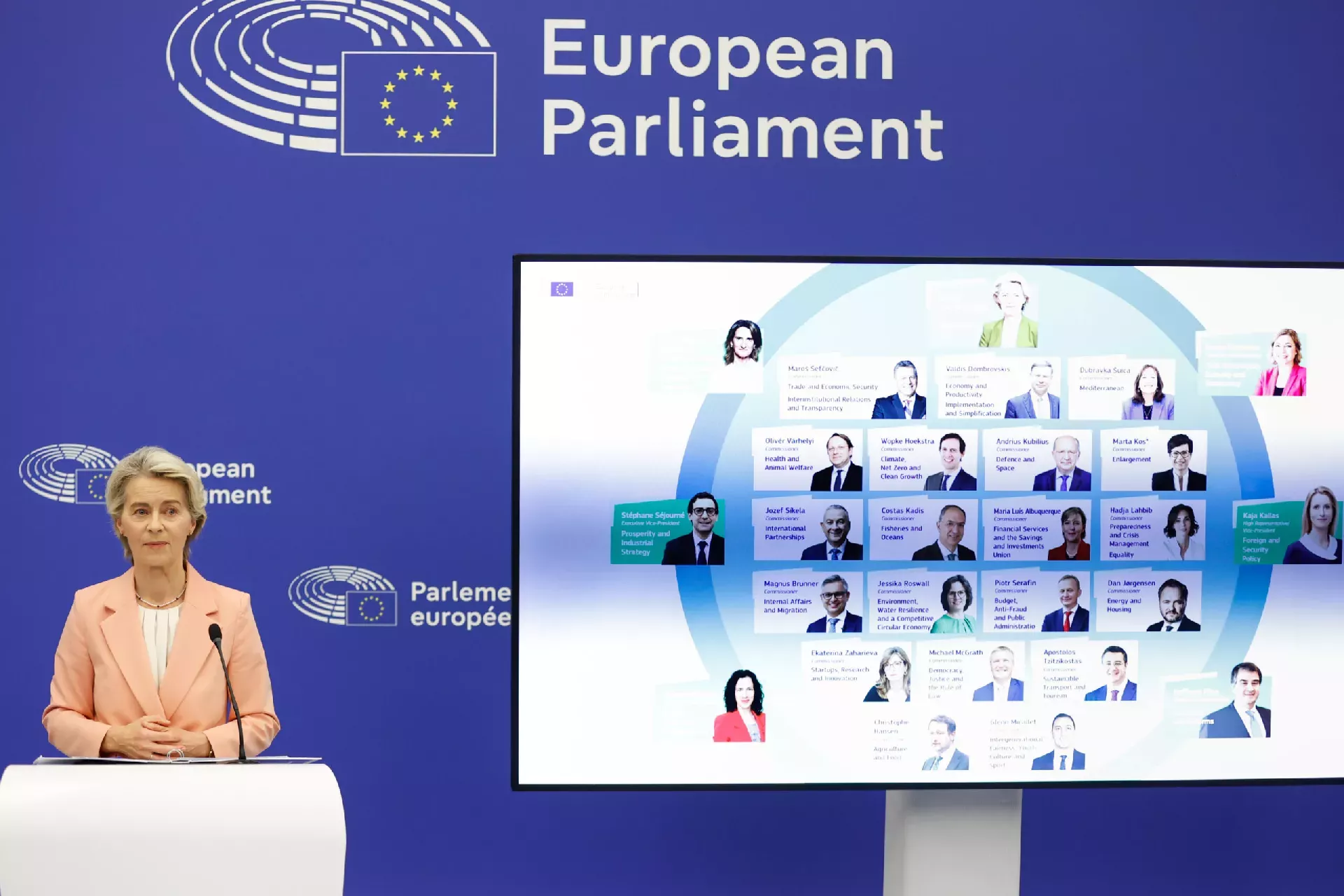
The hosts at the Foundation warned Kos "about media campaigns in pro-government tabloids that have led to six citizens being in custody for fifty days, while another six are in EU countries – the only zone they currently perceive as safe – due to threats of detention." On the second day of the commissioner's visit, opposition politician Marinika Tepić was attacked on the street.
Although some in Serbia have assessed Marta Kos's messages as encouraging, it is not enough to change anything significant. It is clear that Vučić will not allow free and fair elections, his close media will not stop their shameful attacks on anyone who offends him, and Belgrade will not stop treating its neighbors according to the principles of the "Serbian world," which Putin supports and Porfirije advocates. And why would he? The penalty for this, according to Marta Kos, is the end of Serbia's European path.
Komentari (0)
Prijavite se za komentiranje
PrijavaJos nema komentara. Budite prvi!
Minuta
Sve →Iz drugih kategorija

High Representative Not Elected: Germans, French and British Sabotaged Americans, New Attempt at End of June

ČOVIĆ WITHOUT MERCY: How Those Who Brought Ademović to Office Created a Political Hell for Him



Sunny Saturday, quite warm



Tragedy in Albanian resort: Two minors drown












