
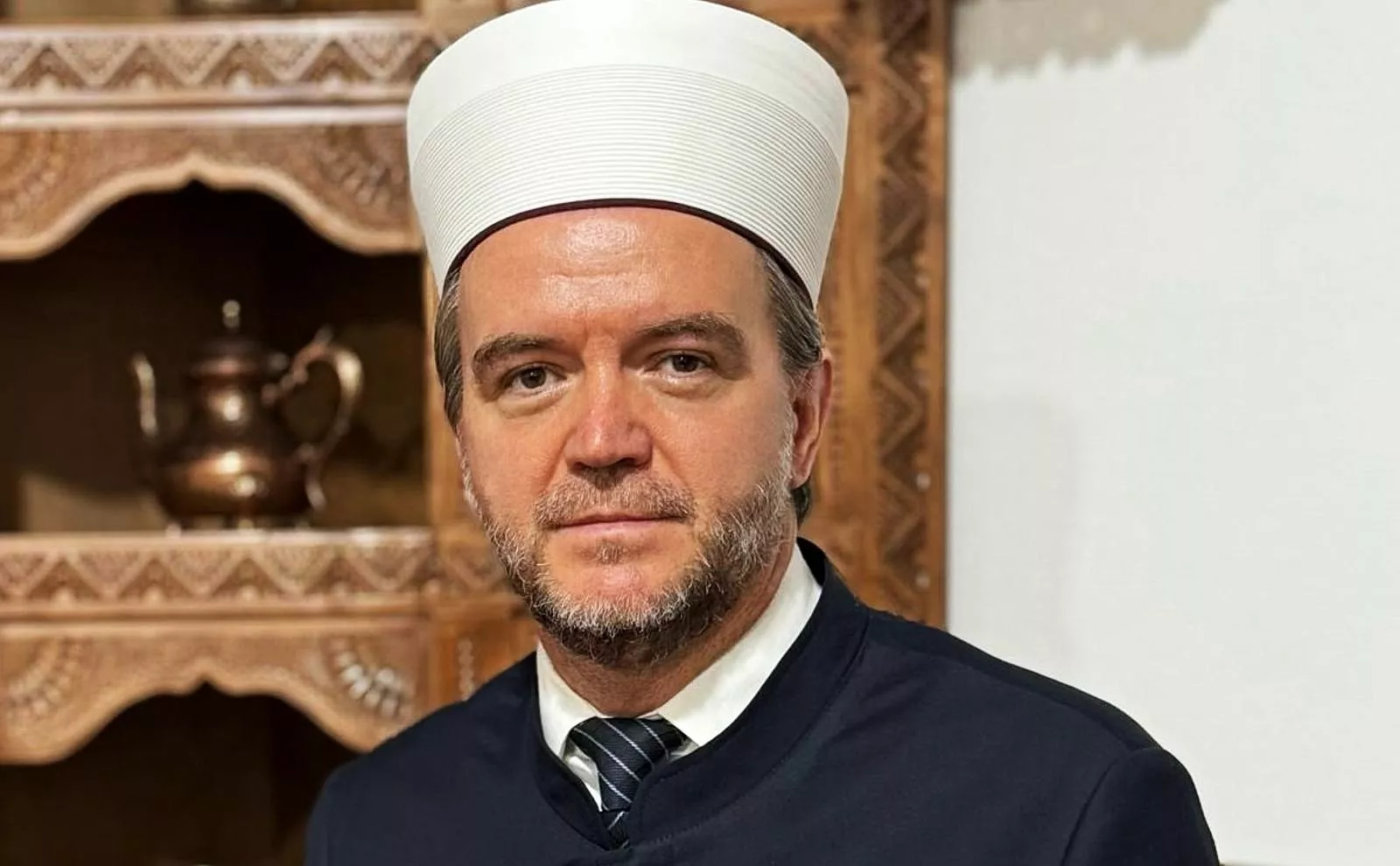
(Patria) - This year's Ramadan brought a special atmosphere to Bosniaks in the diaspora – full mosques and an increasing number of young people in them, testifying to the key role of the Islamic Community in preserving religious and cultural identity outside their homeland.
We discussed this trend, integration challenges, community organization, and the fight against Islamophobia with Senaid-ef. Kobilica, advisor to the reisul-ulema for Western Europe.
In an interview with MINA Agency, he gladly highlights the growing involvement of young people in religious life, especially during Ramadan.
"In the environment and atmosphere in which we live, we must not take the interest and presence of young people in larger numbers lightly. First of all, this fact should make us happy, especially those of us who have children and youth," he says, emphasizing that older generations often find it difficult to understand the rapid changes and challenges that young people face.
According to him, social networks, which are the living space of young people today, offer a "toxic offering full of confusion and insecurity," which leads them to seek alternatives.
"That is precisely the moment when they need to be offered another space and another environment," believes Kobilica, convinced that the presence of young people in mosques shows their vigilance and need for belonging.
Speaking about integration, Kobilica emphasizes that the Islamic Community recognizes the complexity of the situation in which young people grow up, facing assimilation pressures.
"Precisely, the Islamic Community and its leaders recognize the complexity of the times and the environment in which today's young person lives, dedicating their human and financial resources to working with youth through a fairly open and flexible approach," he explains.
The key lies in dialogue: "The time of monologue, exclusivity, and imposing rules is over. It is time for dialogue and two-way communication," he states, adding that such an approach allows young people to build a stable identity that connects them to their homeland and the society in which they live.
As a long-time actor in the work of the Islamic Community in the diaspora, Kobilica observes progress, but also serious challenges in organization.
"We are a very good and smart people. Sometimes we are better and fairer to others than to ourselves," he says.
He also pointed out the paradox that Bosniaks appreciate the organized systems of the countries they live in, but often neglect the need for the same standards within their own communities.
"We have 30 to 40 years behind us since the establishment of jamaats in all Western European countries. We also have almost 25 years of active headaches for Muslims in the Western world behind us," he recalls, referring to the period after September 11 and the terrorist attack on the USA, and warns that fragmentation continues to cost the community.
However, the last few years have brought progress.
"Of course, I must say that progress has been felt in the last two to four years. Jamaats are sending positive signals, and in several countries, concrete steps are being taken towards organizing and strengthening umbrella organizations," Kobilica points out, emphasizing the importance of communication with the Riyaset of the Islamic Community in Bosnia and Herzegovina and strengthening institutional ties with the homeland, especially in light of the new wave of emigration from BiH.
The transition of responsibility in organizing and leading jamaats to younger generations is a process that, as Kobilica says, is still difficult to assess.
"I think it is too early to talk about a successful transition. This would have to be mapped," he warns, calling for greater youth involvement in leading communities.
Islamophobia remains a reality that Bosniaks face, and Kobilica sees the solution in cooperation and dialogue.
"As much as it is important to advocate for the strengthening of umbrella organizations, it is equally important to join platforms at all levels that bring together, not only other Muslim communities but also other religious communities," he says, adding that such platforms enable meetings with state officials and more effective addressing of prejudices.
Looking ahead, Kobilica emphasizes the need for a change in priorities.
"We can be proud of our Bosniaks regarding the allocation and investment in mosque centers," he says, praising the results in the field of waqf property.
Although he praised investments in mosques and Islamic centers, Senaid-ef. Kobilica also warns of a serious challenge he has witnessed through his fifteen years of experience leading the umbrella organization of all Muslims in Norway.
"What is the point of impressive Islamic centers without qualified and quality imams?!" Kobilica asked.
In his opinion, investing in people, not just infrastructure, must be the focus in the coming years, while ensuring continuity through youth engagement.
At the end of the conversation, Senaid-ef. Kobilica sent a message to Bosniaks in the diaspora and the homeland.
"Eid is a time of joy, peace, and togetherness, and as such, it brings an opportunity to gather around common values and traditions," he says, calling for strengthening unity and institutional ties.
He congratulated Bosniaks, both in the homeland and around the world, on the upcoming blessed Eid days.
"May this Eid bring us peace, love, and harmony! Eid Mubarak!" he concluded, emphasizing that Islamic values are the foundation of identity that makes the community resilient to all challenges.
Komentari (0)
Prijavite se za komentiranje
PrijavaJos nema komentara. Budite prvi!
Minuta
Sve →Iz drugih kategorija

High Representative Not Elected: Germans, French and British Against Americans, New Attempt at End of June

ČOVIĆ WITHOUT MERCY: How Those Who Brought Ademović to Office Created a Political Hell for Him



Sunny Saturday, quite warm



Tragedy in Albanian resort: Two minors drown












