
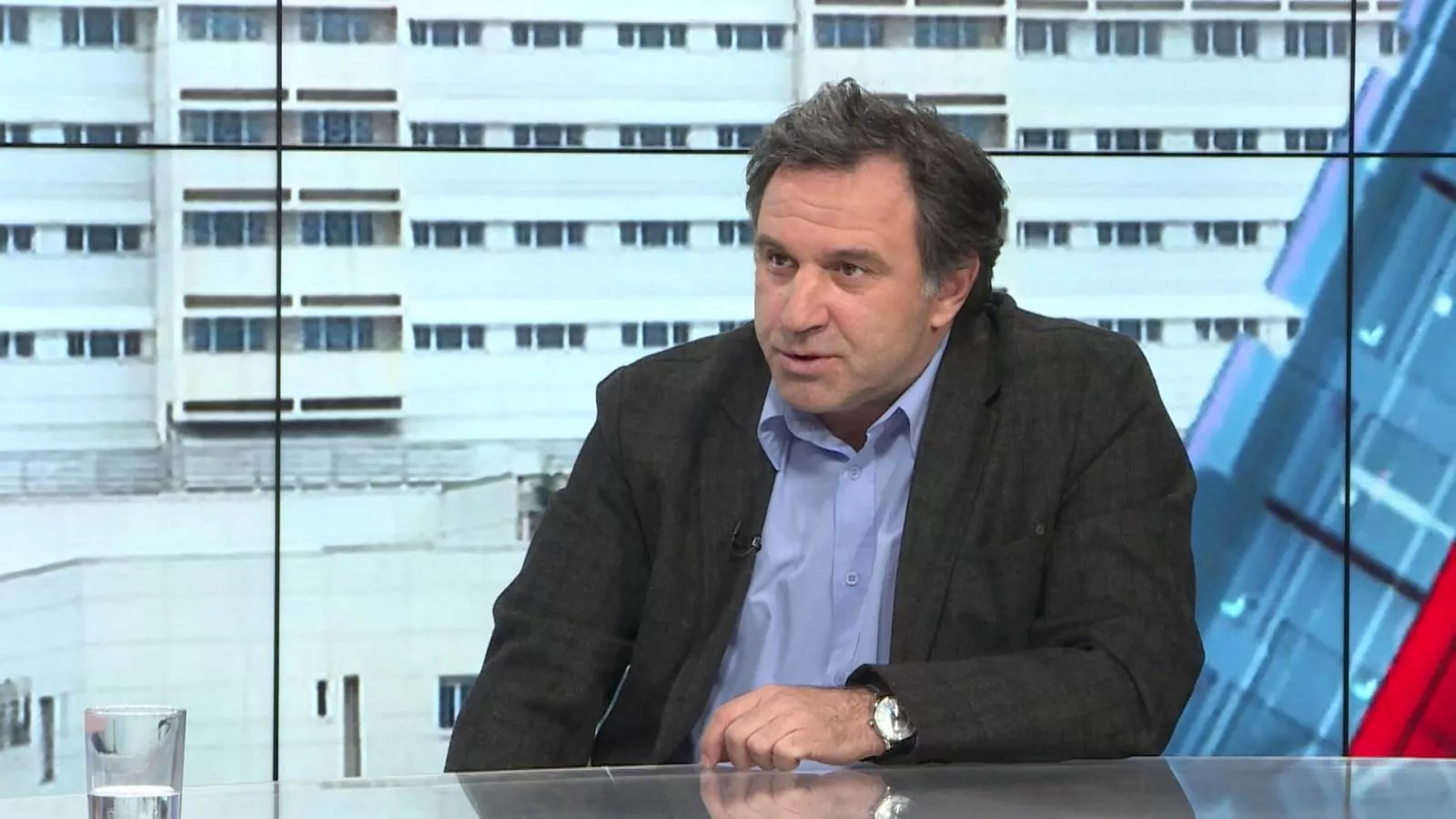
By Professor Kemal Dizdarević
I will try, by examining current and 'viral' issues, to present facts and thoughts about SARS-CoV2 and what is called Covid-19.
1. What is useful to know about the biological characteristics of this virus, its scientific classification and origin?
2. What is the impact of SARS-CoV2 on the human body?
3. Is SARS-CoV 2 similar to the flu virus, is there a new pandemic at all, should one be tested and isolated?
4. What is the role of drugs and vaccines?
5. Respirators - ventilators?
6. What is happening in Italy?
7. Is this pandemic comparable to other viral pandemics of the twentieth century?
8. Collective immunity?
9. What is Mr. Trump saying again?
10. How to move forward?
1. Viruses can only be seen under an electron microscope (20-300 nm). They are made of genetic material that is virulent, consisting of nucleic acid (RNA or DNA) and a protein coat (capsid) with antigens typical for a specific virus. Viruses lack two essential characteristics of living things: they lack their own metabolism and cannot reproduce on their own. They need a living cell of the attacked host to survive.
The first human coronavirus (HCoV-229E) was isolated back in 1965. Coronaviruses attracted little attention, but in 2003, there was a sudden change as SARS-CoV 1 and MERS-CoV were recognized as causes of serious human respiratory infections.
Viruses are generally classified into orders, families, subfamilies, and genera. The family Coronaviridae is one of three families of RNA viruses within the order Nidovirales. Coronaviridae consist of two subfamilies: Coronavirinae and Torovirinae. The latter causes intestinal infections in animals (horses, pigs, goats, cats). All coronaviruses have the same morphology and possess single-stranded RNA with the largest genome among RNA viruses. They got their name because their surface looks like a crown.
The subfamily Coronavirinae is divided into four genera: alpha-coronaviruses (human viruses HCoV-229E and HCoV-NL63, and animal viruses including bat viruses), beta-coronaviruses (SARS-associated coronavirus, MERS-coronavirus, and animal coronaviruses including bat viruses), gamma-coronaviruses (whale and bird viruses), and delta-coronaviruses (pig and bird viruses).
Several new coronaviruses were isolated from bats in 2005. According to the current understanding of virology, human respiratory coronavirus, SARS coronavirus, and MERS coronavirus originated from mutations of bat viruses.
2. SARS-CoV2 spreads when small droplets containing the virus are expelled from the respiratory tract of an infected person into the air by sneezing or coughing, and are inhaled or land on another person's hands, which are then brought to the mouth or nose. After that, viral particles (virions) bind to receptors on the surface of cells, which is a prerequisite for them to enter the cell and replicate within it. More precisely, the virus introduces its genetic material (RNA) into the cell, using its metabolism to achieve only one goal: survival through multiplication. The body begins to react to the virus through an immune response, which induces the development of symptoms and signs. If the virus penetrates the lungs, a battle between the immune system and the virus occurs at the level of the alveoli (the most distal parts of the respiratory tract where gas exchange occurs – the intake of oxygen and removal of carbon dioxide). The vast majority of patients recover because the immune response wins, while patients with pre-existing serious conditions such as certain heart and lung diseases, as well as diabetes, and the immunocompromised (chemotherapy, long-term use of interferon and steroids, various diseases that weaken the immune system, etc.) can develop a severe clinical picture, and even, in rare cases, die. There is usually no encephalopathy, which is important because it indicates the low pathogenic potential of this virus.
3. SARS-CoV2 resembles the flu virus in many characteristics. The flu virus is an RNA virus that causes epidemics and is easily transmitted through droplets, direct contact, and dirty hands. A severe clinical picture can develop in the elderly with significant comorbidities. Pneumonia is a characteristic of complicated cases. However, the flu virus appears to be more dangerous than SARS-CoV2. Last year, it resulted in 3-5 million severely ill people and 290,000 to 650,000 deaths!!
At the time of writing this text, the total number of infected people with SARS-CoV2 is 470,000. Only infected, not severely ill. According to reports, 21,031 have died. The method of reporting and diagnosis in different countries around the world is not standardized, which means it is likely neither accurate nor comparable.
It is necessary to clearly distinguish pathogenicity, colonization, infection, and developed infectious disease. Pathogenicity is a genetically determined characteristic of a microorganism to cause disease. SARS-CoV2, as it appears now, has lower pathogenicity than the flu virus. Colonization means the presence of the virus, but there is no infection, nor disease caused by the virus. Viral colonization will result in a positive test; for example, a patient has heart decompensation and difficulty breathing due to it. They die soon. It will be declared that they died of coronavirus, even though colonization did not lead to infection, let alone viral disease. The patient actually died of heart disease. Infection means the activity of the virus in the body and its replication in cells, but no clinical signs and symptoms of the disease appear. Usually, the patient becomes immunized to the virus through infection and becomes resistant to re-infection. Infectious disease is characterized by the body's fight against the virus, antibodies to the virus are produced as a result of this fight, and there are clear clinical signs and symptoms that reflect tissue damage. In the case of SARS-CoV2, the clinical picture does not differ much from the flu. When a doctor tells you they won't test you because your temperature, cough, sneezing, shortness of breath, and general weakness are not clinically related to coronavirus, then they don't really know what they're talking about. But when they say they won't test you because they don't believe in these tests and that they contribute to the general confusion, then you can think that they have some kind of stance and that they are approaching things by trying to understand them.
In such undifferentiated paranoia and real misunderstanding of the situation, my suggestion is to perform testing. Identify those who are positive for coronavirus (even if they are false positives, as these PCR tests are prone to false results), and isolate them along with their contacts. This is a much more logical approach than stopping the planet, closing down the country, preventing people from going out completely, threatening them with prison, spying on them, publicly announcing their names and declaring them irresponsible, forbidding young people under 18 from even sticking their noses out of their parents' homes, etc. At a time when significant pressure on the healthcare system is expected due to the large influx of patients into hospitals, isolation makes sense. Even strict isolation. But I ask you, where are the corona patients in the hospitals. Everything was done to keep patients away from KCUS as the largest healthcare institution. It created isolation wards above and below, even to the right and left, practically forbade patients from approaching the hospital, confined people to neighborhoods and stairwells to suffer more from fear than from the corona, and at the same time bravely fought for every one of their lives through billboards. And there's not a soul to be seen. They must have been tested. Multiple times.
4. Vaccines are lacking, but that all-powerful pharmaceutical industry will develop one in a maximum of 18 months. I emphasize that antibodies that show neutralization of this virus in vitro have already been isolated by Dutch scientists. If they prove safe for human application, these antibodies can defend the body against the virus through passive immunization (most people don't need it at all). Vaccination is the controlled administration of pathogen (virus) antigens to activate the active immunization mechanism in the body. The body's immune cells remember the antigens previously introduced by the vaccine, and in case of infection, which actually means accidental and uncontrolled introduction of the pathogen and its antigens into the body, they begin to produce appropriate antibodies themselves, thus destroying the virus in the body.
The uncritical and widespread use of flu and corona virus vaccines in the general population is highly questionable. Vaccination against quarantine diseases with high pathogenicity and mortality regardless of age and comorbidity is a completely different matter. The discovery of these vaccines and their rational use is the foundation of modern public health and one of the great achievements of medicine.
There is no specific antiviral drug for SARS-CoV2! Antibiotics are often used even for primary viral pneumonias because they can be prone to secondary bacterial infections. Other drugs mentioned or promoted in various medical reports, even in reference medical journals, are often aggressive medical agents that carry significant side effects.
5. A respirator (an anachronistic and incorrect, but colloquial term) enables mechanical ventilation that can partially or completely replace lung function. In fact, the correct term is a medical ventilator! Today's ventilators have the ability to adjust various parameters, some of which can be mentioned here: tidal volume, respiratory rate, oxygen percentage, and PEEP (positive end-expiratory pressure).
We are talking about three basic forms of mechanical ventilation: controlled breathing (the patient does not breathe at all on their own), assisted breathing (the patient initiates inhalation, and the ventilator completes it), and spontaneous breathing (the patient breathes on their own, while the flow and volume are determined by specific needs). Invasive mechanical ventilation via an endotracheal tube or tracheostomy tube is the standard today for most patients. Non-invasive positive pressure ventilation does not use a tube and involves the use of continuous positive pressure. The connection between the patient and the ventilator is made, in this case, by a nasal or oronasal mask.
The most common indication for mechanical ventilation is acute respiratory failure characterized by insufficient oxygenation and reduced CO2 removal. It occurs in neuromuscular diseases, damage to the respiratory center in the brain, and lung diseases. Mechanical ventilation saves lives in indicated cases, but its prolonged use often causes complications. A significant complication of mechanical ventilation is pneumonia. More precisely, ventilator-associated pneumonias are the most common infections in intensive care units. An elderly patient with viral pneumonia, systemic diseases, and pre-existing chronic obstructive pulmonary disease, placed on a ventilator, very rarely gets weaned off it!
6. Italy. Reports are contradictory, but let's state the key elements that are emerging or known. Northern Italy is a dynamic and very busy tourist region, densely populated, with a high percentage of the elderly population and a social style characterized by close contact, so a higher percentage of infections and a slightly higher percentage of deaths are expected. The average age of the deceased is over 80 years. However, a particular problem is clearly visible here: the 'too much medicine' approach. Reports from relevant medical journals indicate a very aggressive approach that includes not only more frequent use of ventilators but also the use of various types of medications that carry potentially significant side effects, especially for the elderly population. When you put an eighty-year-old on a ventilator, administer steroids and antiviral drugs used for HIV, and interferon, the chance of developing complications is very significant.
If I am forced to ask an anesthesiologist to put an 80-year-old neurosurgical patient on a ventilator, I already know that weaning them off it has completely different implications than for a fifty-year-old. Steroids (glucocorticoids) reduce the inflammatory response, but also the body's defense response. The aggressive drug Lopinavir, an HIV inhibitor (cause of AIDS), in combination with Ritonavir, has been used quite often. There were clinical indications that this combination helped in the case of SARS-CoV 1 and MERS-CoV. However, a recently published randomized, controlled study showed that this combination does not benefit patients (Cao B, Wang Y, Wen D et al: A Trial of Lopinavir-Ritonavir in Adults Hospitalized with Severe Covid-19. N Engl J Med. 2020 DOI: 10.1056/NEJMoa2001282).
It seems to me that the 'overmedication' effect has particularly come to the fore in dear Italy.
7. What the WHO (World Health Organization) has declared a pandemic is not comparable to the major pandemics of the twentieth century. The Spanish flu pandemic claimed between 20 and 100 million people (1918), the Asian flu 2 million (1958), the Hong Kong flu one million (1968), the swine flu (H1N1), which I myself suffered from while on my feet, about 300,000 people (2009), etc. Again, I emphasize that last year, according to the WHO, between 290,000 and 650,000 people died from the flu!! I am not citing these statistics to trivialize the number of deaths associated with SARS-CoV2, but to connect the current political recommendations for complete and absolute isolation with the real seriousness of the current pandemic.
8. Collective immunity means that the majority of the population has immunity to a pathogen as a result of that pathogen passing through the population, either due to infection or infectious disease. The only long-term way to defend against new infections, along with vaccination if justified, is the development of collective immunity.
9. 'Mr. Trump fell back on his comparison of the coronavirus to the flu, saying that despite losing thousands of people to the flu, "We don't turn the country off." He also said that more people die of automobile accidents, but nobody forces car companies to stop manufacturing vehicles.'
In this regard, I would say that if all neurosurgical operations in the world were constantly and meticulously followed by the media, no one would agree to be operated on, or in other words, if all details of traffic accidents in the world were recorded, analyzed, and presented in numbers, it is questionable whether people would be willing to drive cars. Media pressure, political manipulation, the unusual strategy of the WHO, lack of synthesis and rational thinking, and the aroused fear of the unknown have absolutely confined people and stopped the planet.
10. We need to think. Systematically, based on facts and first-class evidence. We need to act, but without threats of prison, please. Test, and only to isolate positive cases and their contacts, not entire communities. Test, even if the tests are false positives. Practice rational social distancing and maintain hygiene. Do not trust Sebija because she has ulterior motives. And for starters, stop irrationally fearing the coronavirus. Its crown looks fake to me. And besides, it is less dangerous than the flu.
Komentari (0)
Prijavite se za komentiranje
PrijavaJos nema komentara. Budite prvi!
Minuta
Sve →Iz drugih kategorija

High Representative Not Elected: Germans, French and British Against Americans, New Attempt at End of June

ČOVIĆ WITHOUT MERCY: How Those Who Brought Ademović to Office Created a Political Hell for Him



Sunny Saturday, quite warm



Tragedy in Albanian resort: Two minors drown












