Written by: Rasim Belko
Amir Pašić Faćo, once a well-known figure from the BiH underworld, now in the role of a TikToker with a criminal background, was arrested on the night of November 20, 2023, for threatening a judge of the Municipal Court in Sarajevo on the social network TikTok.
Without delving into the essence of this case, or the merits of whether and how Faćo threatened the judge, it is somehow devastating that we daily hear attacks on both judges and the judicial system, i.e., courts and prosecutor's offices.
Amir Pašić carries the burden of the past, and that is why detention is proposed for him expeditiously, while political leaders who even lead processes concerning the entire judiciary commit far more serious offenses, far more severely threaten security, and ultimately undermine the system, without punishment.
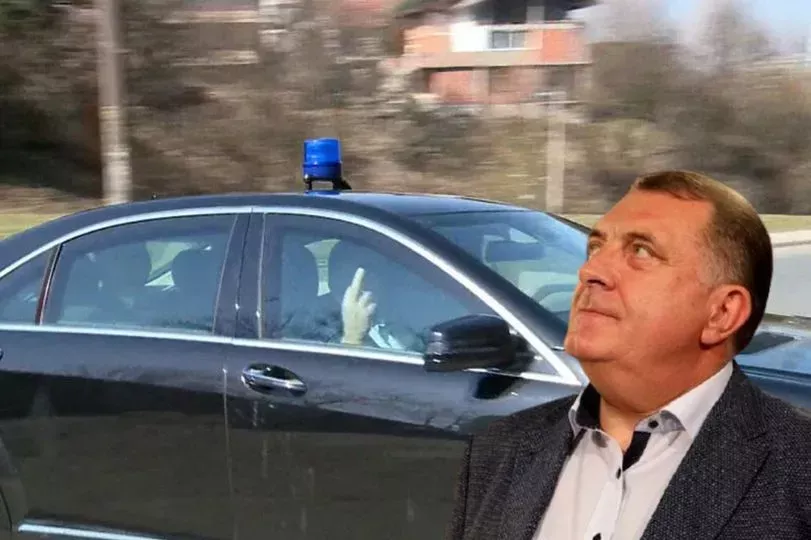
Milorad Dodik chooses when he will be tried, and often at press conferences uses media space to insult judges based on their religious or ethnic affiliation. Thus, in his latest appearance, the President of the RS and one of the three who manage state power said that only Muslims are judging him, which is a continuation of earlier remarks that the Court of BiH is a “Bosniak court,” that “the Court and Prosecutor's Office of BiH are not constitutional,” and the like.
Is this not in some way threatening the judges of the State Court, because their knowledge and professional credibility are reduced solely to the fact that Muslims are judging him as an Orthodox Christian, Bosniaks as a Serb, judges of the Court of BiH as the President of the RS, thereby, according to Dodik's statements, threatening the entire Serbian people and the entity as a whole.
Justice in Bosnia and Herzegovina has long been selective and since Dayton has not touched the ringleaders of political and all other processes. The role of the judiciary is more focused on protecting these ringleaders, responsible for crime, atrocities, instability, and intolerance. They are allowed to enter through the VIP entrances of the Court of BiH, as if they were some high-ranking guests from the outside world, and not defendants being tried for various forms of illegality and ultimately for undermining the Dayton framework for Bosnia and Herzegovina.
The credibility of such a judiciary has long been at the bottom of the scale, and the fact that the European Union ranks us at the very top of corrupt countries speaks volumes about how well that judiciary does its job.
And the corrupt in Bosnia and Herzegovina do not have the epithets of the criminal milieu; they are gentlemen we make way for on the roads and in all other situations, because they are our presidents, ministers, directors, in short, leaders. That is why they are treated in the BiH judicial system as a protected species, for which we ultimately received confirmation when former Chief Prosecutor Gordana Tadić said she could not prosecute high-level corruption.
Neither her predecessors could prosecute it, nor does her successor prosecute it. Because, if they did, Bosnia and Herzegovina would be left without presidents, ministers, directors, ultimately without leaders.
But instead, that judiciary spectacularly conducts operations against all those who do not have the protection of the state and the corrupt. Such individuals are arrested with pre-prepared media plans and operations announced several weeks in advance. Before their lawyers, the BiH public learns what they are accused of, the evidence, and everything else, because even in these cases, the judiciary is not concerned with law and justice, but with proving guilt in the media. Any other engagement with the law afterward is superfluous.
The story of war criminals is a special cancerous wound of the BiH judiciary, which loses defendants in various ways, indicts them at the dictates of the aforementioned corrupt leaders, and so on. Thus, we have a situation where members of the only legal military formation during the aggression against BiH, the Army of the RBiH from Sarajevo, Bihać, and Goražde, are massively on the defendant's bench, while terrorists who sowed death in these and other cities are free or even within the institutions of the system.
It has been rotten for a long time; small-time dealers, thieves, and an honest person if they stray a little have long become objects on which judges and prosecutors in Bosnia and Herzegovina meet their quotas and statistics. Everything else is beyond their reach, because rare are the judges or prosecutors who come to positions to build careers as successful enforcers of law and justice.
Our judiciary is chosen, led, and controlled by corrupt political leaders with a legacy of war crimes. The procedures by which they do this are tied to the war legacy, ethnic affiliation, and suitability. And as long as that is the case, Faćo will be in custody, and Dodik or Mićo Kraljević will be free!
After all, it is clear that Bosnia and Herzegovina as an orderly state can only come to life when we radically change all existing rules in its system. Until then, we will read all sorts of reports and wonder why Chișinău is closer to Brussels than Sarajevo.
Someone turned off the light long ago, and we argue in the dark over whose counter it is. That is why we are condemned to a dark judiciary and society as a whole.
Komentari (0)
Prijavite se za komentiranje
PrijavaJos nema komentara. Budite prvi!
Minuta
Sve →Iz drugih kategorija

High Representative Not Elected: Germans, French and British Against Americans, New Attempt at End of June

ČOVIĆ WITHOUT MERCY: How Those Who Brought Ademović to Office Created a Political Hell for Him



Sunny Saturday, quite warm



Tragedy in Albanian resort: Two minors drown












