
Analysis by Patria Agency
We have often heard various stories from different Slovenian officials about how they want to help us on the EU path, how they offer their experts in this regard, how they stand by Bosnia and Herzegovina in all efforts to transform it into a democratic country, or even various stories about economic and every other form of cooperation.
All of this sounds very nice, especially when we look at all those respected names who have spoken in superlatives about Bosnia and Herzegovina. Of course, we have not forgotten those small-time Slovenian profiteers, who had a family company with two employees, yet applied for million-euro tenders in Bosnia and Herzegovina, which they very willingly and profitably sold to some domestic companies or brought them in as subcontractors.
We especially have not forgotten that famous Janša non-paper on the reorganisation of the Western Balkans, in which we, Bosnians and Herzegovinians, would be left without a country, because a right-wing Slovenian played a bit with geopolitics. In fact, the history of Slovenia's relations towards Bosnia and Herzegovina is varied; it cannot be reduced to our standard 'black and white' because both leftists and rightists, as well as those from the political centre, have their different ideas regarding Bosnia and Herzegovina.
The only question remains: how much of all this is in the interest of our state, Bosnia and Herzegovina.
Then there appears that strange and unprovoked request by Christian Schmidt, in the role of High Representative, through a British law firm, to be included in the 'Kovačević' case as a third party, so that he could personally explain to the European Court of Human Rights that the application of the European Convention on Human Rights leads this country into new conflicts, and even a possible war.
According to Schmidt, the protection of human rights and fundamental freedoms initiates wars, while the protection of peace is only possible through systemic discrimination. Although such a stance by the High Representative, or perhaps even the private individual Christian Schmidt, to appear before the European Court of Human Rights, triggered an avalanche of opposition from both domestic and a large part of international actors, we come to the key question.
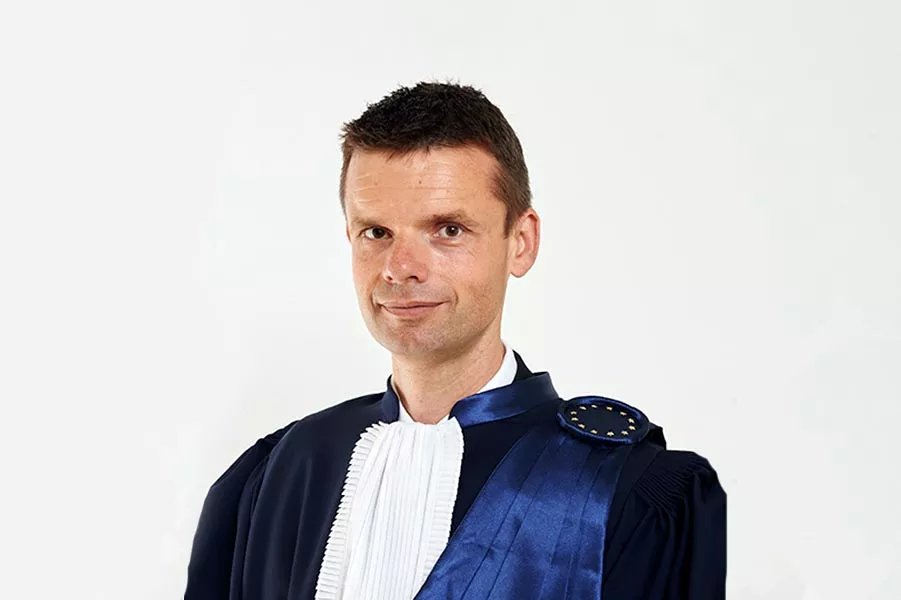
How is it that a Slovenian, albeit the President of the European Court of Human Rights, named Marko Bošnjak (with a very striking surname), approves such intentions of Christian Schmidt so swiftly, within less than 24 hours?
Perhaps that very Slovenian, from that very Slovenia which assures us of its unconditional friendship and support, has some other, personal agenda, based on Janša's non-paper, by doing everything to ban democracy in Bosnia and Herzegovina, at any cost, even if it means creating such case law eagerly awaited by various separatist movements across Europe, wishing to secede from their home countries.
Whether that 'friend' Slovenian, temporarily working as President of the European Court of Human Rights, is aware of the consequences of his decisions and what they could mean, not only for the Western Balkans but for all of Europe, remains unknown to us.
How else to interpret that after the portal istraga.ba published Christian Schmidt's request to be allowed to participate as a Third Party in the 'Kovačević' case with clearly stated limitations, such as that he cannot enter into the merits of the case, our 'friend' from Slovenia, temporarily working in Strasbourg, lightly allowed it without any reaction, and, of course, Schmidt coldly entered into the merits of the case even though our 'friend' the Slovenian explicitly forbade him?
How, besides that, to interpret and understand that 'friendship' of Slovenia, when its judge at the European Court of Human Rights, currently serving as President, so lightly allows the so-called agents of the Council of Ministers to address him, even though their mandate expired long ago during the entire proceedings in the 'Kovačević' case and they had no authorisation to act before the European Court of Human Rights?
Perhaps this is an expression of some friendship that we still do not understand, because our 'friend' the Slovenian, as President of the European Court of Human Rights, allows all sorts of things, all in favour of neighbouring Croatia (he probably forgot the case of the Bay of Piran), which so ardently wants to seize part of Bosnia and Herzegovina's sovereignty, through that phrase 'legitimate political representation of constituent peoples' which does not exist in any member state of the Council of Europe.
In the way of that impossible phrase, which does not exist anywhere in Europe, stands precisely the 'Kovačević' ruling, which apparently does not please our 'friend' the Slovenian, so he allows all sorts of things, calling into question the reputation of the European Court of Human Rights itself.
It is difficult to understand and accept the logic of the 'friend' Slovenian, Marko Bošnjak, whose now visibly active efforts to overturn the 'Kovačević' ruling are eagerly awaited by Plenković and Vučić together.
The first to seize sovereignty from Bosnia and Herzegovina, and the second to do the same to Montenegro, and North Macedonia is not far from that scenario either. However, the question remains, what will then happen with Catalonia, South Tyrol, Flanders, Scotland, and similar parts of other countries, where separatist movements are eagerly waiting for active voting rights, as a direct expression of democracy, to be slightly ethnically arranged according to the principles of the 'friend' Slovenian, Marko Bošnjak, so that they can initiate and realise their separatist ideas.
And we, Bosnians and Herzegovinians, should abandon those various stereotypes that everyone is our friend, when the work or activity of those alleged friends regarding Bosnia and Herzegovina speaks precisely the opposite. Come to your senses, Bosnians and Herzegovinians.
Come to your senses, Slovenians, for whom the 'Serbian world' has long been no stranger, and now under the influence of Plenković, Bošnjak is abandoning European values. It was always said, even during the time of the former Yugoslavia, that Slovenians are Europeans; is that really so?
Komentari (0)
Prijavite se za komentiranje
PrijavaJos nema komentara. Budite prvi!
Minuta
Sve →Iz drugih kategorija

High Representative Not Elected: Germans, French and British Sabotaged Americans, New Attempt at End of June

ČOVIĆ WITHOUT MERCY: How Those Who Brought Ademović to Office Created a Political Hell for Him



Sunny Saturday, quite warm



Tragedy in Albanian resort: Two minors drown












