
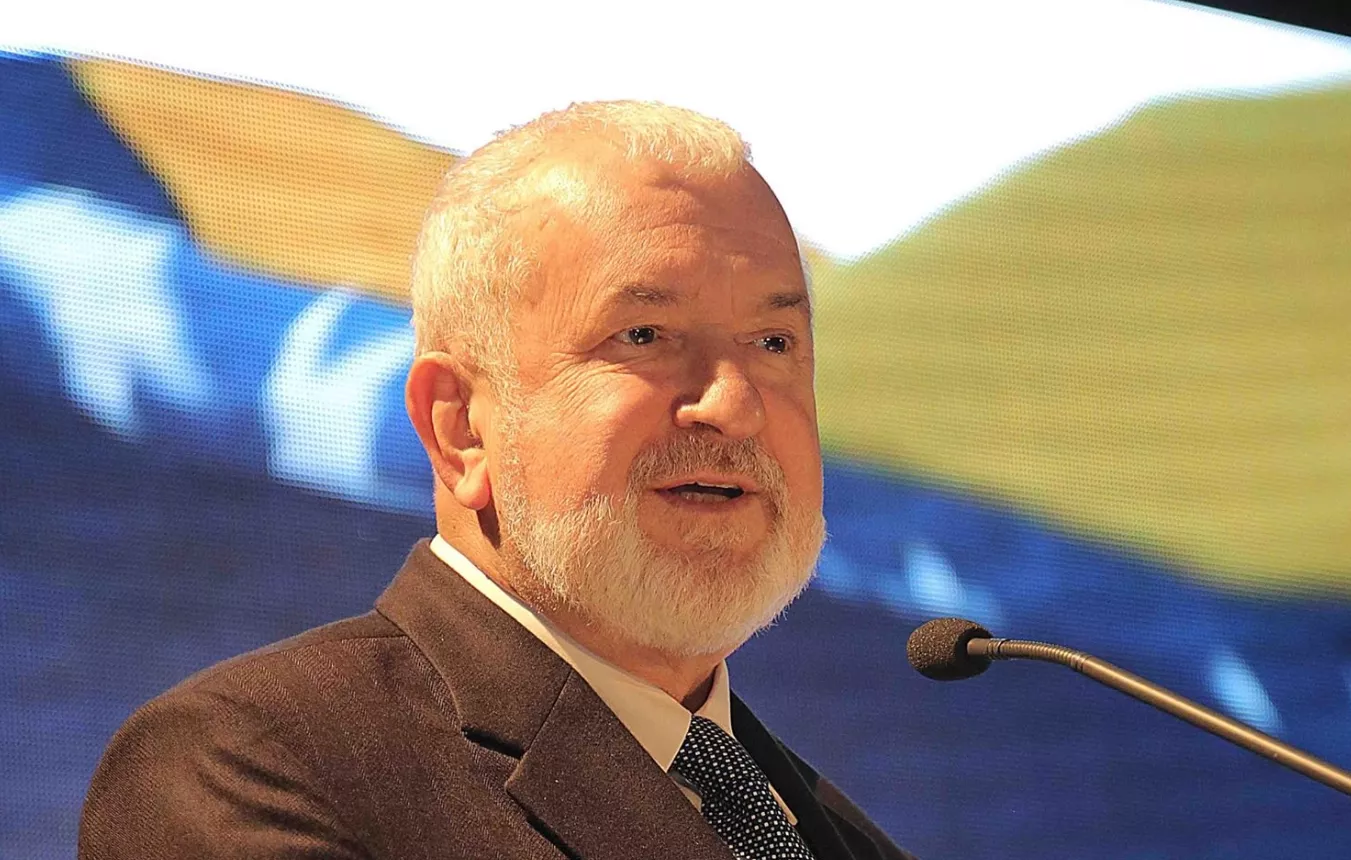
By: Mustafa Cerić
"The concept and content of 'History Fest' are not determined by victim associations," states Husnija Kamberović, a historian from Bosnia, coldly, as if addressing an inanimate mass, not survivors of one of the most documented genocides in contemporary Europe.
A statement that in any decent, morally sensitive environment would sound like academic blasphemy, in our country, unfortunately, is treated as an intellectual contribution.
Let's imagine, purely for the sake of a thought experiment, that some Israeli historian had stated: "Holocaust victim associations do not determine what will be said about the Holocaust at our symposium."
Let's further imagine that a person known, to put it mildly, for relativizing or selectively interpreting Nazi crimes, is invited to the same symposium. It wouldn't take 48 hours before that academic would be ostracized from the community as morally compromised and historically unreliable.
But not here – in Sarajevo. Here, it seems, genocide victims are not important enough to be asked what they think about how their suffering is presented and by whom.
Nevenka Tromp, a perfectly polished figure from European quasi-academic circles, known for her role in the NIOD report from 2002, in which political diplomacy carried more weight than human tragedy – becomes a welcome guest in Sarajevo at Kamberović's so-called "History Fest".
And what about the feelings of the mothers of Srebrenica? The testimonies of surviving camp inmates? The people who dug up their own relatives from mass graves? Ah, their opinion is, as Kamberović says, irrelevant to his and his kamàrād's concept.
Because "History Fest", presumably, does not exist for us to speak the truth, but for us to enjoy the intellectual pirouettes of those who feel they are more European than their own people, and more European than Europeans themselves.
In a world where empathy and ethics are not prerequisites for an academic position, and courage is measured by how willing you are to trample on another's pain in the name of "objectivity," Kamberović's stance is not an exception – it is a symptom.
This brings us to the core: what does such a statement actually tell us? It tells us that genocide victims should remain silent. That they should not interfere in the business of "serious people." Because, of course, what does a mother who still dreams of the bones of her missing children know about "scientific discourse"?
It is sad that in Bosnia, a country where the ground still hides undiscovered mass graves, and souls have not yet had time to rest, some historians think that pain has no right to a voice. And even sadder – that these voices bother them.
Perhaps it is true that water can flow from stone, but from a heart of stone, as we see, neither compassion nor shame can flow. Only dry, unfeeling concepts. And when history is written without shame, we get exactly these kinds of entertainment festivals: solemn masses for oblivion.
Komentari (0)
Prijavite se za komentiranje
PrijavaJos nema komentara. Budite prvi!
Minuta
Sve →Iz drugih kategorija

High Representative Not Elected: Germans, French and British Against Americans, New Attempt at End of June

ČOVIĆ WITHOUT MERCY: How Those Who Brought Ademović to Office Created a Political Hell for Him



Sunny Saturday, quite warm



Tragedy in Albanian resort: Two minors drown












