
By Prof. Dr. Hazim Bašić, member of the Presidency of Krug 99
Bosnia and Herzegovina has never been territorially organized on an ethnic principle. With the Dayton Peace Agreement, the territorial organization of the state was not a matter of state functionality, but of war spoils. The state space was not organized according to geographical and economic criteria, but according to military and (geo)political power on the ground. Since then, regionalization has ceased to be a development tool and has become a political mechanism.
In BiH, regionalization is often attempted to be presented as 'protection of peoples' or 'protection of identity', while in practice, modern regionalization means optimizing management and development. It is important to note that the EU does not require ethnic regions from Bosnia and Herzegovina. European practice involves functional regions, in accordance with the NUTS system (Nomenclature of Territorial Units for Statistics), capable of drawing funds and conducting state statistics.
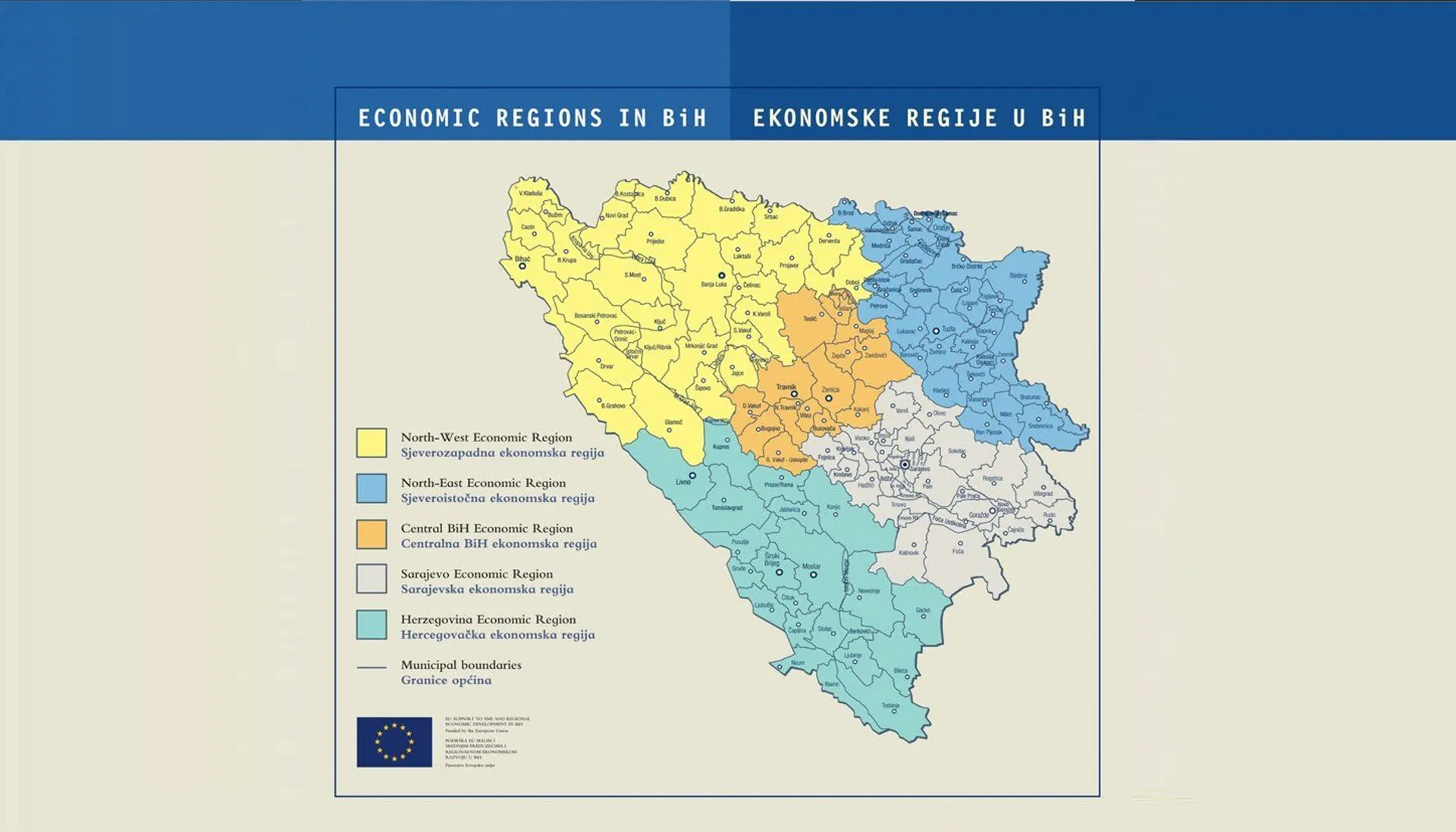
Politicians such as some Croatian MEPs, who, in the context of Bosnia and Herzegovina's EU integration, allegedly suggest the necessity of 'federalization' and link it to consociation, do not mean NUTS recommendations or the economic logic of regionalizing Bosnia and Herzegovina in any way. The motives of external proponents of regionalizing our country need to be questioned, especially in the context of 'EU integration'. Is the country to be reorganized to be more efficient, or for existing divisions to be deepened and made permanent? The problem of Bosnia and Herzegovina is not that it is not regionalized, but that it is regionalized in the wrong way.
Scientifically based regionalization facilitates coordination, connects markets, people, and infrastructure. Conversely, at a recently held gathering of conservatives in Zagreb called Tradfest, an idea was promoted that divides people along ethnic lines. The difference between these two approaches is fundamental: it determines whether the country is moving towards a more efficient organization or towards a new, potentially final phase of fragmentation.
The issue of the so-called 'third entity' has been reopened again - an idea that is persistently presented as a solution, although in its essence it deepens the problem it allegedly seeks to solve. In other words, the problem is being attempted to be solved with the same mechanism that produced it.
In an atmosphere that resembled the adoption of a neo-crusader manifesto, Bosnia and Herzegovina was labeled a 'failed state'. However, it would be more accurate to say it was a failed gathering (without quotation marks), where the central themes were presumably to be the nurturing of tradition and Christian values, rather than the revival of failed political ideas. Incidentally, the participants of the gathering in Zagreb overlooked the fact that they are not the ones to decide on the organization of a state foreign to them, but the citizens of Bosnia and Herzegovina.
The gathering also lacked elementary intellectual consistency: if the state is dysfunctional due to its structure, how will further fragmentation produce functionality? A system that currently has entities, cantons, and a district is not an example of a lack of decentralization, but of its caricatured excess.
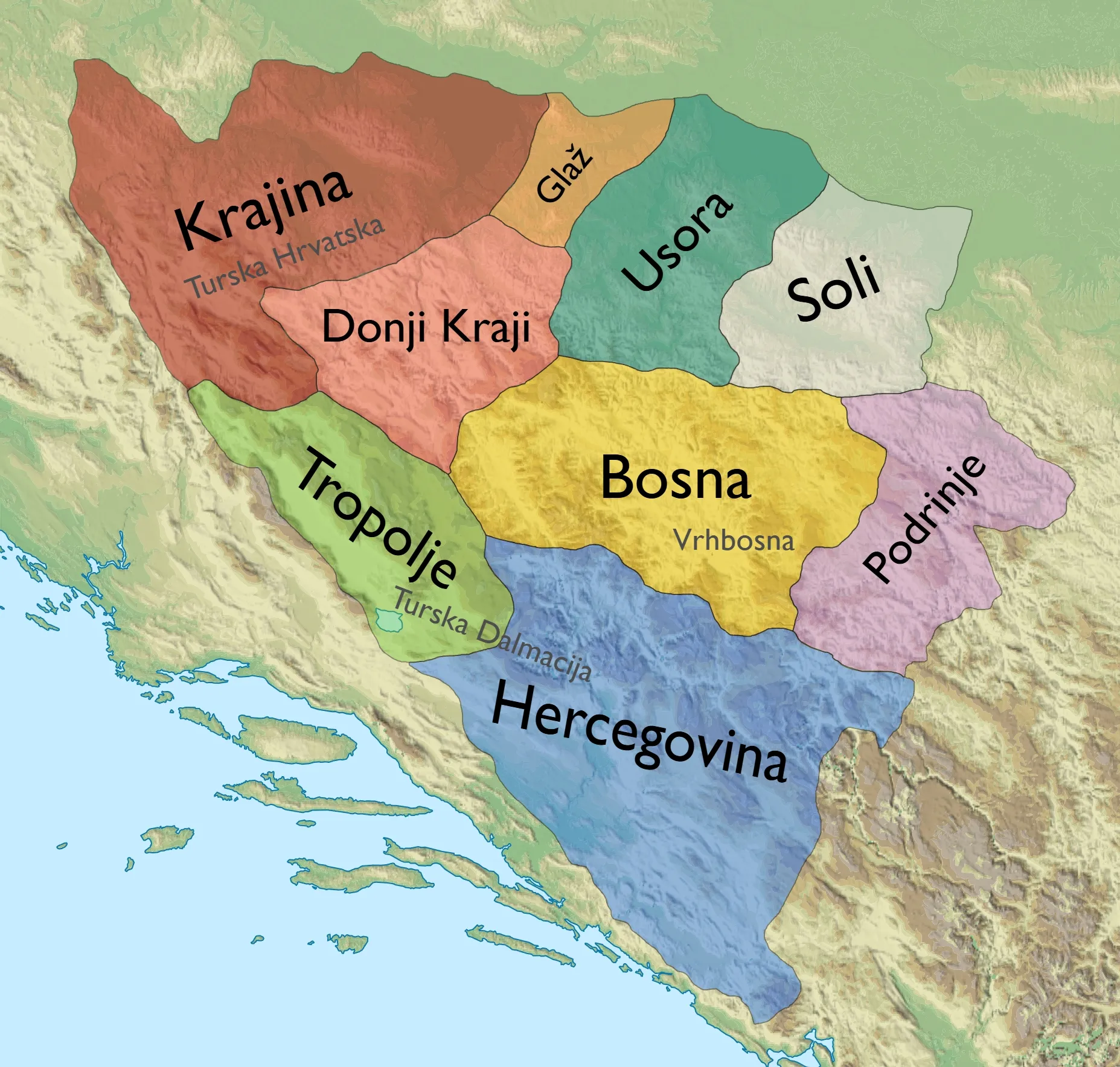
The idea of a 'third entity' is being promoted under the guise that political stability can be achieved through ethno-territorial separation, often packaged in the phrase 'federalization and consociational democracy'. The experience of Bosnia and Herzegovina after the war shows the opposite. Proponents of a new division use terms like 'functionality', 'equality', and 'institutional efficiency', behind which lies the consolidation of ethnic territories as a guarantee of political power.
Ultimately, Bosnia and Herzegovina is not dysfunctional due to administrative regions, but due to its political system. Some even claim that the state was intentionally designed to be difficult to function. The modification of the structure of the Republic of Bosnia and Herzegovina was not functional regionalization, but a political-territorial compromise, and international courts have also given their opinions on the causes that led to this compromise. It is common knowledge that the current administrative organization of the state produces enormous costs, has an excess of administration, slows down decision-making, and blocks development policies.
If the goal is a functional state, then this is not achieved by new ethnic borders, but by relativizing them through economy, infrastructure, and efficient governance. This means fewer levels of government, clearer competencies, and regions that make sense in real life. In regionalization, the focus should be on gravitational centers, economic zones, and infrastructural corridors, rather than on politics.
Advocating for a territorial reorganization that is not based on scientific, geographical, economic, and transport criteria is actually a continuation of old policies by other means: more lines on the map, more institutions, more blockades, and less state. Thus, the talk of 'European regions' and 'federalization' turns into a sophisticated tool for achieving war goals. This time without weapons, but with the same map in hand.
Komentari (0)
Prijavite se za komentiranje
PrijavaJos nema komentara. Budite prvi!
Minuta
Sve →Iz drugih kategorija

High Representative Not Elected: Germans, French and British Against Americans, New Attempt at End of June

ČOVIĆ WITHOUT MERCY: How Those Who Brought Ademović to Office Created a Political Hell for Him



Sunny Saturday, quite warm



Tragedy in Albanian resort: Two minors drown












