
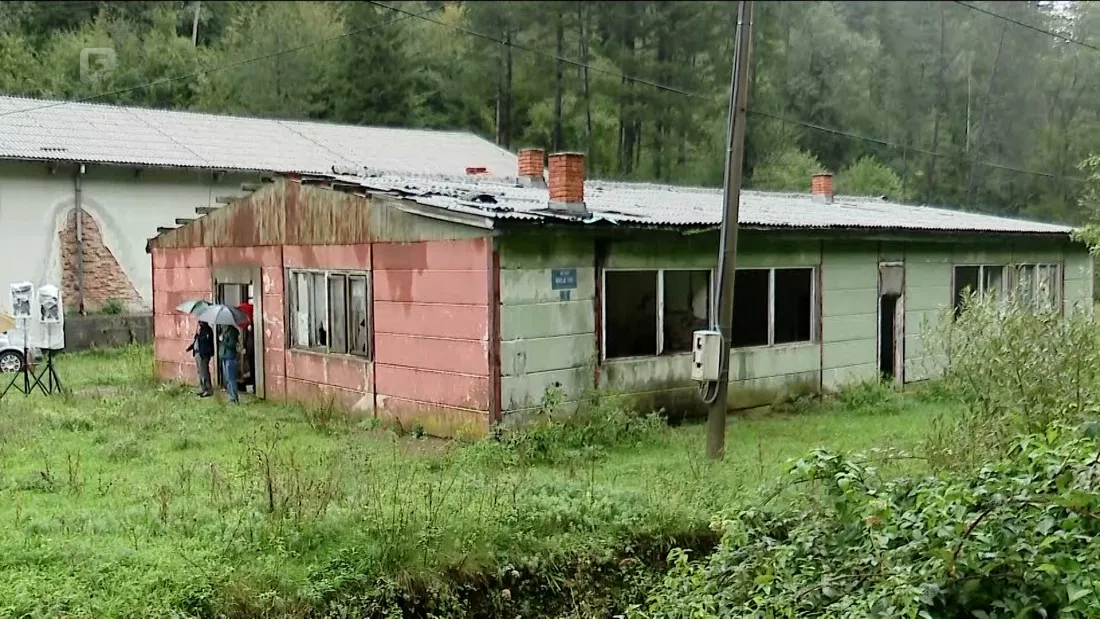
(Patria) - The Association for Social Research and Communications (UDIK) reminds the public of the 32nd anniversary of the closure of the Sušica camp, which was established in a former military equipment warehouse in Vlasenica by Serbian forces, including members of the JNA, paramilitary units and local military personnel who took over the town, and was run by the military and local police. According to the Dossier: Svetozar Andrić, published earlier this year by the Humanitarian Law Center Belgrade, the former general of the Army of Republika Srpska ordered the establishment of Sušica on May 31, 1992.
The first detainees, women, children and the elderly, were brought to the facility by members of the army and police. In the following period, people from Kalesija, Rogatica and Šekovići were brought in, as well as prisoners from Vlasenica. In the first days of the camp, there were over a thousand Bosniaks. On average, there were about 100-150 prisoners daily. From the end of June, prisoners were gradually transferred in groups to the Batković camp.
The International Criminal Tribunal for the former Yugoslavia (ICTY) in early 2005 sentenced the camp commander Dragan Nikolić, known as Jenki, to twenty years in prison after he pleaded guilty to participating in the murders, rape and torture of Bosniak prisoners at the Sušica concentration camp in Vlasenica in 1992. After serving two-thirds of his sentence in 2013, he was released on parole, and died five years later in Vlasenica.
The indictment against Nikolić, filed in November 1994, was the first indictment issued by the ICTY for crimes committed in the SFR Yugoslavia.
Trials for war crimes committed in the Vlasenica area are also being conducted before domestic courts. Several proceedings are ongoing before the Court of Bosnia and Herzegovina for war crimes committed in this area. UDIK's publication "War Crimes in Milići and Vlasenica – Verdicts" documents three cases decided before the Court of Bosnia and Herzegovina for crimes committed in the pre-war municipality of Vlasenica. The State Court sentenced Predrag Bastah and Goran Višković to a total of forty years in prison for crimes in Vlasenica, while Dragan Marinković was sentenced to eight years in prison for a war crime committed in the area of today's municipality of Milići.
According to data from the Institute for Missing Persons of BiH, in the area of the municipalities of Vlasenica and Milići in the period from 1992 to 1995, 955 victims of Bosniak nationality went missing. Their disappearance is not related to the genocide committed in July 1995. The largest mass grave found in the Vlasenica area is the Ogradice grave, from which 232 remains of victims from the past war were exhumed in 2003, and the largest mass grave in the area of the municipality of Milići is Zaklopača, from which 81 remains were exhumed. From the Sušica mass grave, 37 victims were exhumed. The oldest victims are Mujo Begić and Mujo Bektašević, both born in 1903.
More than three decades have passed, and the families of murdered civilians are still searching for the truth about the fate of their loved ones. We appeal to the competent institutions to work more intensively on the issues of finding missing persons and prosecuting perpetrators of war crimes.
We also appeal to all citizens who have any information about the fate of the missing to finally speak out. Let them not be accomplices in the politics of oblivion and division, but let us try together to heal the wounds from the recent war past. Only in this way can we create a healthy democratic society in which the tragic past of the nineties will not and must not be repeated.
Komentari (0)
Prijavite se za komentiranje
PrijavaJos nema komentara. Budite prvi!
Minuta
Sve →Iz drugih kategorija

High Representative Not Elected: Germans, French and British Sabotaged Americans, New Attempt at End of June

ČOVIĆ WITHOUT MERCY: How Those Who Brought Ademović to Office Created a Political Hell for Him



Sunny Saturday, quite warm



Tragedy in Albanian resort: Two minors drown












