
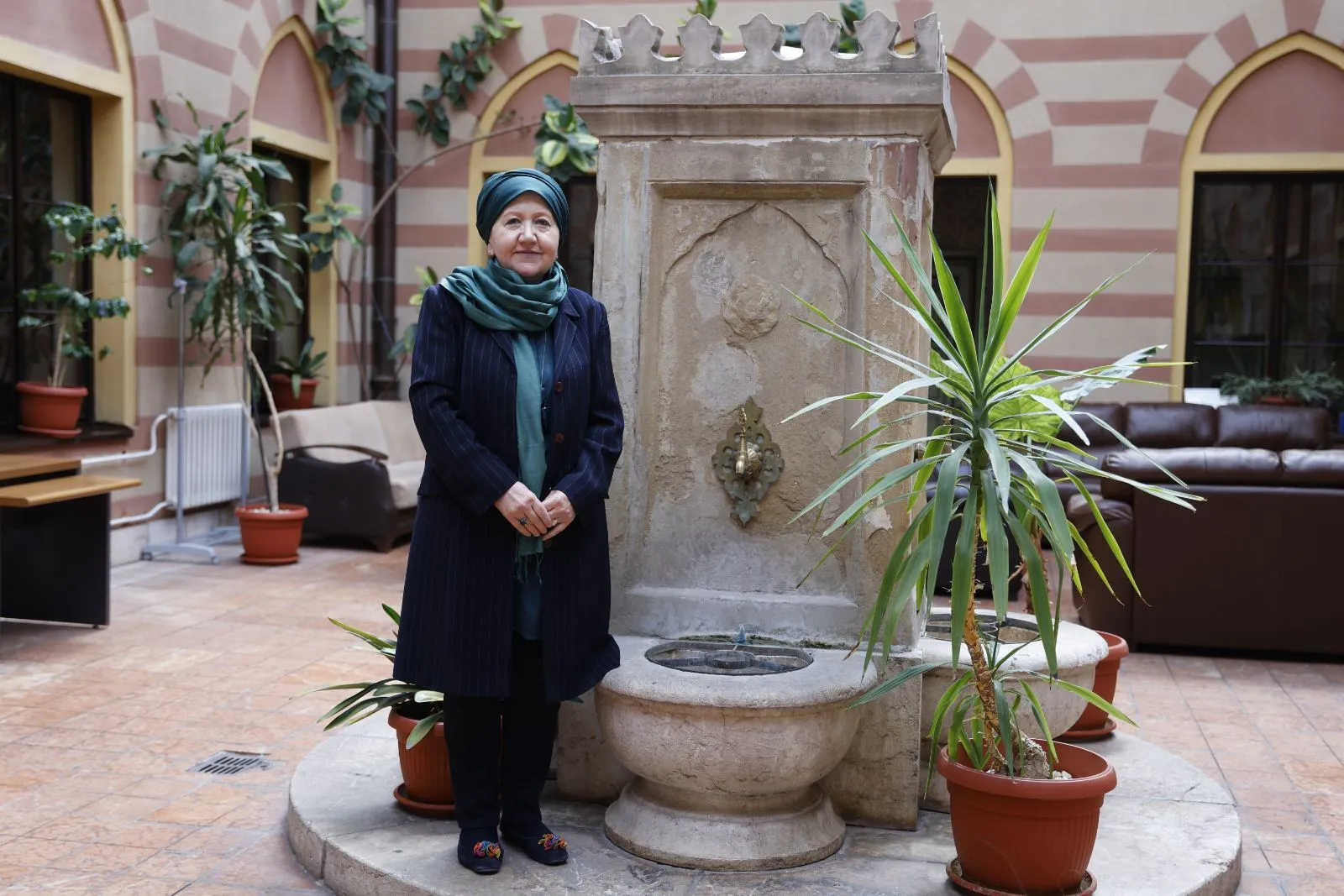
Zehra Alispahić, associate professor at the Faculty of Islamic Sciences of the University of Sarajevo and vice-dean for scientific research, is one of the most recognizable television voices of Bayram mornings in Bosnia and Herzegovina. For years, through the broadcasts of Bayram celebrations on BHRT, her voice has brought warmth, calmness, and a sense of community into homes across the country and the diaspora.
In an interview with Patria, she talks about the emotion that comes with the moment she says "Bajram šerif mubarek olsun" to a million-strong audience, about the changes she notices in society, the importance of community and inner peace, but also about the values that Bayram always brings us back to.
For years, you have been the voice that ushers believers into Bayram morning. How do you personally experience the moment when you say "Bajram šerif mubarek olun" to the entire nation?
First of all, thank you for the opportunity to speak in this Bayram atmosphere and about a question that reawakens both joy and a sense of deep trust in me. When the state television began with live broadcasts of Bayram celebrations, that responsible and honorable role was held by esteemed muftis and professors – Prof. Dr. Nedžad Grabus, Remzija ef. Pitić, and Prof. Dr. Ismail Palić. Listening to them, at a time when the outlines of religious journalism were just emerging in our media space, I secretly nurtured a desire to one day step into the homes of people welcoming Bayram with my own voice. And dreams, by God's decree, do come true. As my esteemed colleagues moved on to other missions, I had the honor of taking over that trust. And today, after many years, when together with dedicated colleagues and editors of the religious program at BHRT, I send greetings and wish a good morning before the Bayram prayer, and then, after the sermon of the Reis-ul-ulema, I say "Bajram šerif mubarek olsun," I feel the same – joy, elation, but also deep responsibility.
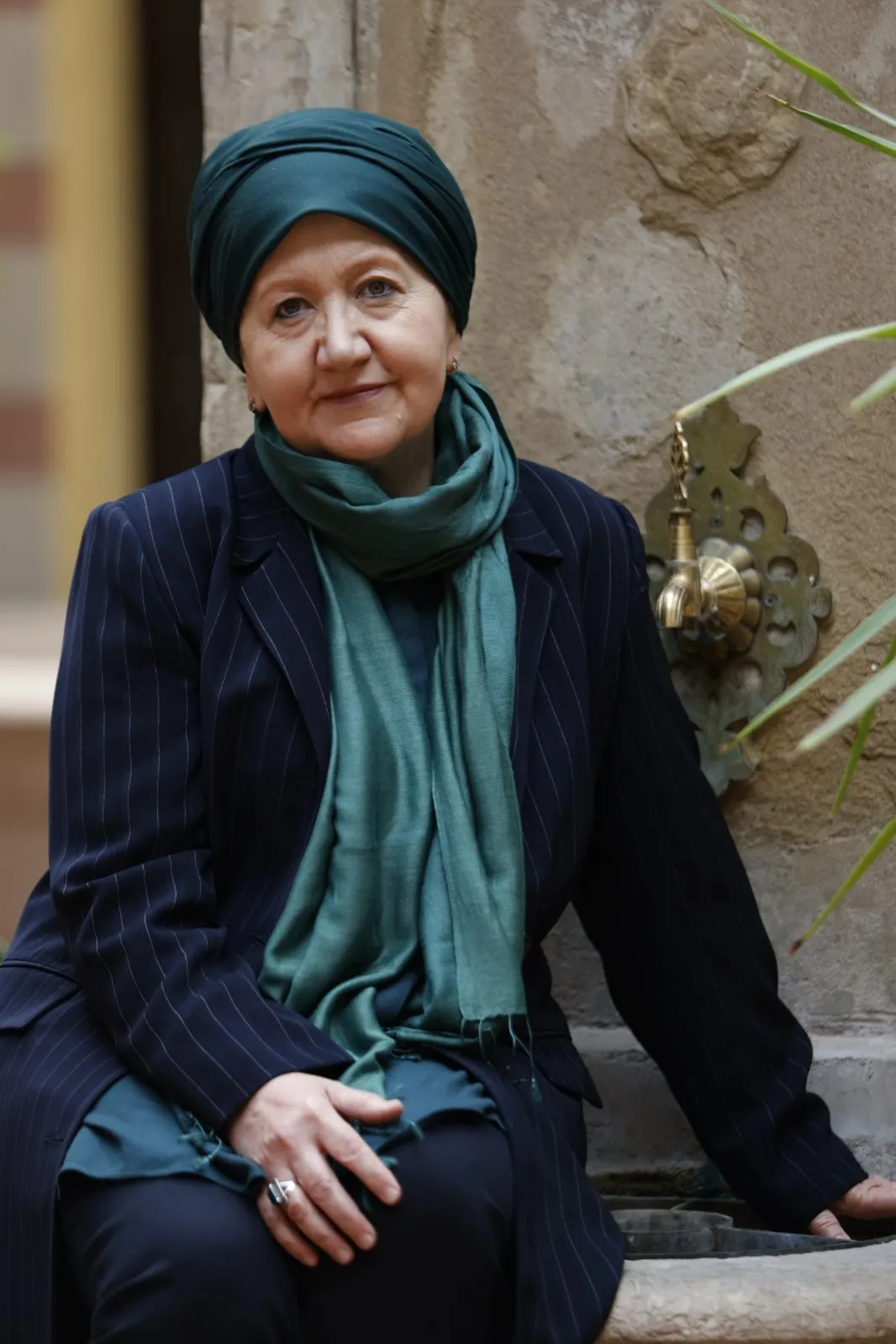 Alispahić: A voice is not just a tool – it is a bridge
Every morning is a new and unique experience for me. It is an invaluable treasure to be part of the Bayram atmosphere of hundreds of thousands of people across Bosnia and Herzegovina and the world, to be a bridge between the homeland and the diaspora, to be company for the sick, the lonely, those who have returned to their pre-war homes, those who work even on Bayram!
Many say that your voice has become part of their family Bayram tradition. Do you feel a special responsibility because of this emotion and trust that people associate with Bayram?
In my professional life, I have had the opportunity to do various jobs, but I must admit that I am especially pleased when people associate me with Bayram mornings – when they say that my voice brings them calmness, clarity, and warmth. Spontaneous encounters often happen on trams, buses, or at the market, where people recognize me by my voice: "Bayram, the broadcast... Zehra, is that you!" Those moments carry a special human closeness.
Because, in electronic media, a voice is not just a tool – it is a bridge. It is emotion. Diction and tone are important, but equally so is the responsibility of the message being conveyed. That is why I prepare thoroughly for each broadcast: I take notes, research, try to find new, perhaps lesser-known, but significant details. I am aware that the Bayram broadcast from Gazi Husrev-beg's mosque is watched by a wide audience – of different generations, beliefs, and life circumstances. That is precisely why the message must be open, understandable, and comprehensive. I am also delighted by the fact that many have learned through these mornings – discovering new dimensions of tradition and the meaning of Bayram. I am happy that our neighbors, members of other religious communities, also follow the broadcast. I myself try to do the same, following the broadcasts of their holiday celebrations.
Through years of broadcasting the Bayram program, you have surely witnessed changes in society and the way people celebrate Bayram. What seems different to you today compared to previous years?
During the broadcasts, I often observe people's faces, their expressions, the way they come and belong to that space. I am particularly pleased by the presence of multiple generations – grandfathers, fathers, sons, and grandsons – as a living continuity of a transmitted value. The strong presence of young people is also noticeable – neat, self-aware, modern, who embrace Bayram without reservation, as an integral part of their identity. There are also new scenes: young people arriving on motorcycles, bouquets of flowers in their hands for mothers, wives, sisters. These are subtle but significant signs of change. In warmer seasons, a larger number of guests and foreign visitors are also noticeable, which further enriches the atmosphere. Nevertheless, I believe that as a community, we could do more to make mosque courtyards more accessible to women who wish to perform the Bayram prayer, especially guests from other parts of the world.
Bayram carries messages of joy, peace, community, and closeness. How much more do we need these values today than ever before, especially in a time of division and fast-paced life?
The very word "eid" in Arabic means return – a return to what is essential. Bayrams return to remind us of values that often elude us in the modern rhythm of life: closeness, attention, mercy, community. In a time marked by speed, alienation, and insecurity, Bayram acts as a quiet warning and a gentle invitation to stop and recognize what is truly important. It is an opportunity to remember those we have neglected, to renew broken ties, to seek forgiveness and offer it to others. In this simplicity lies a deep strength.
It seems that people today seek peace and security more than ever, not only material but also inner. Where do you see the path to that peace?
Holiday seasons, especially Bayram, with their quiet but powerful rhythm, testify that a different way of living is not only possible but also deeply natural to humans. They teach us that we can walk slower, more thoughtfully, with more attention to ourselves and others, with more awareness of transience and the true values that shape us. It is precisely in this change of rhythm that the path to inner peace lies. Peace does not come from external circumstances as much as from the ability to establish balance within ourselves – between who we are and what we strive for, between the need for success and the need for meaning. Bayram reminds us that humans are not just beings who acquire, but also beings who give, forgive, renew, and build relationships.
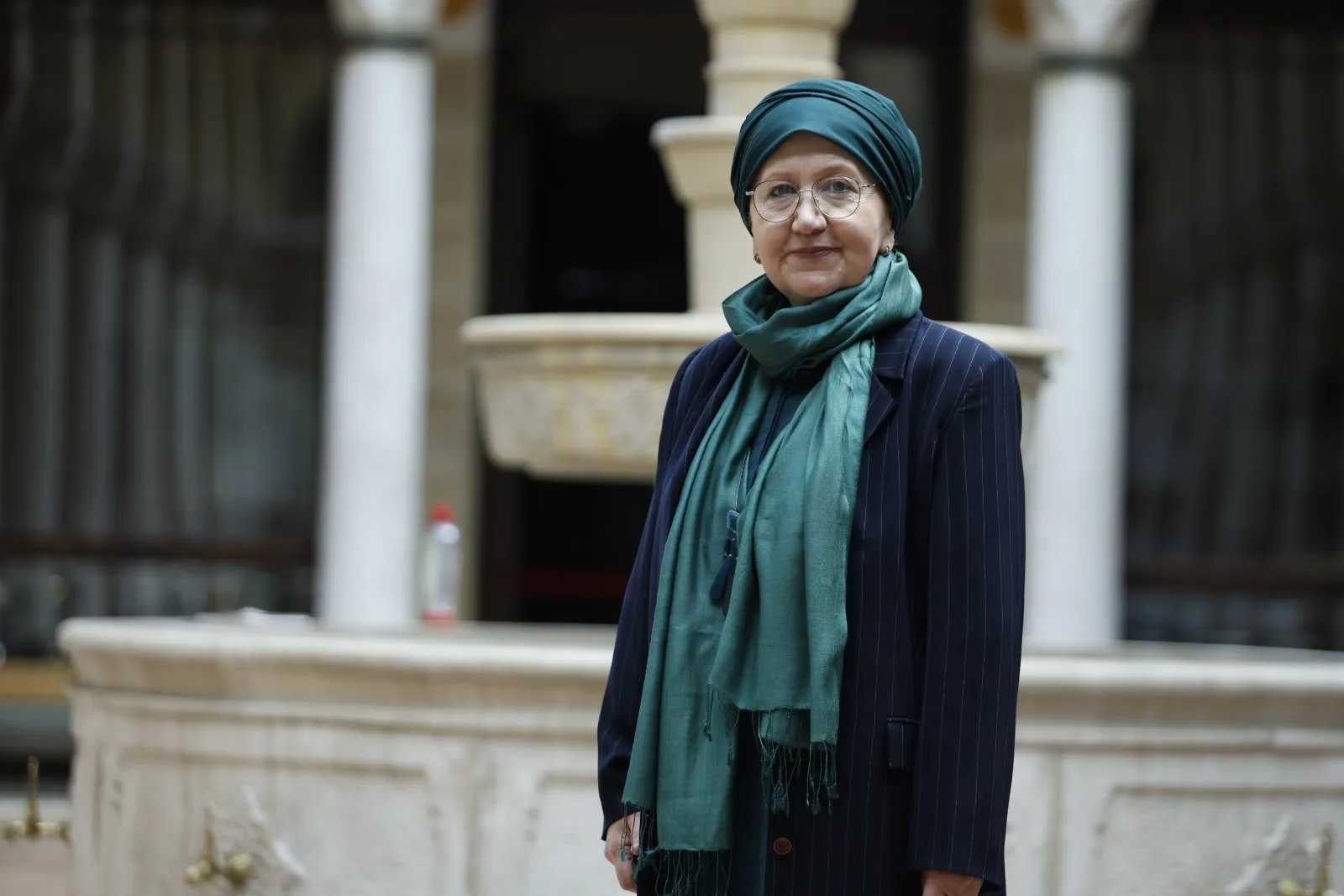 Alispahić: Hope lies in the youth
True values are not far or unattainable – they are, in fact, constantly present, but often covered by layers of daily haste and noise. A certain inner discipline is needed to recognize them: a willingness to pause, to listen, to encounter another person without prejudice and haste. In that encounter, in the simple act of attention, a kind word, or an outstretched hand, the renewal of trust begins – both towards others and towards life. Therefore, I believe that the path to peace is not in big, unattainable changes, but in small, conscious steps: in nurturing goodness, in returning to the essence, in the courage to live the values we already carry within us. Bayram is just a reminder of that possibility – but also an invitation not to forget it when the holiday days pass.
What worries you most in today's society, and what still gives you hope?
Working with young people, I often think about their relationship with knowledge – with books, writing, research. I am concerned by the lack of patience and research curiosity, that quiet enjoyment in the learning process. However, hope also lies in the youth. They surprise us when we least expect it. Every sincere effort, every desire for knowledge, every pursuit of excellence testifies that this potential has not disappeared – it just needs to be carefully nurtured and encouraged. I am particularly pleased by the generations of young people born outside Bosnia and Herzegovina who are strongly connected to their homeland and all its values.
Which Bayram broadcast would you single out, and subjectively – is the joy the same for Ramadan Bayram or Kurban Bayram?
Each Bayram carries its own emotion and unique atmosphere. Bayram sermons are always multi-layered, filled with messages that transcend the moment and direct us towards the time to come. The lectures preceding the prayer are often valuable reminders of history, but also its contemporary echo. Spring Bayrams have a special charm – those with the scent of linden trees in the courtyard of the Bey's Mosque, with blossoms, or even with rainy mornings that carry a quiet, reflective beauty. On the other hand, Bayrams that coincide with painful anniversaries from our recent history also carry a dimension of remembrance, seriousness, and collective consciousness.
If you could send one Bayram message to people who are lonely, disappointed, or burdened by everyday life, what would you tell them?
Bayram carries hope within itself and renews two fundamental dimensions of love – love for the Almighty and love among people. Therefore, it is a time when we should turn to each other, recognize each other, offer a hand, and share joy. Let no one be alone on this day. Let words be kind, and presence sincere. Let Bayram be a moment of change – a quiet but firm confirmation that life can be different, more fulfilling, and more meaningful. Therefore, Bayram is an invitation to draw closer – not only physically but with heart and intention. To pause before another person, to truly see them and recognize their pain, their silence, their unspoken need for closeness. In a time when many are surrounded by people, yet lonely, Bayram teaches us that presence is not in the number of encounters, but in their sincerity. Let Bayram be a moment when we consciously choose goodness. Let it remind us that every shared joy becomes greater, and every shared sorrow lighter. May no heart remain completely alone in these blessed days, and may that quiet but constant hope awaken within us that life, despite everything, can be warmer, nobler, and more fulfilling. Let Bayram bring us back to each other.
Komentari (0)
Prijavite se za komentiranje
PrijavaJos nema komentara. Budite prvi!
Minuta
Sve →Iz drugih kategorija

High Representative Not Elected: Germans, French and British Against Americans, New Attempt at End of June

ČOVIĆ WITHOUT MERCY: How Those Who Brought Ademović to Office Created a Political Hell for Him



Sunny Saturday, quite warm



Tragedy in Albanian resort: Two minors drown












