
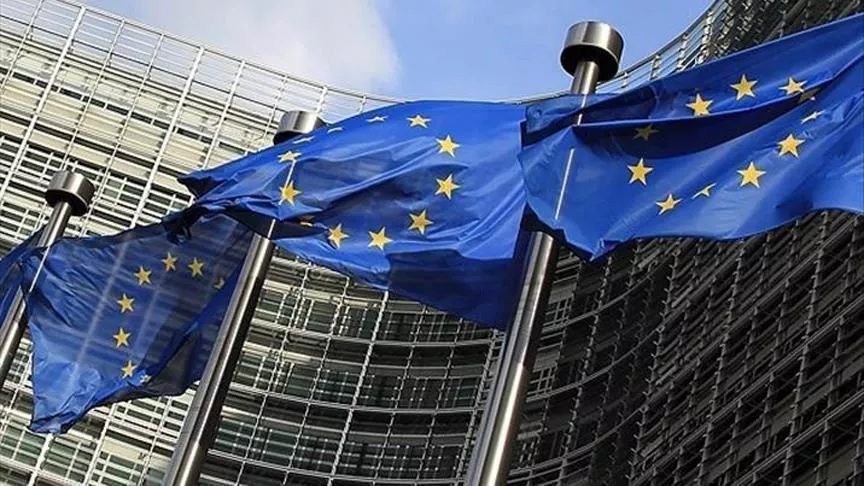
(Patria) - The European Commission has published its report for Bosnia and Herzegovina for the period from June 15, 2023, to September 1, 2024. You can read the full report at this link, reported Istraga.ba.
The Commission states that the institutions responsible for the integration process are already largely functional, that the Council of Ministers has taken action to adopt EU-related reforms with visible results before the Commission's report in March 2024, after which positive reforms were halted.
Bosnia and Herzegovina has made some progress in public administration reform (PAR).
The Commission believes that BiH has a certain level of preparedness for the implementation of the EU acquis and European standards in the field of justice and fundamental rights. Limited progress was made during the reporting period.
“Persistent and evident signs of deterioration still require urgent measures to strengthen integrity and restore public trust in the judicial system. The poor functioning of the judicial system continued to undermine citizens' rights and the fight against corruption. In January 2024, the obstacle to access personal data for external experts tasked with monitoring the asset declaration system was removed from the Law on the High Judicial and Prosecutorial Council (HJPC); the HJPC's right to access additional information from natural and legal persons still needs to be strengthened. The draft new Law on the HJPC needs to be in line with the interim opinion of the Venice Commission from June 2024. Bosnia and Herzegovina needs to submit a revised draft for further assessment and fully align the draft law with its recommendations before adoption in Parliament. The National Assembly of the Republika Srpska entity must urgently appoint two vacant positions for judges of the Constitutional Court of Bosnia and Herzegovina,” the report states.
The Commission points out that the Law on Prevention of Conflict of Interest of BiH, adopted in March 2024, represents a significant step forward, although it is not yet fully in line with European standards.
“Selective and non-transparent judicial proceedings in cases of public interest corruption are a cause for significant concern, along with pressure and intimidation, as seen in a number of high-level cases. Results in the fight against corruption remain weak due to operational inefficiency and political interference,” it states.
They emphasize that the number of final convictions in high-level corruption cases remains low.
“One significant exception is the final verdict in the Novalić and others case,” the report states.
They believe that no progress has been made in guaranteeing freedom of expression and the media, and the protection of journalists.
“Political pressure, intimidation, and harassment of journalists continued, including physical and verbal attacks, without adequate institutional follow-up. Political influence on public broadcasters persists, and their financial sustainability is increasingly threatened. The Law on the Public Broadcasting System remains unchanged, and entity legislation is still not harmonized with this law. The criminalization of defamation in the Republika Srpska entity continues to seriously affect freedom of expression and the media and has a chilling effect. The legislative initiative of Sarajevo Canton on sanctions for internet 'fake news', if adopted, could be misused to restrict media freedom. All such norms must fully respect the standards of freedom of expression,” it states.
In the context of adopting the Law on Prevention of Money Laundering and Combating the Financing of Terrorism, the Commission believes that some progress has been made. They believe that migration management has continued to improve.
Some progress has been made in combating organized crime, particularly with the adoption of the Law on Combating Money Laundering, operations supported by Europol, and improved coordination capacities of the Prosecutor's Office.
“Systemic shortcomings remain in operational cooperation and the investigative capacity of the Agency for Investigations and Protection due to unharmonized criminal legislation, weak institutional coordination, and lack of resources. Financial investigations and asset seizures and confiscations remain insufficient. A proactive approach is necessary to stop criminal infiltration into the political, legal, and economic system,” it states.
The Commission points out that economic growth slowed to around 1.6 percent in 2023.
“The labor market remained resilient, but significant emigration of workers is leading to a labor shortage. The public sector remained inefficient and oversized. The business environment suffers from a fragmented internal market and weak rule of law. Political stalemates, lack of cooperation among different levels of government, and resistance from entities and cantons have continued to delay necessary structural reforms,” the report states.
The report highlights that the quality of education remains inadequate and that the country continues to lag in the energy and digital transition.
“However, some structural adjustments have been made, with
the country's value-added focus shifting towards services such as trade, IT, and tourism. Economic integration with the EU remains high, but overall trade is below potential,” the European Commission believes.
Public procurement remains prone to irregularities and susceptible to corruption. Selective and non-transparent judicial proceedings in public procurement corruption cases are a cause for significant concern.
Komentari (0)
Prijavite se za komentiranje
PrijavaJos nema komentara. Budite prvi!
Minuta
Sve →Iz drugih kategorija

High Representative Not Elected: Germans, French and British Against Americans, New Attempt at End of June

ČOVIĆ WITHOUT MERCY: How Those Who Brought Ademović to Office Created a Political Hell for Him



Sunny Saturday, quite warm



Tragedy in Albanian resort: Two minors drown












