
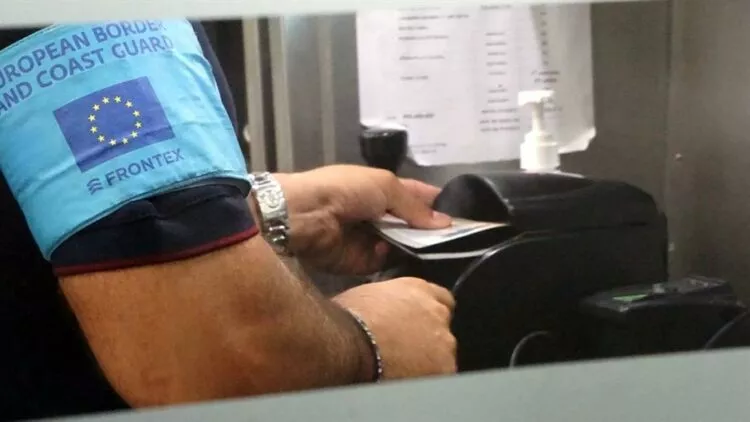
The European Union's executive body has called for an increase in the number of staff of the bloc's border agency Frontex to 30,000 employees as part of a strategy aimed at protecting Europe from hybrid attacks, cybercrime, organized crime, and terrorist threats.
“Our security landscape is very alarming,” said Henna Virkkunen, Executive Vice-President of the European Commission for Technology, in an interview with POLITICO.
“When we look at our security threats, we see that they are much more cross-border today and that they are largely digitized. A national response alone is not enough,” she added.
Virkkunen presented the Commission's proposal in Strasbourg on Tuesday to provide law enforcement agencies with more resources. The strategic document proposed increasing the staff of the EU border agency Frontex to 30,000 people. The current plan envisages 10,000 permanent employees by 2027.
The strategy, which is a broad plan rather than a set of concrete legislative proposals, builds on two recent proposals on defense and preparedness, showing how the EU is increasingly taking responsibility for security.
The Commission also called for the EU's police agency, Europol, to be given more resources and entrusted with combating hybrid threats.
Hybrid attacks exist in a grey area between criminal and state activities, aiming to destabilize societies by attacking critical infrastructure through physical or cyber attacks, or by spreading fear and confusion through information campaigns. Russia has bombarded Europe with such attacks since its full-scale invasion of Ukraine in 2022. A senior NATO official stated in December that such attacks could soon cause mass casualties.
According to this plan, law enforcement agencies would also gain greater access to data.
Many police authorities “are lagging far behind… when it comes to digital tools,” Virkkunen said. “More and more, crimes are linked to technologies, and digital platforms are being used… I think our police and law enforcement agencies need more tools to combat crime in the digital world.”
However, these plans are likely to raise concerns among privacy advocates. The proposed EU law to combat child sexual abuse material online has long been stalled as member states cannot agree on whether private messaging services like WhatsApp and Signal should be forced to hand over user conversations to the police.
Any attempt to achieve the same through other legal mechanisms could encounter similar problems, although Virkkunen insisted that people's privacy would be protected.
Komentari (0)
Prijavite se za komentiranje
PrijavaJos nema komentara. Budite prvi!
Minuta
Sve →Iz drugih kategorija

High Representative Not Elected: Germans, French and British Sabotaged Americans, New Attempt at End of June

ČOVIĆ WITHOUT MERCY: How Those Who Brought Ademović to Office Created a Political Hell for Him



Sunny Saturday, quite warm



Tragedy in Albanian resort: Two minors drown












