
By Senad Šepić, founder of the Sarajevo Energy Forum, the leading energy gathering in the region
As the world watches new escalations in the Middle East and potential disruptions in the Strait of Hormuz zone, the old, but never resolved, question arises again – how much control do we actually have over our own energy?
The answer is quite unpleasant: very little.
More than a fifth of global oil passes through Hormuz. This means that any political or security crisis in that area almost immediately becomes our crisis too – through rising fuel prices, inflation, and additional pressure on the economy. Bosnia and Herzegovina has no influence there, but it certainly feels the consequences.
Dependence We Pay For Dearly
Our transport system is almost entirely tied to fossil fuels. This is not just a technical issue, but an issue of economic security.
When oil prices rise, the cost of living rises, the prices of goods and services rise, and the competitiveness of the economy decreases.
In other words, every global crisis automatically becomes a local problem.
There is no stability in such a system – only constant uncertainty.
Electrification as an Answer, Not a Trend
Electric vehicles and solar panels are often viewed as part of the “green agenda”. However, the current global context shows that this is about something much deeper – an issue of independence.
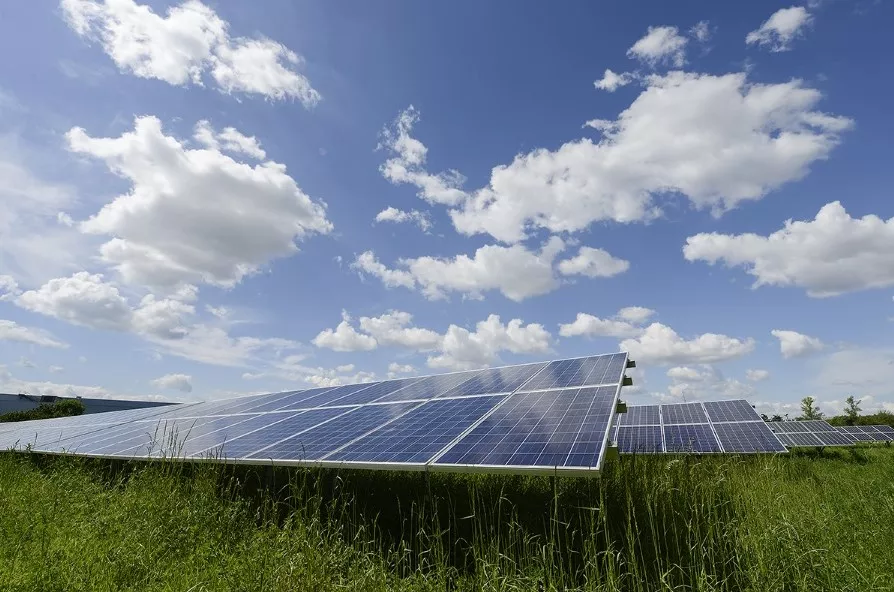
The combination of one’s own electricity production and an electric vehicle allows citizens and companies, for the first time, to break free from the vicious cycle of dependence on imported energy sources.
In practice, this means energy produced on one’s own roof, mobility that does not depend on global markets, and costs that are predictable and stable in the long term.
This is not ideology – it is a rational response to an unstable environment.
The Price: Short-Term Perception vs. Long-Term Reality
The argument that electric vehicles are expensive is often used without broader context.
A conventional vehicle may be slightly cheaper initially, but:
1. the price of fuel is completely unpredictable
2. maintenance costs are high
3. the total cost increases over time
For electric vehicles:
1. energy is cheaper and more stable
2. maintenance is minimal
3. combined with one’s own solar system, the cost of driving can be almost negligible
In scenarios like the Hormuz crisis, the difference becomes even more pronounced – because then the fossil fuel system shows its full vulnerability.
The Myth of Impracticality
One of the key reasons for the slower adoption of electric vehicles is the perception that they are impractical. However, the reality is different.
Most daily commutes in BiH are within 30 to 50 kilometers – which electric vehicles cover without any problems. Charging at home solves the vast majority of needs, while public charging infrastructure is continuously developing.
Paradoxically, it is precisely in crisis situations that electric vehicles become a more practical option. While fuel can become expensive or unavailable, electricity is produced locally and from multiple sources.
Combined with solar panels, the user gets what is most valuable today – control.
Time for a Paradigm Shift
The energy transition is often presented as a long-term process. However, geopolitical circumstances show that it is accelerating – not because of politics, but because of reality.
A system based on the import of fossil fuels is centralized, prone to crises, and beyond our control.
On the other hand, decentralized energy production and electric mobility offer us greater resilience, economic stability, and real independence.
Therefore, the question is no longer whether we should switch to this model, but how quickly.
And what more can we personally do, since institutions are not acting proactively, is to understand that energy independence does not start at the state level. It starts on our roof – and in our garage.
And what are the trends in the development of this industry and how electromobility raises our own and business position to a higher level, find out at the Third EV WEEK conference and exhibition of electric and hybrid vehicles, which will be held on April 28-29 in Sarajevo. Follow more about this event on the page www.ev-week.ba
Komentari (0)
Prijavite se za komentiranje
PrijavaJos nema komentara. Budite prvi!
Minuta
Sve →Iz drugih kategorija

High Representative Not Elected: Germans, French and British Against Americans, New Attempt at End of June

ČOVIĆ WITHOUT MERCY: How Those Who Brought Ademović to Office Created a Political Hell for Him



Sunny Saturday, quite warm



Tragedy in Albanian resort: Two minors drown












