
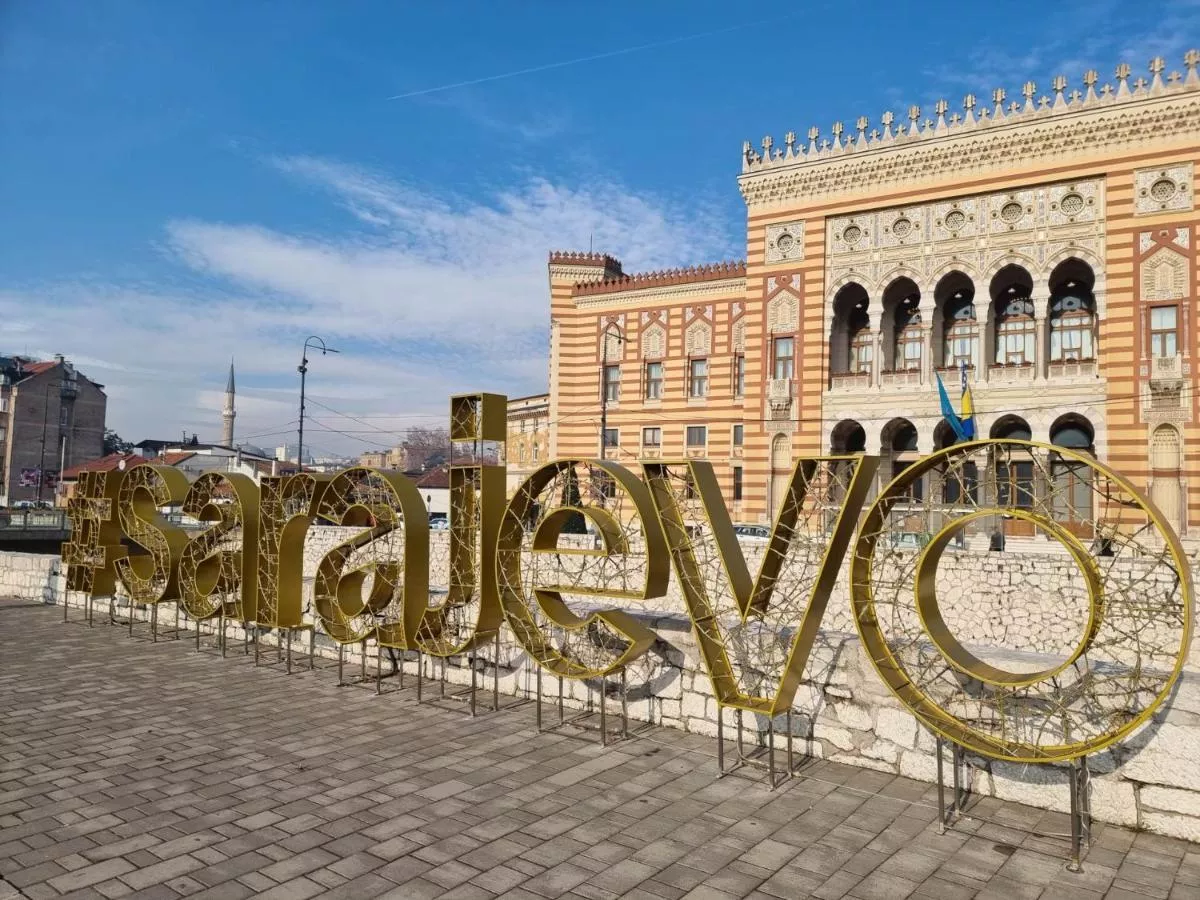
(Patria) - Economic growth in the Western Balkans is projected to moderately slow down in 2025, due to weaker external demand and economic uncertainty brought about by further developments in global trade policies. This could negatively affect business and consumer confidence, according to the World Bank's regular economic report for the Western Balkans, published today.
The World Bank forecasts that the overall economic growth rate of Albania, Bosnia and Herzegovina, Montenegro, Kosovo, North Macedonia, and Serbia will reach 3.2% in 2025, which is 0.5 percentage points lower than previous projections. In 2026, growth is expected to accelerate to 3.5%.
“We are noticing some positive economic trends in the Western Balkans that indicate the region's resilience and should support solid economic growth. Lower inflation and rising wages are boosting consumption, and public investments are also beginning to grow,” said Xiaoqing Yu, World Bank Director for the Western Balkans.
“On the other hand, we are witnessing increased domestic uncertainty in several Western Balkan economies. Slower economic activity in the European Union and deepened uncertainty in global trade flows could also negatively impact growth prospects in this region.”
Uncertainty in global trade will likely affect the Western Balkans primarily due to the slowdown in economic activity in the eurozone, which could reduce trade in goods and services, as well as inflows of investments and remittances.
The report indicates that, in periods of uncertainty, diversifying sources of growth and renewing structural reform programs are the most effective strategies for preserving economic resilience. Key measures include removing barriers to labor market access, including restrictions affecting women, deepening regional economic integrations, improving governance standards, and increasing market competition to boost productivity and support long-term growth.
Furthermore, faster implementation of reforms in the Western Balkan countries within the EU accession process – such as joining the Single Euro Payments Area (SEPA) and introducing “green lanes” to simplify cross-border trade – could further improve business confidence, attract investments, and stimulate job creation.
The World Bank also emphasizes in the report that rising temperatures and the occurrence of extreme weather events, along with the transition to a low-carbon economy, are fundamentally changing sectoral employment patterns in this region, requiring significant labor force adjustment. The six Western Balkan economies should prioritize reforms of their social protection systems and employment services, thereby helping their working-age population to overcome weather disasters such as floods, droughts, and forest fires, and to be ready for new employment opportunities brought by the green transition.
Strengthening systems for protecting labor income in response to employment shocks and greater flexibility of the social protection system would help prevent the impoverishment of individuals. Additionally, retraining workers for “green” jobs would help meet the changed demand for skills, thereby boosting productivity and economic growth.
Komentari (0)
Prijavite se za komentiranje
PrijavaJos nema komentara. Budite prvi!
Minuta
Sve →Iz drugih kategorija

High Representative Not Elected: Germans, French and British Against Americans, New Attempt at End of June

ČOVIĆ WITHOUT MERCY: How Those Who Brought Ademović to Office Created a Political Hell for Him



Sunny Saturday, quite warm



Tragedy in Albanian resort: Two minors drown












