
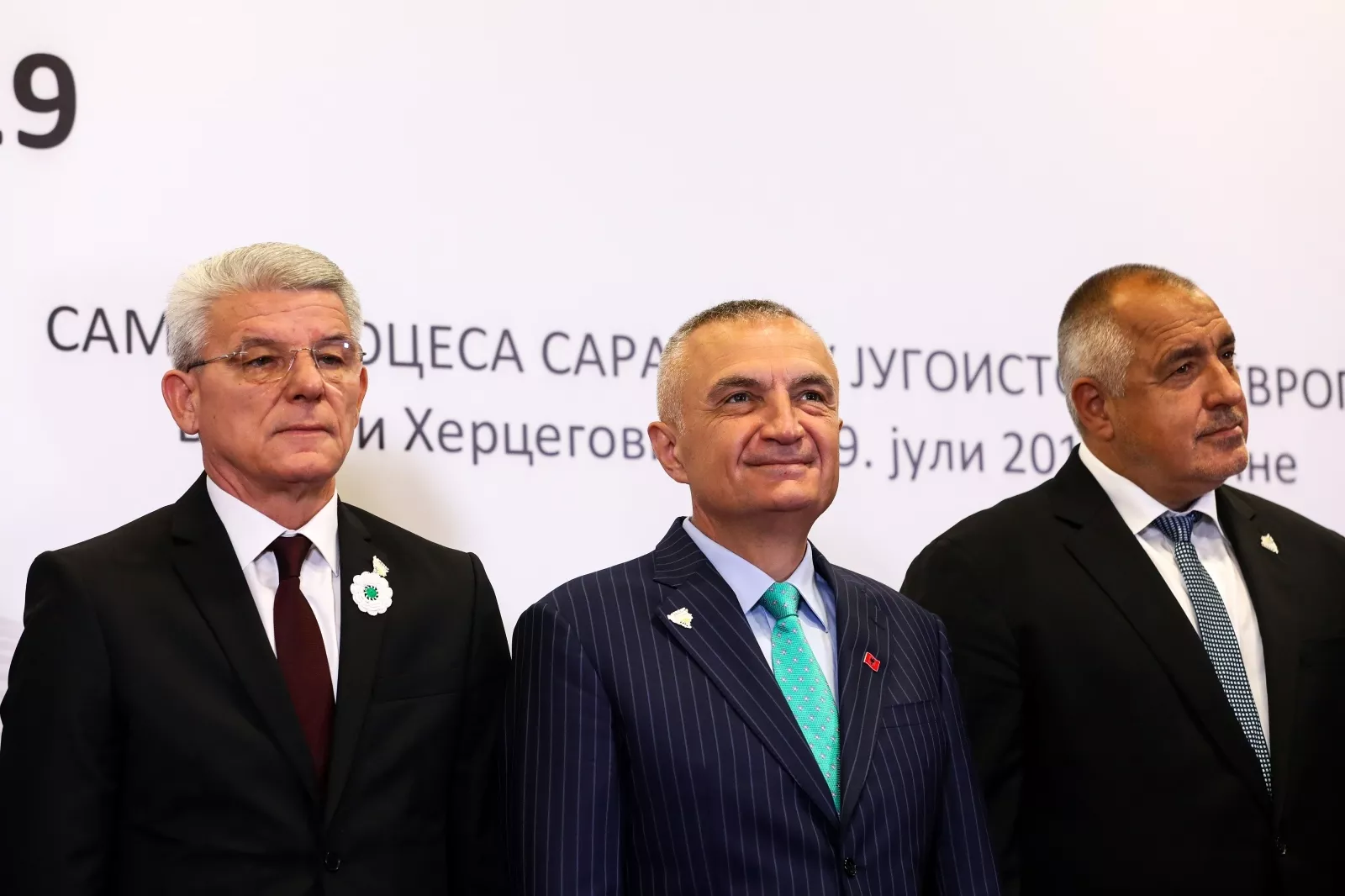
(Patria) - Šefik Džaferović, addressing the participants on the second day of the Summit of the Process for Cooperation of Southeast European Countries (SEECP) held in Jahorina, spoke about the significance of this Summit. The speech is transmitted in its entirety.
"This platform was established 23 years ago, with the aim of strengthening regional cooperation, security, and stability. In this past period, all SEECP member states have made significant progress in achieving their goals. Integration processes into the European Union and NATO continue to be of key importance for the future of our region and its security and progress. Improving relations in the region is necessary for joint action on migration flows, the fight against terrorism and violent extremism, the fight against organized crime and illegal arms trafficking, the fight against cyber threats, and common regional energy and transport policies.
Bosnia and Herzegovina is strongly committed to regional cooperation and good neighborly policy, and it is committed to resolving interstate disputes peacefully, respecting the principles of international law. In addition, Bosnia and Herzegovina advocates for dialogue in finding mutually acceptable solutions to all open issues, which is also one of its fundamental foreign policy priorities.
Our region continues to face numerous challenges, among which the migrant crisis, which has been escalating in the area of Bosnia and Herzegovina for the past two years, currently stands out. Dealing with the migrant crisis has shown the weaknesses of institutional capacities and regional cooperation. Given that migrants arrive in this region and Bosnia and Herzegovina from the territory of the European Union, it is clear that the focus of this issue cannot be solely on the immediate border between the EU and BiH. Bosnia and Herzegovina did not cause intensified migration processes, nor can it bear sole responsibility for resolving this issue. We expect, primarily from the EU, support for BiH institutions, especially strategic and organizational support, to effectively respond to all challenges posed by the migrant crisis.
What further exacerbates the situation are the influences of organized crime and the widespread phenomenon of human trafficking. The Presidency of Bosnia and Herzegovina has discussed the issue of cooperation between Bosnia and Herzegovina and neighboring Montenegro and Serbia, with the aim of combating human smuggling.
Deteriorated stability inevitably affects socio-economic conditions, as well as the overall social environment. Areas of political instability and friction, and legal uncertainty, represent an unfavorable environment for economic development. Faced with insufficient growth in living standards, and with uncertainty due to political instability, a significant portion of the young population is leaving for developed Western European countries, which, on the other hand, are facing demographic deficits and a need for new labor.
Challenges in the areas of security, economic development, the migrant crisis, or the emigration of young people represent common problems that can only be overcome with joint solutions and regional initiatives aimed at promoting stability and economic cooperation. One of the goals of the Process of Cooperation in Southeast Europe is to improve cooperation in the field of justice and the rule of law, which is the foundation of modern and developed societies.
In this context, I would like to draw attention to a regional problem that seriously jeopardizes the rule of law, as well as security. We are witnessing a phenomenon where convicts with dual citizenship, who have been convicted of the most serious war crimes in one country, have their sentences commuted/significantly reduced for the same crimes in another country, after which they are released.
It is unacceptable that perpetrators of mass crimes can evade justice so easily. States must take a step forward to prevent this phenomenon so that all those who have committed criminal offenses are held accountable for them. Regarding the Western Balkan region, it is necessary to state that the required progress has not been made in confronting the truth about the past and the need to restore trust between states and different ethnic groups. In the past period, there has been a certain slowdown, and even obstruction, of positive processes concerning this aspect of regional cooperation. Disregard for the judgments of international courts, negative and inflammatory rhetoric, or intensified armament represent the most serious factors that jeopardize security and stability.
Considering all the challenges and internal debates that the European Union itself is facing, it is necessary to emphasize the crucial importance of preserving the credible European perspective of the Western Balkans. Undoubtedly, the European perspective remains the main driver of reforms in the Western Balkans. Therefore, it is of key importance that the accession of all countries in the region to the European Union remains one of the Union's priorities.
Steps such as Montenegro's accession to NATO or the signing of the Prespa Agreement have brought new energy to the region regarding Euro-Atlantic integration. This momentum needs to be maintained in the coming period, which is our expectation from the new European Commission.
Bosnia and Herzegovina has received the opinion of the European Commission, which lists a series of reform measures in various areas that need to be fulfilled for Bosnia and Herzegovina to obtain candidate status and then open accession negotiations with the European Union.
Regional cooperation has great potential and development opportunities, and the latest example demonstrating this is the Sarajevo-Belgrade highway construction project, initiated through a joint initiative of Bosnia and Herzegovina, Turkey, and Serbia. Although created on the initiative of these three countries, this project is of great importance for the entire region, and beyond. Regional cooperation, based on the principles of mutual respect, trust, our common values, and intersecting interests, continues to represent the main framework for the advancement of the entire region and the people living in this area. I wish Kosovo a successful presidency as the future SECEEP chair. I regret that their delegation is not participating in this summit," said Džaferović.
Komentari (0)
Prijavite se za komentiranje
PrijavaJos nema komentara. Budite prvi!
Minuta
Sve →Iz drugih kategorija

High Representative Not Elected: Germans, French and British Against Americans, New Attempt at End of June

ČOVIĆ WITHOUT MERCY: How Those Who Brought Ademović to Office Created a Political Hell for Him



Sunny Saturday, quite warm



Tragedy in Albanian resort: Two minors drown












