
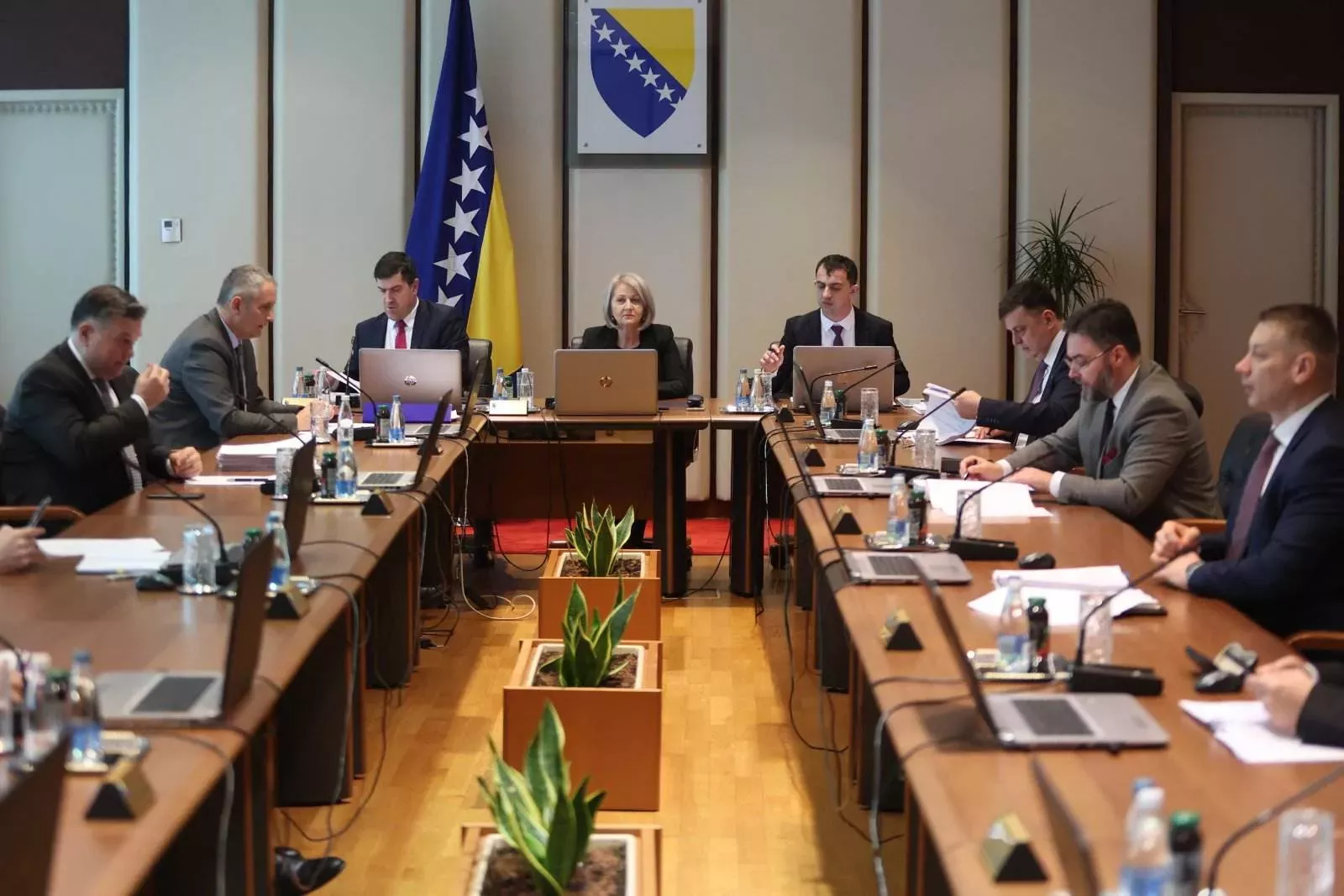
(Patria) - The coalition at the state level of Bosnia and Herzegovina reached an agreement on Wednesday on the draft law on conflict of interest, which was adopted by the Council of Ministers. As we highlight in a special topic published today, the policy of a green light in accession negotiations is burdened and will play into the hands of the current elites in the country.
This is stated in the analysis of the Council for Democracy Policy, which we transmit in full below:
But besides that, the law is very problematic in essence. Formally, it replaces the existing conflict of interest commission, composed of a majority of deputies, with an independent body of 7 expert members. However, through a composition that reflects the ethnic model of power-sharing in Dayton BiH, with two members coming from each of the three constituent peoples in BiH, and one from "others" (Article 18), combined with their appointment by the BiH Parliament by a simple majority (Article 19), the commission will in reality remain under the complete control of the ruling coalition, with the Dodik-Čović tandem controlling the majority that will prevent the commission from making any decision against their party interests (Article 22).
Such a body will certainly do nothing to fight endemic corruption and nepotism unless it serves their narrow party agendas. It encompasses mutually assured destruction – and the definition of deviance – at the heart of BiH's #PeaceCartel.
Furthermore, the new law opens the possibility for entity and cantonal laws to override the ban on state-level officials simultaneously holding functions at lower levels of government (Article 6 (2)).
Further, unlike the existing law and earlier drafts of the new law, the final version removes the unlimited obligation of institutions, bodies, and legal entities in the entities and cantons to provide financial and property data of a public official when requested by the commission, i.e., (Article 17 (3)) allows entities and cantons to adopt laws that block such an obligation; which history shows they will certainly do to reduce transparency.
Finally, the new law removes a provision from the existing one that entity laws on conflict of interest must not contradict the state law, meaning that lower-level laws will be able to be even weaker than this already weak state law.
In short, the law planned for adoption today will not fight conflicts of interest, but will change the law to make such conflicts easier to pursue – and hide. It also supports Dodik and Čović's goal of further weakening state primacy in favor of levels of government over which they have unique control. By giving the stamp of EU approval to the law, the EU is helping BiH politicians consolidate feudal dominance in "their" domains.
After Enlargement Commissioner Oliver Varhelyi immediately praised the Council of Ministers' agreement on the draft law, it was planned that both houses of the BiH Parliament would adopt the law today under an accelerated procedure, an instrument overused in all Western Balkan countries and criticized by the EU for undermining parliamentary democracy by preventing public debate.
With the latest abstentions, Berlin and The Hague signal a willingness to give in to the European Commission. According to the scenario, everything seems ready for the upcoming European summit to declare a "success".
As this latest chapter on the conflict of interest law shows, the surrender of self-proclaimed defenders of EU liberal-democratic values such as Germany and the Netherlands to the agendas of illiberals and transactionists in EU institutions and among member states regarding BiH and the wider Western Balkan region demonstrates the hollowness of the enlargement process, but also of the EU itself.
It also shows the fragility of a values-free enlargement policy as a geopolitical tool after Russia's aggression against Ukraine. The target audience seems to be the EU itself. The citizens of BiH will not be fooled – nor will the Kremlin.
In BiH, giving the green light to accession negotiations at the European summit will only encourage corrupt and undemocratic ruling elites, encouraging Milorad Dodik and Dragan Čović to continue their ethnic divisions and secessionist agendas as "champions of EU integration".
It is high time for Berlin and The Hague to bridge the huge gap between announced policy and practical effect – by blocking a positive decision on BiH at the European Council, and then working on a long-term comprehensive EU strategy towards BiH.
Komentari (0)
Prijavite se za komentiranje
PrijavaJos nema komentara. Budite prvi!
Minuta
Sve →Iz drugih kategorija

High Representative Not Elected: Germans, French and British Against Americans, New Attempt at End of June

ČOVIĆ WITHOUT MERCY: How Those Who Brought Ademović to Office Created a Political Hell for Him



Sunny Saturday, quite warm



Tragedy in Albanian resort: Two minors drown












