
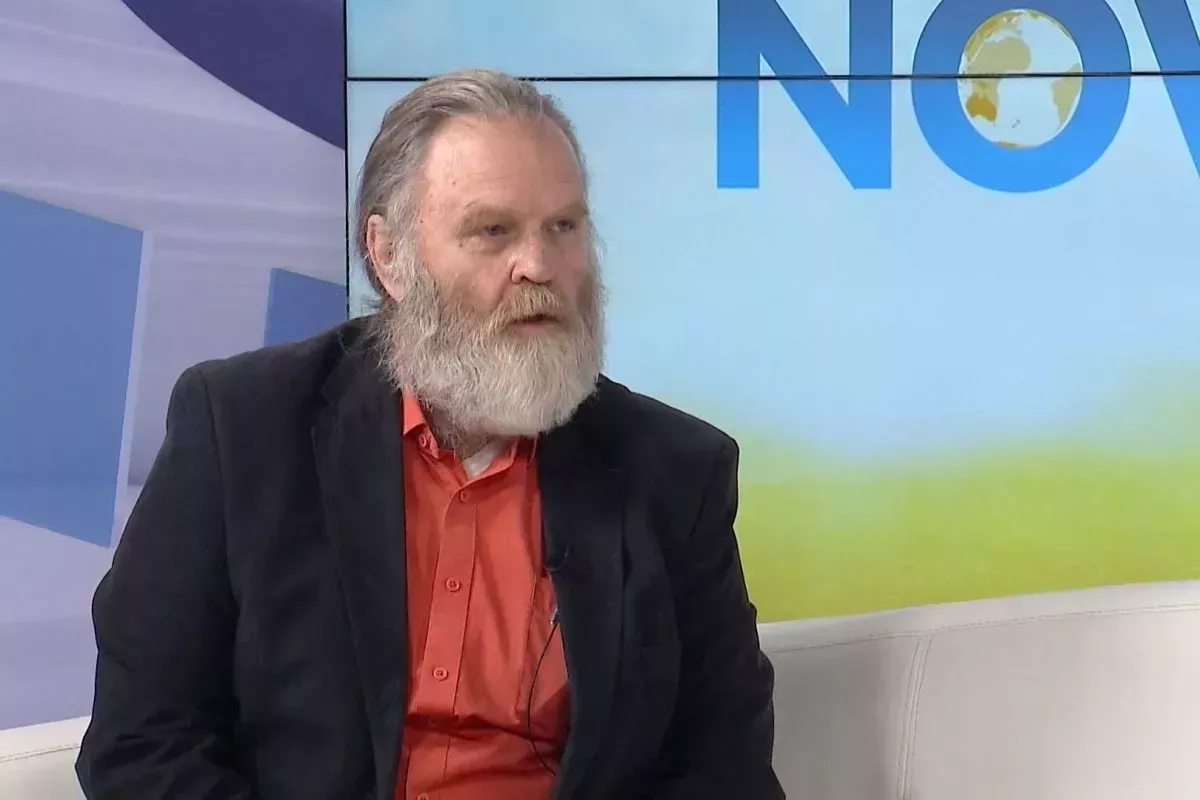
The last installment of the feuilleton "Dostoevsky in Gaza" - (first part) (second part)
By: Sead Alić
Dostoevsky's irony in his speech about journalism is also interesting. His short instruction for those who want to learn something about Jews is that they don't have to go to libraries and read books. It is enough to reach for the newspapers that are at hand, and something positive will surely be written about Jews on the second or third page. The media, Dostoevsky suggests, are in the hands of Jewish logic, behind which stand the Jews.
It is in the nature of capital to multiply. Without growth and fertilization, capital loses its value and its influence ceases. The accumulation of capital over centuries has resulted in its involvement in all spheres of life. The media were among the first to be targeted. There are many texts and comments from people on social networks that point to the Jewish dimension of ownership of world media. From this text by Dostoevsky, and from the texts we will analyze later, it is clear that the media have played an important role in creating the ideology of media lies, which is omnipresent and almost omnipotent.
Dostoevsky allows for the possibility that some people hate Jews, but he wonders if there is a reason why Jews claim that everyone hates them. If hatred is universal, what is its source? How would Jews answer that? Dostoevsky denies such hatred. He rejects the idea that the entire Orthodox Russian people would hate Jews because of the belief that Judas betrayed Christ. Dostoevsky testifies from his own experience that the majority of the Russian people accepted Jews, but even when they were accepted, it was the Jews who kept their distance.
This is where we come to a crucial link between Dostoevsky's views and the current genocidal intentions of Zionists in Gaza. Dostoevsky asks: "Sometimes a madness occurred to me, to ask myself: what if there were not three million Jews in Russia, but Russians, and eighty million Jews? What would happen to those Russians, and how would the Jews treat them? Would they allow Russians to be equal to them in rights? Would they allow them to pray freely? Wouldn't they immediately turn them into slaves? And worse! Wouldn't they skin them alive? Wouldn't they completely eradicate them, finally destroy them, as they have done with other peoples in ancient times, at the beginning of their history?
Palestine is the answer to Dostoevsky's questions. Gaza is confirmation that these questions had to be asked and that they had to be thought about in time. The genocide that Zionists are currently committing against Palestinians is a clear sign that the role of victim was a costume for transforming distance into complete rejection of others (if they are not useful); that the hatred they attribute to others is actually a feeling that has been developing within themselves; that the first situation that led to them being more numerous in a certain territory developed the idea of ethnic cleansing of others. Even when they were not the majority, (because Zionists excluded Palestinians from Gaza and the West Bank from democratic processes) weapons, media, and usurious capital were in their hands. Judaism has unleashed Zionism as an armed evil of the idea of exterminating the people of a country.
Dostoevsky sees the root of the problem in the position that Jews have developed in the world, which is Status in statu. The main characteristics of this position for Dostoevsky are the following: "voluntary segregation raised to the level of religious dogma, refusal to mix with anyone, the belief that there is only one nationality in the world – Jewish, and that others, of course, exist, but should be considered as if they do not exist in the world. Separate yourself among the tribes and show yourself, and know that you are the only chosen people of God for now, and either exterminate all others, or turn them into slaves, or exploit them. Believe in your victory over all the peoples of the world, believe that all will submit to you. Despise all others, and in your way of life, do not mix with others. And even when you are deprived of your land and your political individuality, even when you are scattered across the face of the earth and driven among other tribes – nevertheless – believe in all that was promised to you once and for all, believe that all that was promised will come to pass – and for now, despise everyone, distance yourself from everyone, and exploit everyone, and – wait, and only wait...!"
Dostoevsky believes that Status in statu, this position that Jews hold, does not and did not exist due to the need for self-preservation. His premonition is dark, and our time seems to be the time when this status will be illuminated. Namely, Dostoevsky writes: "The main reason is not only this need for self-preservation, there is some other idea that drives and guides, something particularly deep rooted in the very mystery of the world, about which people have not been able to say a final word until today."
Dostoevsky sees the religious dimension as crucial in that idea. This feeling of 'chosenness', of the specialness of a people to whom God himself has spoken, has resulted in arrogance, untouchability, distance, fences, walls. "One cannot imagine a Jew without God," Dostoevsky notes and arrives at the key point of his interpretation.
Indeed, everything we refer to defines us sometimes more strongly than we think. Sometimes it defines us in unexpected ways. Jews, who felt like the 'chosen people', never managed to establish a constructive relationship with the rest of the world. Believing in stories collected over a thousand years and tailored to the needs of political hierarchies, Jews have turned into autistic advocates of the narrative truths of the Old Testament. Everything would have been fine if it had remained at the level of listening, metaphor, faith, confession, spirituality. Unfortunately. The text of the Old Testament, specifically the part that calls for the killing and extermination of other peoples, has become the political program of Zionist policy. Palestinians are a people to be exterminated, just as the Amalekites were once exterminated. Dostoevsky, of course, cannot go that far, but he sees the depth of the religious fanaticism of the Jewish person. He sees the problematic nature of the idea of a chosen people. He sees the consequences. One of them is the accumulation of gold so that, unbound by foreigners and their land, they are ready to follow the Messiah wherever he calls.
The problem that Dostoevsky sees here could be summarized in a few sentences. Namely, if Jews are so special, if they insist on it, if they fence themselves off and do not accept others, while at the same time wanting all the rights that people in the countries where they live have (including Russia), wouldn't they then, Dostoevsky asks, receive more than they deserve.
The key to understanding Dostoevsky's fencing off is the word with which he thinks Russians would describe the character of Jews, or rather, that the ordinary Russian person most feels their – 'ruthlessness'. "Ask the inhabitants in our province: what is it that drives the Jews, what has driven them for so many centuries? You will get a unanimous answer: ruthlessness, 'only ruthlessness drove them towards us, and an eternal thirst to drink our blood and our sweat.' And, indeed, the entire activity of the Jews in our provinces was limited to subjugating the local population as much as possible, to putting them in a position of complete dependence."
Dostoevsky wants to say that the demands for equality coming from the Jewish side are actually one-sided and hypocritical.
Where Jews dominated, the Russian people did not prosper. Jews want to preserve their distinctiveness at the same time, but also to use the state's legislation as a lever to develop and preserve that distinctiveness. If that distinctiveness were a matter of rituals or culture, customs, folklore, or something similar, it would of course not be a problem. But here we are talking about "...that spirit which breathes hatred towards everyone who is not Jewish, in the spirit of that ruthlessness which is felt in their attitude towards everyone and everything that is not Jewish – towards every other being, tribe, or people."
The short history of the Zionist neocolonial conquest of Palestinian land, the genocidal attempt to exterminate the natives, the Palestinians, the invocation of their right to 'return' to the holy land, and at the same time the violation of all rights of Palestinians as well as United Nations resolutions – tell us that Dostoevsky correctly foresaw a problem that will also cost Jews dearly.
Indeed, the crimes committed by Zionists in Palestine rely on God. As in the case of crimes in Bosnia and Herzegovina (where people were killed in the name of God, mostly Muslims), here too, without invoking God, people/soldiers could not be forced to commit such crimes. God is the one who gives them instructions on how and how much to kill. God gives them the suggestion not to leave anything alive (Palestinian) alive. God is the Jewish witness that they can simultaneously be special people and criminals.
The Jewish God is either not God, or the holy texts are so falsified that they demand that Jews both follow God and kill.
Dostoevsky also sees the superiority of Jews over Europe of his time. But while in Europe it is about peoples with developed cultures, so the establishment of Jewish ideology is a little more difficult, Russia seems to have been created for Jewish division.
Materialism and money are the means of Jewish erosion of values on which social communities were based until the nineteenth century. Dostoevsky sees Jews as a kind of owners of Europe, those who have elevated materialistic principles unacceptably high, those who manage banks, stock exchanges, financial flows of European societies… he sees them as 'gods of international politics'.
Dostoevsky notes: "Therefore, it is not accidental that Jews rule the stock exchanges there, it is not accidental that they hold capital, it is not accidental that they own credit institutions, and it is not accidental, I repeat – that they rule in international politics, and what will happen next, only the Jews themselves know: their empire is approaching, their complete empire! The complete triumph of ideas is coming, which will overshadow the feeling of humanity, the thirst for truth and justice, before which the feeling of Christian, national, and popular pride of European peoples will fade. Materialism is coming as the embodiment of blind lustful thirst for personal material security, as the embodiment of the thirst for accumulation and hoarding of money at any cost – and this is all that is recognized as a noble goal, as reason and freedom, instead of the idea of salvation which rests on the ever-increasing moral and fraternal union of people."
Today, the world is slowly becoming aware that this financial management of the world, turned into political power by partners from the political world of bureaucratized and bought governments – is leading the world into World War III. It is becoming clear that the critique of Judaism as a materialistic worldview (Karl Marx) has landed in real political relations that threaten catastrophe.
Realistically, the logical consequence of combining the biblical myth, playing the role of victim, accumulating wealth over centuries, managing banks, stock exchanges, financial flows of money, buying and managing media, and through them politicians at global and regional levels – everything is becoming much clearer.
Gaza is the end of the beginning or the beginning of the end. Gaza is a place that should open humanity's eyes. The killing of a people in 'live broadcasts' on social networks, with the blessing of the most powerful states of the American and European continents, all this must be exposed in analyses that will re-examine history and religious history, as well as the history of morality, thought, social relations. Ultimately, the history of the concepts with which we have tried to think about the world.
(End)
Komentari (0)
Prijavite se za komentiranje
PrijavaJos nema komentara. Budite prvi!
Minuta
Sve →Iz drugih kategorija

High Representative Not Elected: Germans, French and British Against Americans, New Attempt at End of June

ČOVIĆ WITHOUT MERCY: How Those Who Brought Ademović to Office Created a Political Hell for Him



Sunny Saturday, quite warm



Tragedy in Albanian resort: Two minors drown












