
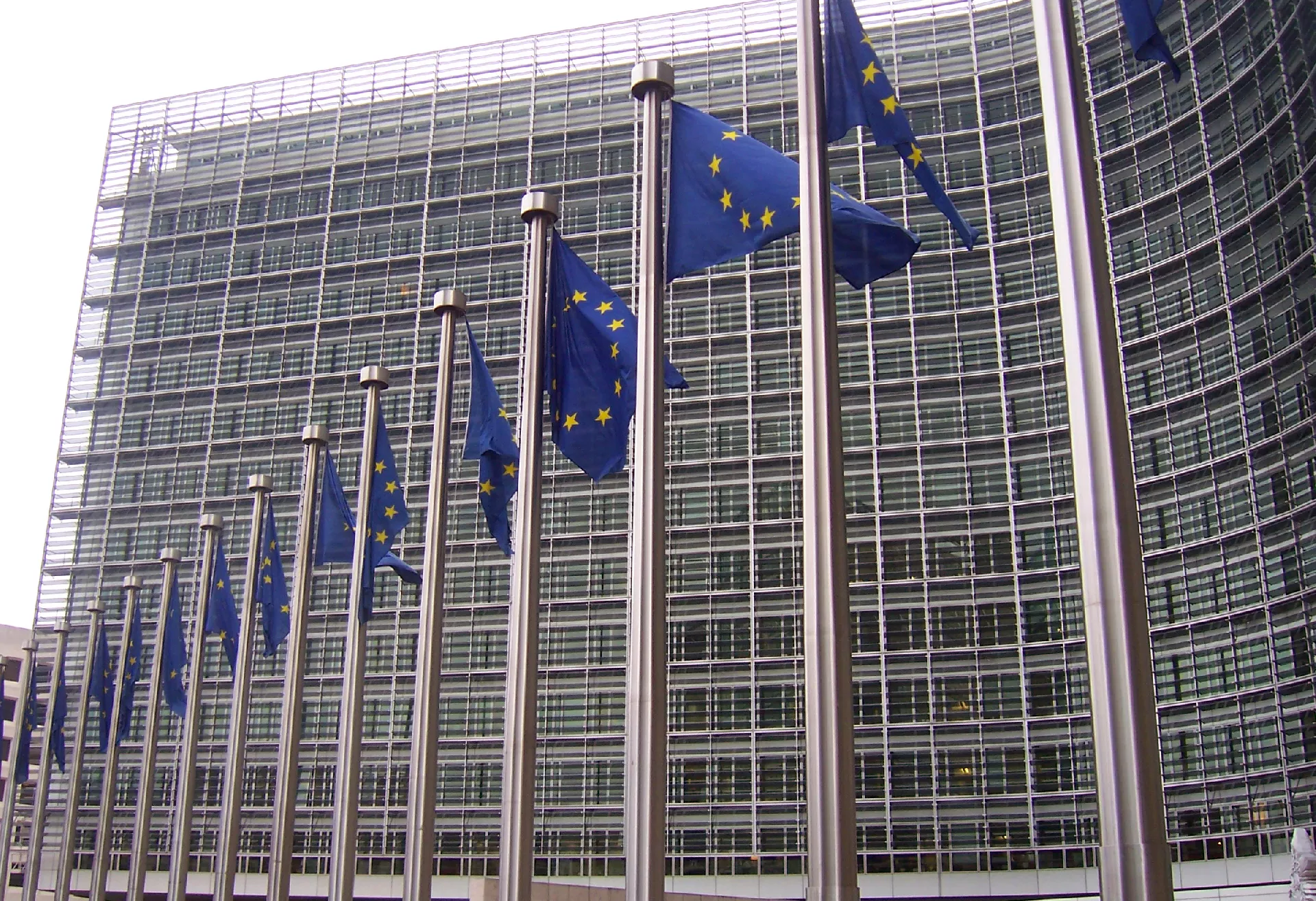
Column by the Head of the EU Delegation and EU Special Representative in BiH, Johann Sattler, and the Chargé d'Affaires of the Diplomatic Mission of Belgium in BiH, Benjamin Sturtewagen
Among the founders of the European Union was a group of diverse and fascinating individuals. Jean Monnet, one of the most prominent leaders of European integration, was a charismatic cognac merchant before becoming politically engaged. Altiero Spinelli, during his imprisonment in 1941, wrote a significant manifesto on European unity on cigarette paper and managed to smuggle it out of prison in a roast chicken.
Robert Schuman, author of the Schuman Declaration of 9 May 1950, which paved the way for today's European Union, was a deeply religious man whom the Catholic Church beatified, one of the steps towards sainthood. Konrad Adenauer, a workaholic and post-war German chancellor, was a leader in the reconciliation process that restored the reputation and economy of his country after the devastation wrought by Nazism.
Simone Veil, president of the first directly elected European Parliament in 1979, survived Auschwitz and Belsen.
Despite their different characters, nationalities, party affiliations and life stories, the founders of the Union were united by a common belief that Europe must no longer be destroyed by wars, so frequent in our history. United in the view that monuments to lives cut short across our continent must be a powerful and constant reminder of what is at stake here. Driven by a unique idea that the many peoples of Europe strengthen their national identity through joint work, while the flag should be a source of celebration and pride at a football match or cultural festival, rather than being attached to a bayonet or a tank.
For the citizens of Bosnia and Herzegovina, who remember the consequences of conflict, the promise of a future within the Union is a guarantee of peace, security and a better future.
Enlargement is one of the most successful policies of the European Union. Uniting 450 million people into a Union of 27 member states is one of the reasons for the 2012 Nobel Peace Prize for the European Union. However, the project of uniting European peoples is not yet complete.
There is a new dynamic in the enlargement process, a realisation that countries wishing to join cannot remain forever in the Union's waiting room. This realisation came to the fore after Russia's illegal aggression against Ukraine, aimed at redrawing borders and returning Europe to political spheres where force dominates, an idea that the very founding of the EU was meant to leave in the past. There is an understanding that if the countries of the Western Balkans sincerely engage in reforms, the European path should be revived, offering the region new opportunities for stronger integration into the single European market, as well as new sources of funding.
Before the historic decision of the European Council to open accession negotiations with Bosnia and Herzegovina, the coalition at the state level expressed a desire for sincere engagement in the reforms necessary for progress on the European path. Through negotiations, dialogue and compromise, which are so important within the European Union itself, a series of key laws were adopted.
Unfortunately, Bosnia and Herzegovina is again in a political crisis. For the benefit of the citizens of Bosnia and Herzegovina, leaders should show vision and genuine courage and leadership and seize the existing historic moment to achieve lasting progress on the European path. Accession to the Union requires tough decisions. It is time to start making such tough decisions.
It is time for further progress in the spirit demonstrated by domestic authorities in the months before the European Council's decision. The consensus necessary for making joint decisions from which everyone benefits is the backbone of the way the European Union functions, and it can be the same in Bosnia and Herzegovina. It is no coincidence that the 27 EU member states are not always in agreement on every issue. Precisely for this reason, meetings of leaders of member states can last for days, until the early morning hours. However, this fundamental process of negotiation to harmonise common positions also yields concrete results, including a single currency, a prosperous single market, the borderless Schengen area, high social, environmental and consumer standards, and others.
Bosnia and Herzegovina already benefits significantly from its partnership with the Union, including better infrastructure, trade and business opportunities, programmes such as Erasmus+, Creative Europe and Horizon Europe, which open opportunities for BiH students, creatives and researchers. The successful pan-European response to the Covid pandemic provided life-saving equipment for patients in Bosnia and Herzegovina, over half of the total vaccine doses in this country and over 70 million euros in aid for socio-economic recovery.
There is interest on both sides for progress in enlargement, but that does not mean that the conditions for membership can be changed. These are prerequisites for future successful full membership. The accession process is hard work, but it inevitably brings reforms that improve the functionality of institutions, strengthen the rule of law, improve the fight against corruption, support the energy transition, lead to greater environmental protection and create a more favourable business environment for growth and jobs, and much more. The truth is that every country that has opened accession negotiations has witnessed first-hand the benefits that come from the negotiations in terms of investment and growth.
The European Union is also committed to considering ways in which the countries of the Western Balkans can enjoy important benefits of integration with the European Union even before full membership. Agreements on the abolition of roaming already mean that BiH citizens can travel to the region and Europe without accumulating excessive phone bills. Plans for Bosnia and Herzegovina to join the Single Euro Payments Area (SEPA), an EU initiative for integrating payments to simplify bank transfers, will lead to a dramatic reduction in the cost of sending money from the Union to Bosnia and Herzegovina and vice versa, with all that this will mean for families and businesses. We are looking for ways to simplify procedures at border crossings and speed up traffic flow, including goods. We are committed to supporting further improvements in infrastructure, including the completion of Corridor 5c, as well as digital infrastructure in terms of better internet speed and connectivity.
It is time to complete the European Union. Robert Schuman, that reserved, academic student of the Bible, in his Declaration of 9 May 1950, states that "Europe will not be created overnight, or according to a single plan. Europe will be built through concrete achievements that above all generate de facto solidarity." On Europe Day 2024, a day when we also mark the fall of fascism, we must remember the immense achievement of a united Europe and work tirelessly to complete the vision of the Union's founders here in Bosnia and Herzegovina, as well as across the entire continent.
Komentari (0)
Prijavite se za komentiranje
PrijavaJos nema komentara. Budite prvi!
Minuta
Sve →Iz drugih kategorija

High Representative Not Elected: Germans, French and British Against Americans, New Attempt at End of June

ČOVIĆ WITHOUT MERCY: How Those Who Brought Ademović to Office Created a Political Hell for Him



Sunny Saturday, quite warm



Tragedy in Albanian resort: Two minors drown












