
By Armin Sijamić
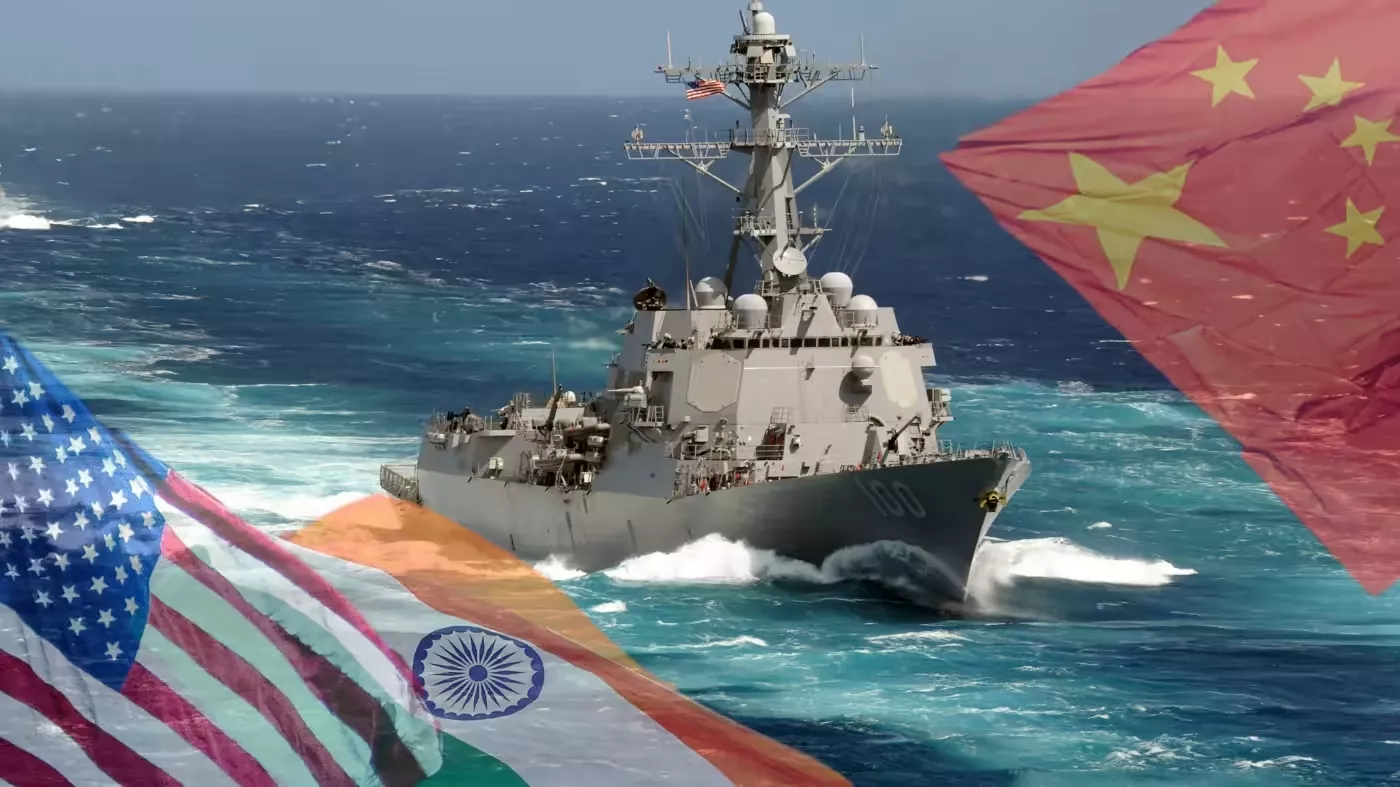
Relations between China and India cannot be properly assessed solely at a given historical moment, as the rivalry between the two geopolitical giants has lasted for centuries. These are not just neighboring rival states, they are two civilizations that refuse to submit to each other. The two most populous nations are this time in conflict over the Maldives, the smallest Asian country with half a million inhabitants, whose "sin" is that it is located along important shipping routes that two powers want to control.
At the end of September last year, Mohamed Muizzu, the then mayor of the capital Male, won the presidential election in the Maldives. Muizzu campaigned under the slogan "India Out" and was recognized by the public as a pro-China candidate. The then-president Mohamed Solih was considered a pro-Indian politician.
From the announcement of the elections, this contest was discussed and attracted attention worldwide. This island nation with hundreds of coral islands and atolls is known to people around the world as a tourist paradise, but to those who study geopolitics, the Maldives are known as a group of islands in the Indian Ocean, along whose shores almost half of the world's oil passes. In a broader context, it is one of the important links in China's plans to have a presence in the Indian Ocean and further towards the Persian Gulf and the Suez Canal, while India views the Maldives within the framework of efforts to disrupt China's maritime routes and prevent its own encirclement.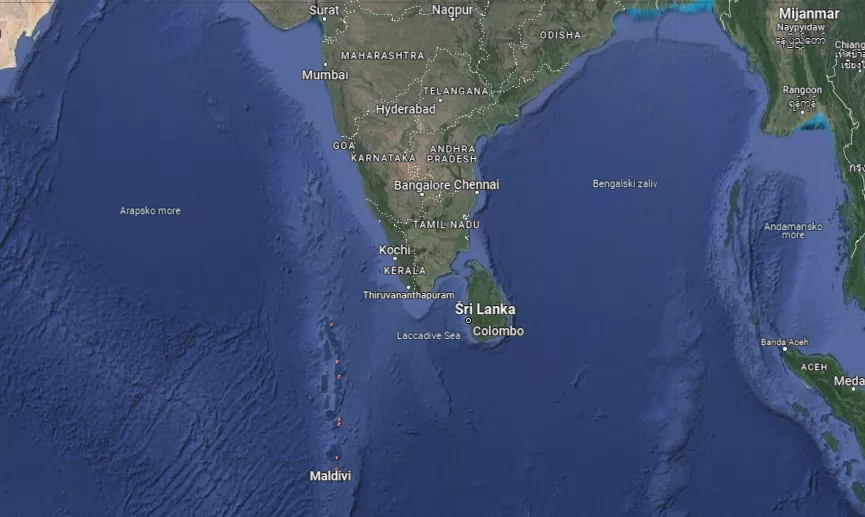
A look at the geographical map clearly shows the importance of the Maldives and why India and China are fighting for this country. Chinese ships pass between the Maldives and India, or Sri Lanka. Control of this maritime route is therefore so important, especially for China, considering that there are Indian military outposts in Seychelles and Mauritius, while serious American forces are stationed on the island of Diego Garcia, a base that can accommodate thirty thousand soldiers and host the largest American ships and B-52 bombers, and that British and French overseas territories are also located there.
Therefore, China's control over the Maldives and similar countries is of exceptional importance, especially for the security of its ships' long voyages. Beijing wants to prevent rival powers from influencing Chinese navigation. Hence, China has been working on its presence in Thailand, Myanmar, Sri Lanka, the Maldives, and the African country of Djibouti, where it has a military base, in recent years.
In addition, China has strongly entered Central Asia, Pakistan, Afghanistan, Iran, the Middle East..., expanding its "Belt and Road" initiative. A look at the map indicates that these are all countries surrounding India. After the Maldives joined this initiative in 2017, the opposition accused Beijing of "grabbing land," while former President Solih called for a redefinition of his country's position in this project. Current President Muizzu called for stronger ties with China at the beginning of the year.
"Allies" from BRICS and SCO
These days, New Delhi has been disturbed by the news that the ship "Xiang Yang Hong 3" is arriving in the Maldives, which, according to Beijing's claims, is on a scientific mission to collect data in the Indian Ocean and is stopping there for personnel rotation and resupply. From the standpoint of international norms, there is nothing controversial about this, but India believes that the ship is there to collect data for the Chinese army.
This is not the first time that Chinese vessels have appeared off the Indian coast. In 2014, two Chinese submarines visited Sri Lanka, and in the last two years, two research vessels. The aforementioned ship "Xiang Yang Hong 3" was actually on its way to Sri Lanka. It is believed that the ship changed course due to India's pressure on Sri Lanka, so it continued towards its ally in the Maldives, President Muizzu, who was on a five-day visit to China last month. After that, Chinese delegations visited the Maldives, and new infrastructure projects were announced.
The fact that China has taken the Maldives from India is also evidenced by Muizzu's order for 80 Indian soldiers, who were stationed there with donated aircraft to the island nation, to withdraw from the Maldives. Muizzu ordered the first group of Indian soldiers to withdraw in March and the second in May. That group of soldiers enabled India to monitor a key part of the Indian Ocean. India wonders if Chinese soldiers will replace them. Then, Muizzu announced that he would not renew the agreement with India on hydrographic research of the seabed in the waters of the Maldives, and no one from the Maldivian government attended the celebration of the 75th anniversary of India's Republic Day, which was held in Male.
This Chinese triumph off the coast of India demonstrates the rivalry between two members of BRICS and the Shanghai Cooperation Organization (SCO), which were conceived in Moscow and Beijing as tools to abolish Western dominance and for the cooperation of the "global south." Such a confrontation over the control of the smallest country in Asia speaks volumes about the differences between the two most populous states. Moreover, it confirms that the confrontation between India and China is intensifying, much to the satisfaction of Washington and President Joseph Biden, who offered Prime Minister Narendra Modi an attractive deal in mid-last year.
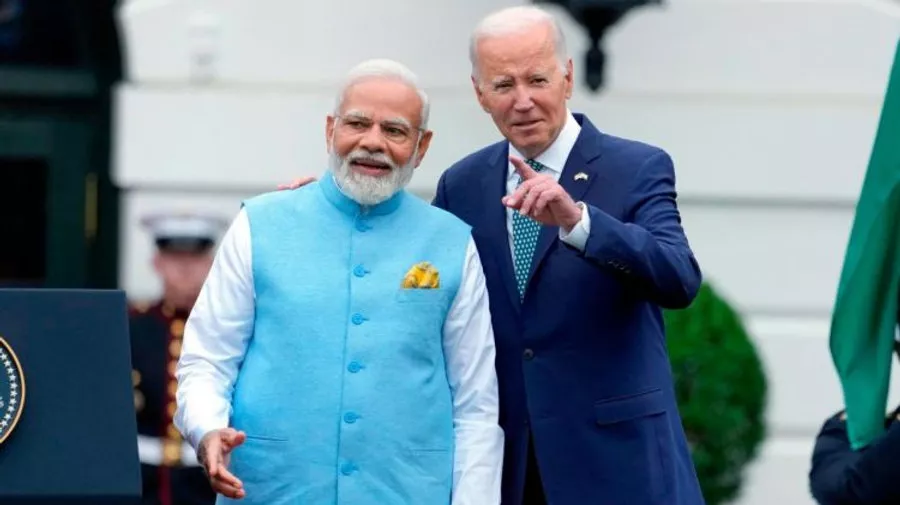
The Maldives are not the only example of things not developing in the direction of cooperation between India and China. In the past few years, India has been working to attract companies from the West, i.e., persuading them to leave China. In addition, India is a member of the Quad initiative (USA, India, Japan, Australia), whose sole real objective is to suppress Chinese influence. Then, two years ago, India sold BrahMos anti-ship missiles to the Philippines, strengthening its navy for a showdown with China in the South China Sea, likely with Washington's approval. It is believed that India has also offered weapons to Indonesia and Vietnam, which view China's behavior in that sea as a threat.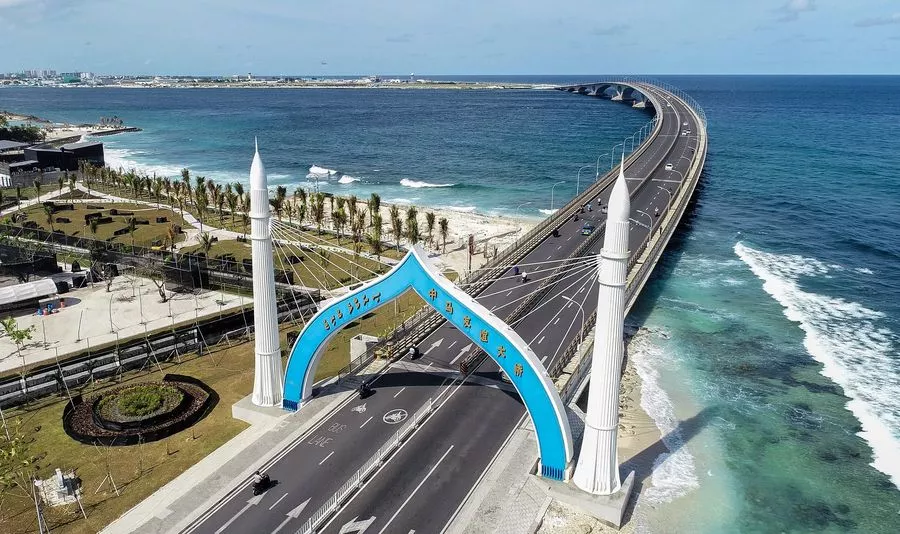
Clash of Old Rivals
The Sino-Indian confrontation continues, as it has in previous years, despite the proclaimed alliance between Beijing and New Delhi through various forums. It is entirely clear that India sees China's further strengthening as a threat, while Beijing fears that economic and other flows could turn in India's favor now that it has become the most populous country in the world and the West is seriously considering limiting relations with China.
In recent months, Modi has almost halted the work of BRICS and SCO, reducing these organizations to an economic forum, which was certainly not the idea of Moscow and Beijing when they founded them. The latest Chinese influence in the Maldives and Muizzu's arrogant treatment of India show that Beijing does not have excessive faith in Modi's intentions and that a offered hand of partnership often comes with reservations. This was not so pronounced during the time when Manmohan Singh governed India, but with an Indian nationalist like Modi, things are quite different.
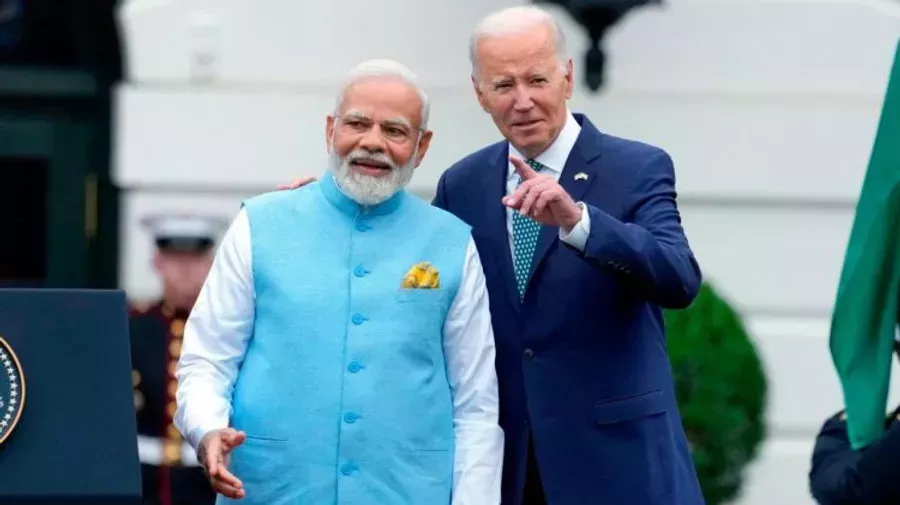
Chinese President Xi Jinping has so far not found a way to convince Modi to jointly resist the West, just as Vladimir Putin has not convinced him to support him in the war against Ukraine. However, this should not be a surprise for Moscow and Beijing, as they had a similar problem in BRICS earlier with Brazilian President Jair Bolsonaro, who looked up to Donald Trump and firmly hit the brakes on any BRICS move that could endanger Washington.
While China is counting lost time in the work of organizations it seriously relies on, India believes it can gain concessions from the West for its policies. From this point of view, it is even more evident that Biden has done a good job for the US and the West with the aforementioned agreement with Modi, meaning that Beijing has not found an answer but is choosing confrontation off the coast of India. It is in the West's interest for this confrontation to continue, as long as Modi prioritizes national interests over obedience to another country, organization, or alliance. The case of the Maldives proves that India and China can clash even without the presence of the West.
Komentari (0)
Prijavite se za komentiranje
PrijavaJos nema komentara. Budite prvi!
Minuta
Sve →Iz drugih kategorija

High Representative Not Elected: Germans, French and British Against Americans, New Attempt at End of June

ČOVIĆ WITHOUT MERCY: How Those Who Brought Ademović to Office Created a Political Hell for Him



Sunny Saturday, quite warm



Tragedy in Albanian resort: Two minors drown












