
By: Amina Čorbo-Zećo
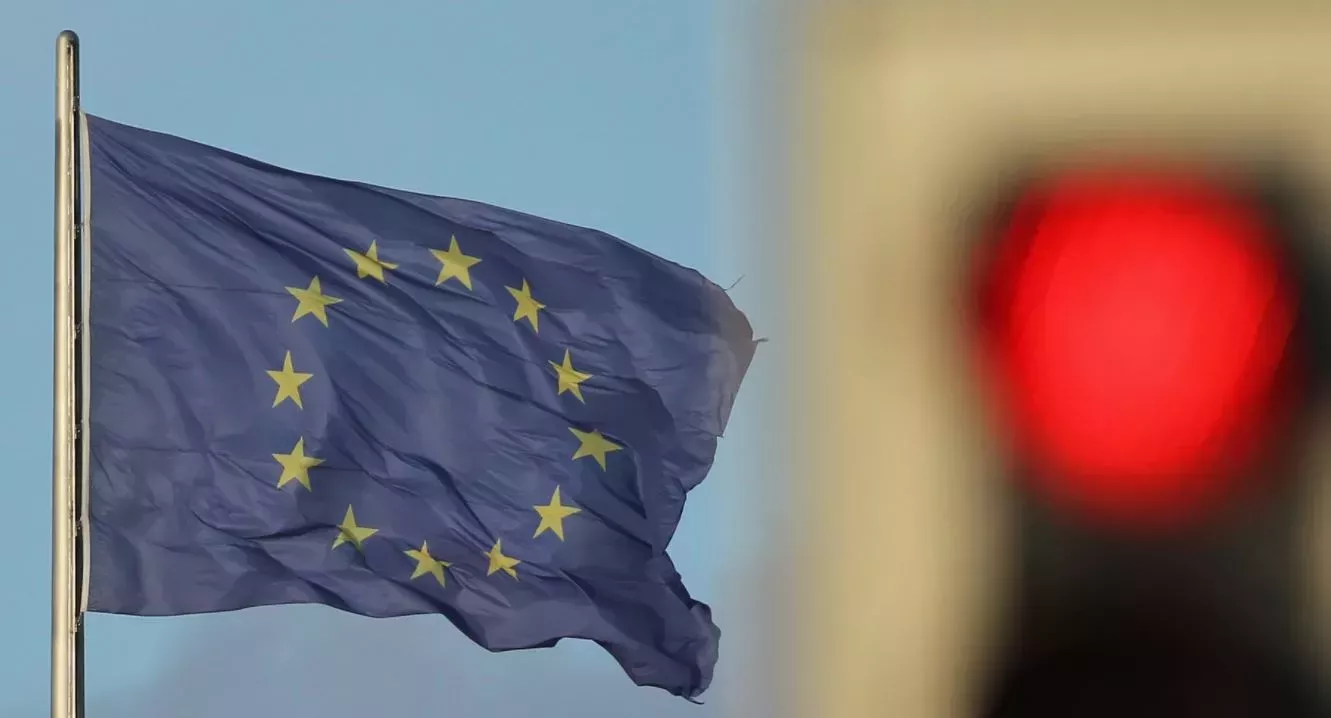
The arrival of high officials Ursula von der Leyen and António Costa in Kyiv to mark the fourth anniversary of the Russian invasion is a symbolically strong message of support for Ukraine. But behind the symbolism lies political reality. The European Union has once again shown how vulnerable it is when it comes to making strategic decisions that require unanimity.
The planned 20th package of sanctions against Moscow and a loan of 90 billion euros to finance Ukraine's defense have been blocked by Hungary. Foreign Minister Peter Szijjarto clearly stated that Budapest will not give its consent, first due to a bilateral dispute with Kyiv over oil, and then as a political message of disagreement with further escalation of sanctions.
This, in short, is today's Brussels, a group of 27 states with formally equal votes, but with deeply different interests, political cultures, and foreign policy priorities. At a time when global relations are rapidly changing and Europe's security architecture is being redefined, the EU is finding it increasingly difficult to balance principled policy with internal blockades.
Why is this important for Bosnia and Herzegovina?
First and foremost, because Bosnia and Herzegovina is a candidate for membership in the European Union. If the European Union is unable to overcome internal blockades when it comes to Ukraine, a country defending itself against open aggression, the question arises as to what strength and capacity it will have to protect the interests of future members or candidates.
Ukraine's experience shows that one member state can, for its own political or bilateral reasons, block a broader European strategy. In the context of BiH, many are already drawing parallels with the role of Croatia, an EU member that actively participates in shaping internal political processes in BiH, particularly through insisting on changes to the Election Law in accordance with the proposals of HDZ BiH and the party's leader, Dragan Čović.
The emerging fear is: will Croatia, as a full member, have a position similar to that which Hungary currently holds towards Ukraine? In other words, can Zagreb block BiH's progress towards membership if it assesses that political processes in Sarajevo are not moving in a direction that suits the interests of HDZ BiH? And where are the interests of Bosnia and Herzegovina as a state in all this.
The EU formally advocates for the rule of law, functional institutions, and respect for sovereignty. However, in practice, it often chooses a pragmatic approach to preserve a minimum of internal unity. Tolerating unilateral actions by member states, including pressure on neighboring countries, is becoming part of the political reality.
Now the question is whether Brussels is consciously overlooking the actions of certain member states towards BiH, or how they cannot prevent Croatia's detrimental interference in BiH's internal affairs. But, an answer will be found if we remember that Croatia was admitted to the EU without resolved borders with BiH. This certainly raises doubts that official Brussels knows what it is doing.
If the EU is not prepared to react clearly when a member state uses its position to achieve particular national goals towards a neighboring country, then BiH's invitation to membership sounds less like a strategic vision and more like a political process without clear guarantees.
What must BiH learn from this? The first lesson is that EU membership cannot be built on the expectation that Brussels will "resolve" internal disputes or protect BiH from regional pressures. The EU functions on compromise and interest, not on idealized solidarity.
The second lesson is that any unresolved internal weakness, from blocked institutions to ethnic divisions, becomes a space for external influence. If BiH wants to avoid a scenario where its European path depends on the will of one member state, it must build internal consensus on key reforms, without imposing solutions that serve narrow party interests.
The third lesson concerns the reality of decision-making in the EU: unanimity gives every member state veto power. This is a system that simultaneously guarantees equality but also produces paralysis.
Therefore, the discussion about BiH's European path is much more than technical legislative harmonization. It is a matter of political maturity, negotiation capacity, and understanding that in Brussels, no one protects BiH's interests better than BiH itself. Although our politicians do not understand it that way. They still believe that the EU and Brussels will be benevolent towards our country, but that is no longer faith, it is madness. Because we must remember that the EU did not follow the US sanctions against Milorad Dodik!
This is precisely why it is important to follow what is happening between Kyiv, Budapest, and Brussels. The future of Sarajevo on the European map is reflected in these relationships.
Komentari (0)
Prijavite se za komentiranje
PrijavaJos nema komentara. Budite prvi!
Minuta
Sve →Iz drugih kategorija

High Representative Not Elected: Germans, French and British Against Americans, New Attempt at End of June

ČOVIĆ WITHOUT MERCY: How Those Who Brought Ademović to Office Created a Political Hell for Him



Sunny Saturday, quite warm



Tragedy in Albanian resort: Two minors drown












