
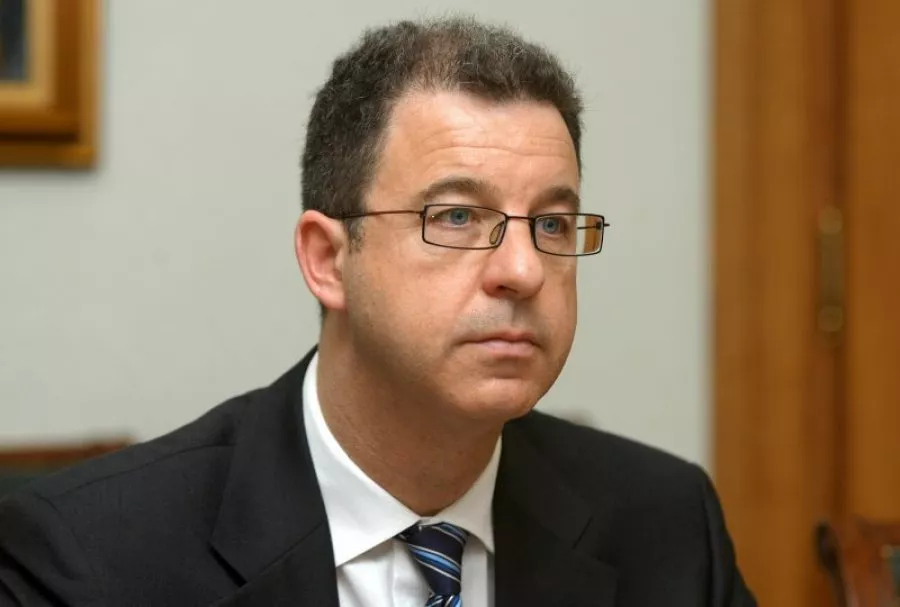
(Patria) - Chief Prosecutor of the International Residual Mechanism for Criminal Courts Serge Brammertz addressed the United Nations Security Council today regarding the activities of the Office of the Prosecutor of the International Residual Mechanism for Criminal Courts. As he stated, his written report to the Security Council contains details of activities during the reporting period.
As he said, the Prosecution's first priority, as always, is to expeditiously conclude the ad hoc trials and appeals proceedings within the Mechanism's jurisdiction.
"During the reporting period, the Prosecution's branch in The Hague made significant progress towards concluding the remaining proceedings referred from the ICTY. Most importantly, on March 20, 2019, the Mechanism's Appeals Chamber upheld the conviction of Radovan Karadžić for genocide, crimes against humanity, and war crimes. The Appeals Chamber further granted the Prosecution's appeal and imposed a sentence of life imprisonment. As President of Republika Srpska, Karadžić stood at the height of his power, which he abused by manipulating his people and committing atrocities that shocked our collective conscience. He was one of the world's most wanted fugitives for thirteen years. He has now been held accountable by an international court for his crimes. This case is a strong indicator that, when the international community remains determined, justice can and will prevail," said Brammertz.
Speaking about the retrial in the Stanišić and Simatović case, Brammertz stated that during the reporting period, the Prosecution concluded the presentation of its evidence and the defense's evidentiary proceedings have now begun.
"In this regard, I note the efforts of the Republic of Serbia to ensure full cooperation with the Prosecution by promptly responding to several significant requests for assistance. Regarding the appeal proceedings in the Mladić case, the Prosecution has completed the preparation of written arguments on the appeals, and has also discussed several other issues in this case, including requests for additional evidence," he said.
He stated that regarding the prosecution at the state level of crimes committed in Rwanda and the former Yugoslavia, his written report provides a detailed insight into the current status and challenges.
"It is clear that much remains to be done to achieve more justice for more victims. Rwandan authorities are still searching for more than 500 fugitives. In the former Yugoslavia, state courts must prosecute thousands more cases. Our partners at the state level are unanimous that they need more support, assistance, and advice to successfully implement national strategies regarding war crimes. Last year, we received 333 requests for assistance in providing evidence, more than ever before.
And current trends indicate that we will receive a record number of requests this year. Regional cooperation is another area where we have intensified engagement and where intensified engagement will have an impact. I am pleased to report that, with the support of the Prosecution, at a recent conference in Belgrade, the chief prosecutors from the region agreed to transfer specific cases concerning mid-level officials from the countries where the crimes were committed to the countries where the suspects now live. They further requested the Prosecution to assist in this process. The countries of the former Yugoslavia have committed to accelerating the pace of war crimes prosecutions and significantly reducing the number of unsolved cases. State prosecutors have made it clear that achieving these goals depends on continued and increased assistance."
He said that the international community must play a significant role by ensuring that the requested assistance is provided.
"The last topic I would like to address is the denial of crimes and the glorification of war criminals. Regarding Rwanda, the denial of genocide, in all its forms and manifestations, unfortunately continues. Attempts to minimize the scale of death and destruction, or to point to other factors to divert attention from the facts of the genocide, are unacceptable. Regarding the former Yugoslavia, I informed you about this topic for the first time five years ago. Unfortunately, since then, the situation has dramatically worsened. It is unacceptable that, as recently as last week, a government minister called the Srebrenica genocide a lie, while a member of parliament congratulated Ratko Mladić on the genocide, which he called a brilliant military operation. The truth is that during the conflict there was unspeakable human suffering, caused by leaders who used fear, division, and hatred. No one was left unharmed, neither in Bosnia and Herzegovina, nor in Croatia, nor in Kosovo, nor in Serbia. Denial of crimes causes deep pain to the victims. Their suffering is immense, and yet some are determined to further insult and torment them. Glorification of war criminals punishes the young. What they learn in classrooms and from their leaders divides them, instead of bringing them together. The consequence is clear. Denial and glorification destabilize the region and prevent reconciliation. Therefore, to begin moving forward, glorification must stop. Denial of crimes must not continue. Political leadership at the highest levels is urgently needed.
Important lessons can be learned from Rwanda. Every year, the Rwandan people collectively commemorate all victims of genocide for 100 days and renew their determination to ensure that such crimes never happen again. The international community failed the victims in Rwanda and the former Yugoslavia by standing aside when crimes were being committed. We must not fail them again now by not speaking out against denial and glorification."
He stated that the Prosecution remains firmly focused on concluding its remaining functions in an efficient and effective manner.
"In the search for fugitives, the Prosecution is gathering credible information about the current whereabouts of several fugitives. However, we are still not receiving the cooperation needed to ensure arrests. We call on all member states to abide by their international obligations and provide full cooperation to our efforts."
He stated that they remain committed to supporting the continuous implementation of the strategies for the closure of the IRMCT and ICTY by state authorities, in order to achieve more justice for more victims.
"We are grateful for the continued cooperation of this Council in all our endeavors," said the Chief Prosecutor of the International Residual Mechanism for Criminal Courts, Serge Brammertz.
Komentari (0)
Prijavite se za komentiranje
PrijavaJos nema komentara. Budite prvi!
Minuta
Sve →Iz drugih kategorija

High Representative Not Elected: Germans, French and British Against Americans, New Attempt at End of June

ČOVIĆ WITHOUT MERCY: How Those Who Brought Ademović to Office Created a Political Hell for Him



Sunny Saturday, quite warm



Tragedy in Albanian resort: Two minors drown












