
‣ What was said at yesterday's regular session of Krug 99 on the topic "International pressures and the resistance of the modern Bosnian state"?
‣ Bosnia and Herzegovina after the Russian diplomatic blow of September 9th and, before the Conference on the Balkans in Ireland on October 8th.
Written for NAP by: Fuad Đidić
When you receive as many as three diplomatic initiatives for BiH and the Balkans in two months, you ask yourself what is happening!? What is going on!? What are the plans!? Is the international community, accidentally or deliberately, opening the final diplomatic chapter for our country?
The first diplomatic initiative came from Turkey, then from Italy, and the third from Great Britain - as the presiding country of the Berlin Process for 2025.
Bosnia and Herzegovina is once again in the arena of political and diplomatic battles in Europe. This battle is primarily for the interests of the great powers seeking their place in a rapidly changing world. It is up to us to "open our eyes" and show our courage and vision for the country we truly want and for which it is truly worth fighting.
First, Turkey launched a new diplomatic initiative for the Balkans at the end of July 2025 - the "Balkan Peace Platform". The first inaugural meeting was held in Istanbul on July 26th and 27th. Turkish Foreign Minister Hakan Fidan, who chaired the meeting, announced that the platform would meet informally every six months.
The first host was Istanbul. The meeting brought together high-ranking officials from Bosnia and Herzegovina, Montenegro, Kosovo, North Macedonia, Serbia, and Albania. The goal of the platform led by Turkey is to promote dialogue in the region, whose stability and security are crucial not only for Turkey but also for Europe.
In a statement from the Ministry of Foreign Affairs, Fidan said, among other things: "The Western Balkans is a region in which Russia and Western powers maintain a special strategic interest. In this context, Turkey is not positioning itself as a counterweight to Russia, nor as an alternative to the EU or the US. Instead, it seeks to play a stabilizing role".
The Turkish platform is based on the belief that Western Balkan countries share the same aspirations for joining the EU and NATO. This fact is the basis for Turkish diplomacy, through which the Turks, in the new security circumstances in Europe, want to show their "alignment with Western goals".
In essence, after consolidating its extensive military presence in the region, Turkey wants to consolidate its diplomatic presence and strength in the region with this important document.
Giorgia Meloni announced the "Italian Peace Initiative" during her visit to Serbia on August 5th, 2025. However, the details of this announcement were not revealed even a month later.
The significance of Meloni's visit was seen in the context of her excellent and close relationship with US President Trump. Her visit to Belgrade during the peak of the famous Italian "ferragosto" was interpreted in the context of the international community's urgent efforts to preserve the region's stability and prevent any kind of unrest or conflict.
Particularly indicative of Meloni's visit was the timing of the meeting between US Secretary of State Blinken and Serbian Foreign Minister Marko Đurić. All good observers of the region interpreted these two meetings as coordinated and well-thought-out diplomacy between two close allies - Meloni and Trump. Meloni stayed in Belgrade for only one day, thus confirming the urgency of the initiative and the messages she brought to the region.
Meloni referred to the "reunification of the Balkans" on several occasions, although, according to Italian sources, she is aware of the "complex geopolitical puzzle of the Balkans". The same sources assured us that the primary goal of Italian diplomacy is to be a "bridge" between the Western Balkans and European institutions, and not to allow lagging behind in the EU integration process.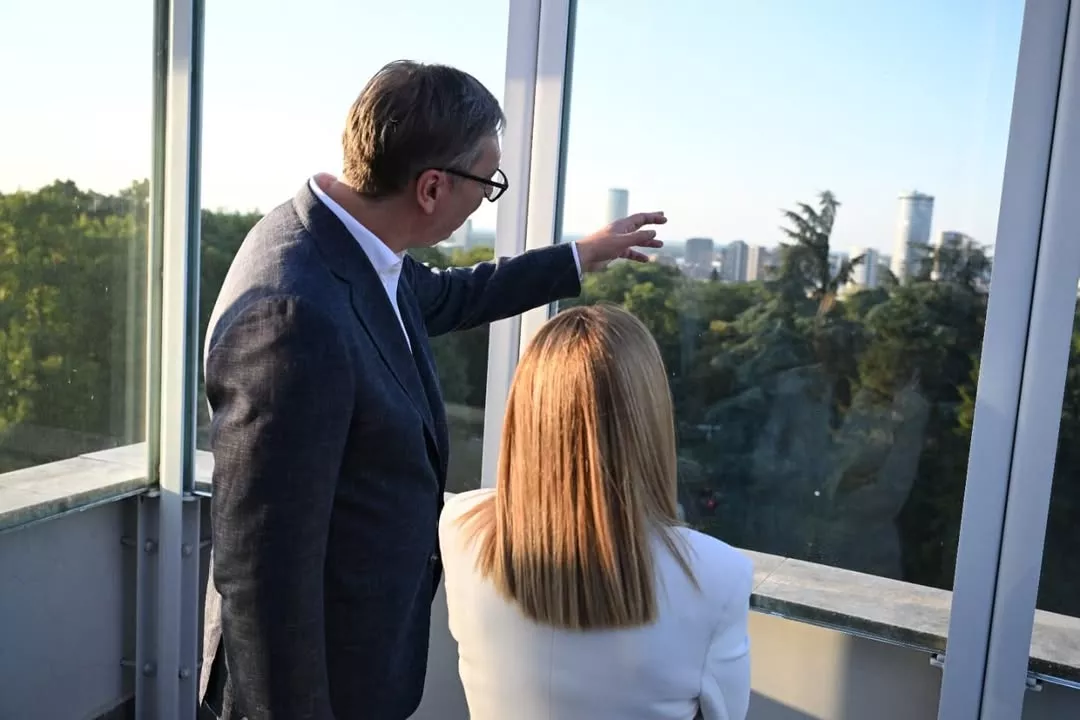
Meloni visiting Serbia
It is clear that two diplomatic initiatives have met in BiH - those of Turkey and Italy, two countries with excellent cooperation in the military industry and multi-billion dollar contracts.
Italy is using the "initiative" to strengthen its predominantly "right-wing" influence in the EU, while Turkey, through the "platform," wants to redefine its relationship with Europe.
Both countries - Turkey and Italy - have invoked their strong diplomatic presence in the region. However, neither of these two powers has publicly invoked the country they are using as an "entry point" or "gateway" for the implementation of the initiative.
Unofficially, the country they are counting on the most is Albania, which recently gained the status of a key NATO member in the Balkans. With Turkey's help, this country has become "Europe's largest drone industry center," and for Italy, Albania, with the new NATO air base Kuçova (opened in March 2024) and a NATO naval base of special strategic importance.
However, both powers have the same assessment - that Serbia is actually the political key to "repositioning the Western Balkans" in the face of new security challenges arising from the conflict between Russia and Ukraine.
Therefore, both Turkey and Italy are seeking guarantees for the success of their multilateral initiatives primarily through strengthening bilateral diplomatic channels with both Serbia and Albania.
However, both Turkey and Italy see BiH as a medium for so-called soft diplomacy, meaning strengthening and developing traditional cultural ties, even though both countries have their military contingents within the EUFOR formations in Sarajevo.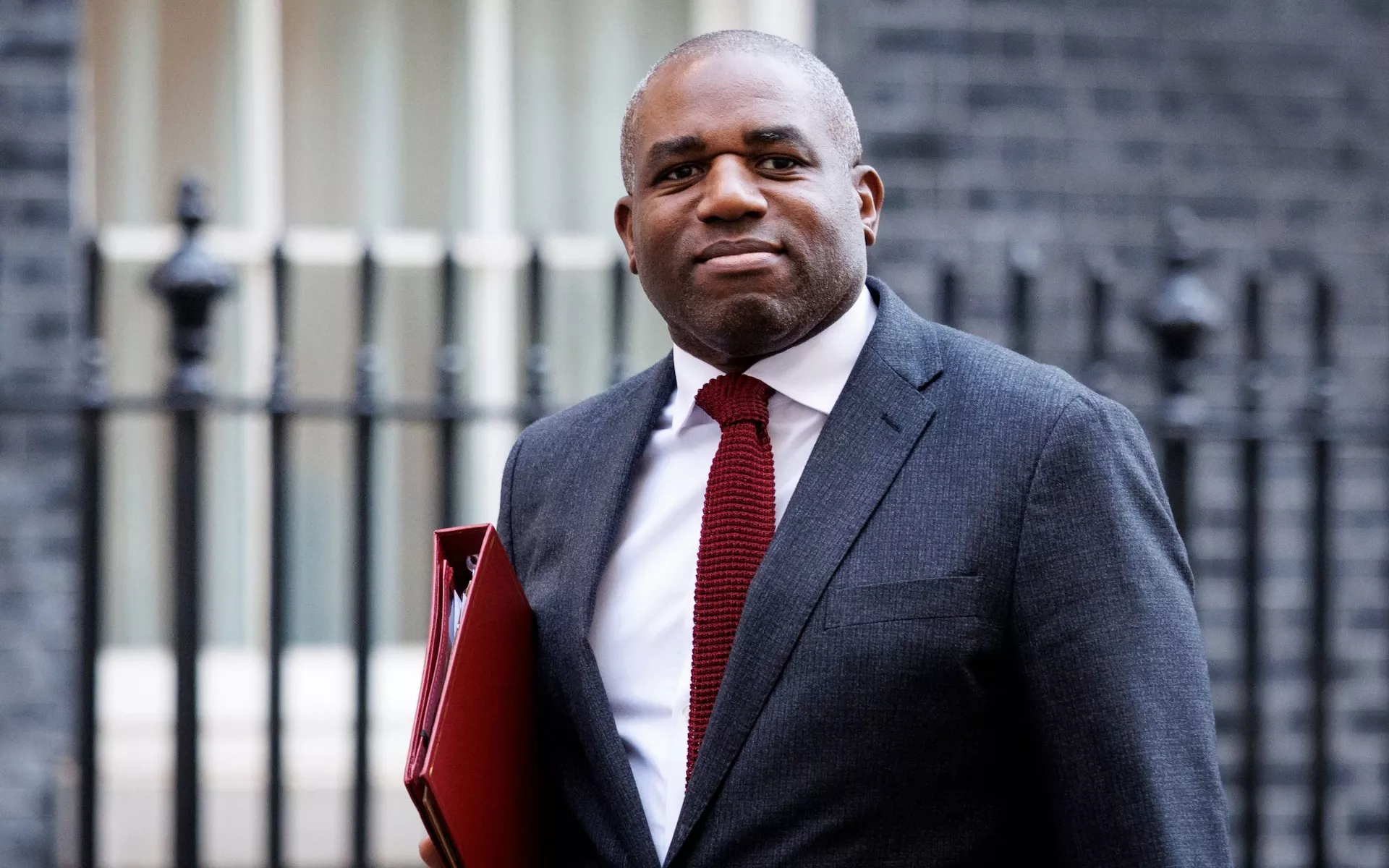
David Lammy
Just a few days after Meloni's visit and the announcement of the idea of "reunifying the Balkans," a new diplomatic initiative was announced by Britain. This British initiative for BiH and the Western Balkans was announced very diplomatically by the then outgoing German ambassador to Sarajevo.
Britain announced a Balkan countries conference for October 8th, 2025, in Ireland. The participation of as many as 15 European countries is expected. The venue has been set in Belfast, at the old Hillsborough Castle estate, where some of the key events in British and Irish politics took place.
Let us recall: the Good Friday Agreement was signed at this location in May 1998, after decades of conflict between the two communities in Northern Ireland.
Last week's departure of David Lammy, who had carefully prepared this conference and visited Sarajevo on May 6th, 2025, cast a big shadow over its full success. Instead of him, the conference will, by all accounts, be chaired by the new British Foreign Secretary, the former British Home Secretary Yvette Cooper, who has no prior experience in foreign affairs.
However, the presence of several career diplomats from the British Foreign Service, as well as the new peace mediator for the Balkans - Ms. Pierce - is encouraging. A statement from the British government issued in connection with this conference states, among other things:
"Given the unresolved disputes and growing ethnic tensions in the Western Balkans that undermine European aspirations and make the region vulnerable to harmful influence, the Foreign Secretary will draw on the experience of the peace process and practical examples of cohesion between different communities present in Northern Ireland today".
What can we expect from this event, especially after the "real Russian diplomatic blow" to BiH orchestrated by Foreign Minister Lavrov on September 9th, 2025, in Moscow?
To be honest, our expectations are mixed. One of the important architects of this agreement was US Senator George Mitchell, with significant help from legal expert Jonathan Powell, who is now in the office of Prime Minister Keir Starmer. By all accounts, Starmer's advisor will once again come up with a proposal for the Balkans, or more specifically - for BiH.
This important diplomatic event for the future of BiH, as well as the Balkans, will show whether British diplomacy, this time without the support of someone from the American Congress, has enough strength to "break free from old models" in resolving the issue of BiH and reject concepts, for example, of "constituent peoples" that belong to the past.
It is speculated that Britain could offer a "consociational model," or in translation - the federalization of BiH with a third entity. This initiative, with such a proposal, would be a reflection of another time and order of things and would show Britain as a country "trapped in the past" rather than a "country open" to new visions of Europe and the Balkans.
Why not offer a vision of BiH as a modern European state where all judgments of the European Court of Human Rights will be implemented? It is in the interest of Britain itself, as well as the whole of Europe, to pave the way for BiH.
Our message is: the time has come to make BiH a country capable of defending itself, a country that will have the strength to fully adapt to European defense standards, a country that will contribute rather than be a burden to the defense and security of the entire region. Give us the opportunity to defend the entire country in the interest of Europe, rather than defending fragmented and separate parts of the country - for the interests of others.
This is our vision, this is the idea that would guide us. Listen to what the British Ambassador to BiH said in a conversation with the Deputy Mayor of Bugojno in January 2025. After separate meetings with the mayor and his deputy, British Ambassador Reilly stated that "constituent peoples in BiH will not exist one day" because it is "an element that BiH must give up" on its path to European Union membership, which "shocked" Miroslav Zelić of HDZ BiH.
Ambassador Reilly practically showed how a European diplomat can adapt to the new order of things. When Secretary of State Lammy hinted at Britain's proactive engagement in Sarajevo, we hope he had in mind what his ambassador in Sarajevo told Zelić in a conversation a few months earlier.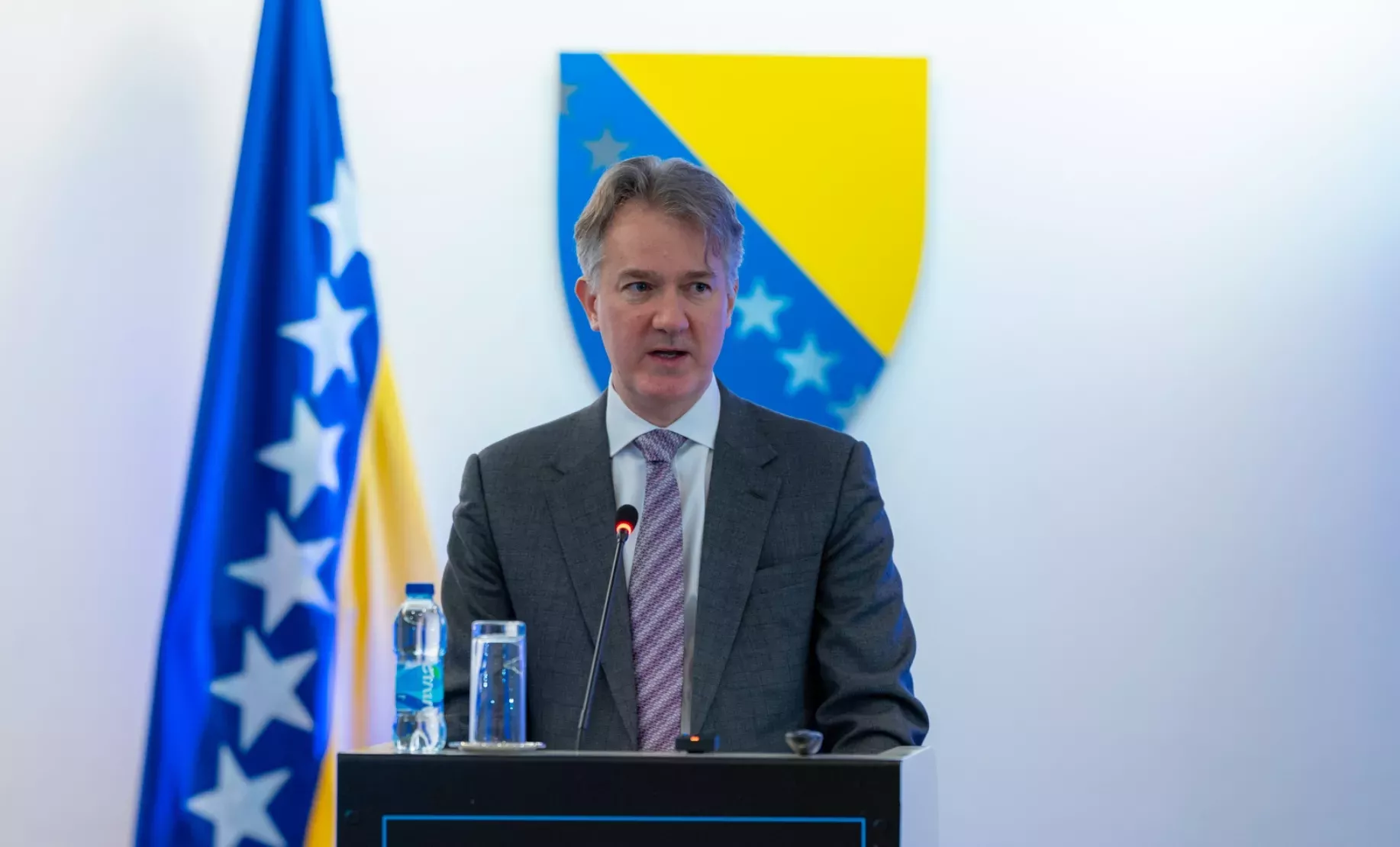
Ambassador Reilly
In the context of three diplomatic initiatives, the meeting between Russian Foreign Minister Lavrov and Dodik in Moscow on September 9th, 2025, had the character of a real "diplomatic blow" to BiH, but also to the aforementioned initiatives.
This time, Russia announced its direct involvement in BiH under the pretext of preserving the Dayton Peace Agreement. The impression, however, is that we have not yet fully grasped the scale of this Russian "diplomatic blow" to BiH.
Russia, unlike Turkey, Italy, or Britain, has suspended its mediating role. Lavrov showed that he does not want any diplomatic solution to be found. Using the excuse of defending the original Dayton Agreement, he delivered strong diplomatic slaps in multiple ways, primarily to Western countries, and then to Bosniaks - especially.
Thus, the Russian Foreign Minister changed the very concept of diplomacy in the case of BiH, largely violating the narrative of the Dayton vocabulary itself, even though they "swore" to its defense. Lavrov spoke of the "original Dayton" in the same way that Putin spoke of the "original Yalta," with which the Russian president justified the military annexation of Crimea in 2014.
For the first time, Lavrov addressed Bosniaks as "Muslims," thus this world-class diplomat adopted Dodik's militant vocabulary, and called the Federation of BiH the "Muslim-Croatian Federation" at a time when Dodik, in his presence, requested a "third entity for Croats".
With this act, Lavrov suspended the political credibility and place of one nation in BiH. He thus encouraged hegemonic aspirations, especially from Serbia towards BiH. It is clear how this diplomatic incident of Minister Lavrov fits into Russia's imperial ambitions in the Balkans, and that it comes just a few days after Putin's visit to China for a military parade and a meeting of the Shanghai Cooperation Organization (SCO).
All that Lavrov was concerned about was the spread of imperial Orthodox Russian influence in BiH. Lavrov is doing what a semi-drunk Yeltsin said at the Vancouver summit on April 3rd, 1993, while cruising the coast of this Canadian city with Clinton. At that time, during negotiations on Russia's sphere of influence in the Balkans, Yeltsin spoke of Bosnia and Herzegovina as a "Russian territory" during lunch.
Therefore, this vocabulary was not a slip of the tongue for Lavrov, but a return to the roots of wartime Russian diplomacy towards BiH, as well as the revelation of a much sharper stance towards the West in general. It is a vocabulary of escalation and instilling fear. With this vocabulary, Lavrov, in the language of Byzantine diplomacy, abolished Dayton and showed that he has something else in mind - let's call it a "geographical" plan known as the "Russian Orthodox world".
The composition of the delegation that Lavrov received is itself an illustration of the scale of this dangerous Russian turn towards Bosnia and Herzegovina. In addition to the Minister of Internal Affairs of RS, Željko Budimir, the meeting was attended not by the Ambassador of BiH to Moscow, but by the Head of the RS Representative Office in Moscow, Duško Perović, along with lawyer Slavko Mitrović.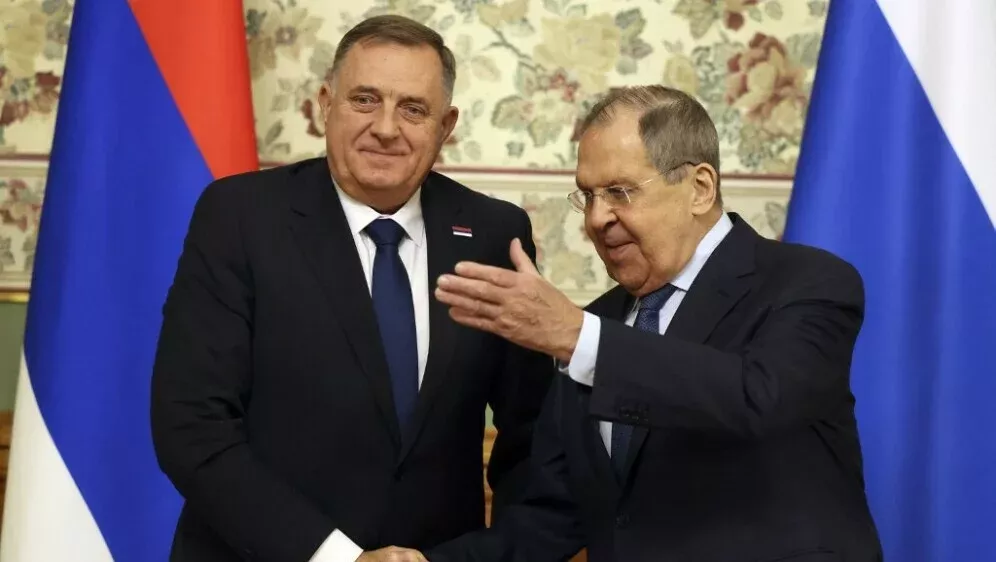
Dodik with Lavrov
We would also like to point out some other important details from the mammoth 65-minute Lavrov-Dodik press conference in Moscow on September 9th, 2025, which have escaped the attention of our public.
At this conference, Lavrov crossed the "psychological Rubicon" on the issue of Bosnia and Herzegovina. For the first time, he accused the West of working against the "Orthodox-Christian world." Also, for the first time, Lavrov spoke of European "anti-Slavism".
This was a precedent. It is a very clear message: the dominance of the West, the unipolar world you maintain, is over. Lavrov used Bosnia and Herzegovina, as well as the attack on the Office of the High Representative, as a medium through which to send messages to the West about the emergence of a new "multipolar world" in which the "Orthodox world" is one of its poles.
The almost fanatical and completely unjustified criticism of the OHR office and High Representative Christian Schmidt, who was called "Hitler" or "Gauleiter" at this scandalous press conference, has little to do with Schmidt himself and more to do with the message they sent to the West - "are you ready for a world in which you are no longer unquestioned rulers..."
It is interesting how Lavrov completely agreed with Dodik's Zionist lawyer Eric Zell on this point. This international lawyer, on July 21st, 2025, published an article in the Israeli newspaper Ynetnews titled "How Minorities Resist Islamist Centralization," in which he sharply criticized the High Representative in BiH. The criticisms against Schmidt, made from Israel, were presented as accusations that he is "depriving Republika Srpska of control over mineral resources".
Zionist lawyer Eric Zell, who, when it comes to BiH, also enjoys Lavrov's support, described the authorities in Sarajevo as an "Islamist government," and called Dodik's coalition partners - the Trojka - a "mortal danger to the freedom-loving ambitions of Republika Srpska in its struggle for autonomy..."
Regardless of these coincidences of Russian diplomacy with Zionism, Minister Lavrov's diplomacy is essentially based on the teachings of Putin's closest philosopher - Alexander Dugin. Lavrov projected these ideas of Dugin, when speaking about BiH, onto the Balkans by applying his teaching about one pole of the new world, which we see as the "Orthodox world".
One should not miss the detail that this unusually long press conference began with Lavrov's thanks to former RS President Dodik for the progress in building the Serbian-Russian Orthodox Church in Banja Luka. Lavrov said something like: "We will provide the interior work, and thank you for the material you have provided for the exterior work..."
Therefore, Bosnia and Herzegovina is today the scene of a conflict between two diametrically opposed doctrines. The doctrine of the "Russian world" is fiercely clashing with the doctrine of "stabilocracy" advocated by the West. On one side are Russia and Serbia, or the MBB axis - Moscow, Belgrade, and Banja Luka, while on the diametrically opposite side are Britain, Germany, Italy, and partly Turkey.
The future of this country, from the perspective of the Western doctrine, is seen through the preservation of "constituent status," "agreement of peoples," "concessions," while the future of this country in the doctrine of the "Russian world" is seen through constant "political patronage," "predominance of the Orthodox pole," "ending Western domination" - as Lavrov announced in Moscow, following the philosophy of Alexander Dugin.
Russia bases its diplomacy towards Bosnia essentially on fear - "only if you fear us can you be good with us," while the West bases its diplomacy on maintaining balance through EUFOR military units and the Office of the High Representative.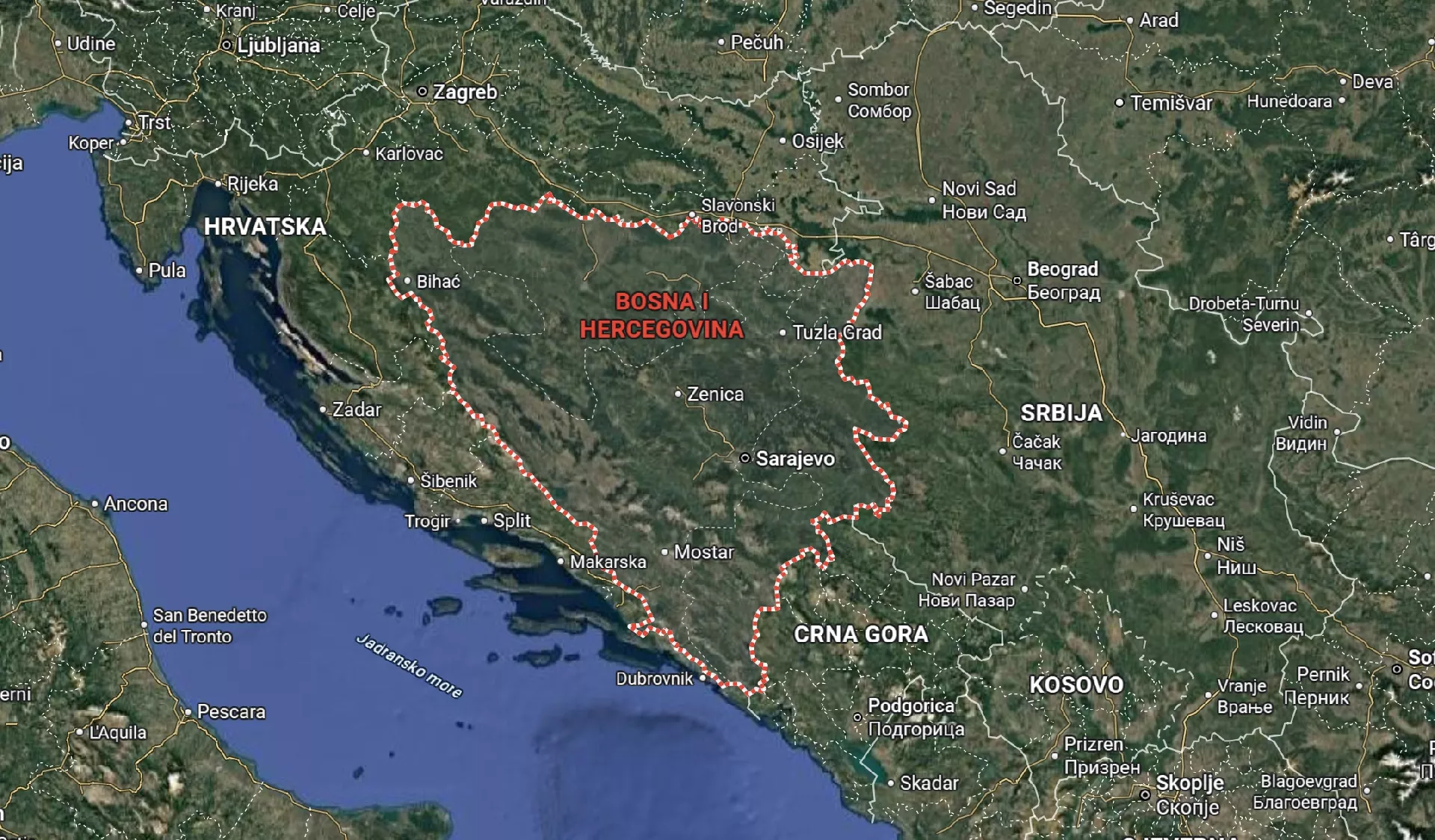
Map of Bosnia and Herzegovina
We, the citizens of Bosnia and Herzegovina, we in Krug 99, who express the critical thought of the public, offer, propose - a model for the future of modern Bosnia and Herzegovina. A model of Bosnia and Herzegovina based on European standards, on implemented judgments of the European Court of Human Rights. We have recorded this in our crown document "White Paper on Security," as well as in the Draft Proposal for a New Constitution of Bosnia and Herzegovina, which we will announce to the public very soon.
We are talking precisely about the BiH that the British ambassador spoke about, intentionally or quite by accident. A country where power and privileges are not obtained solely based on belonging to a constituent nation. A country where one must fight for their political status in the political arena.
The imperative for the West today in BiH is to correctly understand the game that Russia is playing here. We are facing fundamental and irreversible challenges in finding a way out of the current despair and apathy of citizens.
If we want to survive as a country in this world, we must be brave and seek support from the democratic world for Bosnia and Herzegovina, tailored to European standards, much more decisively.
Bosnia and Herzegovina and its survival are a litmus test for the West. But also a test of how far Russians can go in promoting their doctrine of imperial expansion.
Komentari (0)
Prijavite se za komentiranje
PrijavaJos nema komentara. Budite prvi!
Minuta
Sve →Iz drugih kategorija

High Representative Not Elected: Germans, French and British Against Americans, New Attempt at End of June

ČOVIĆ WITHOUT MERCY: How Those Who Brought Ademović to Office Created a Political Hell for Him



Sunny Saturday, quite warm



Tragedy in Albanian resort: Two minors drown












