
By: Armin Sijamić
The Spanish media, little known to the general public, has shaken the Caucasus these days. Armenia's decision could change the Caucasus, Central Asia, and the Middle East.
Many had not heard of the Spanish media outlet Periodista Digital until recently. The small number of followers on social networks, considering that Spanish is the native language for half a billion people, indicates that it does not enjoy great popularity. But this week, it showed that it can have a huge impact even on the other side of Europe – in the Caucasus.
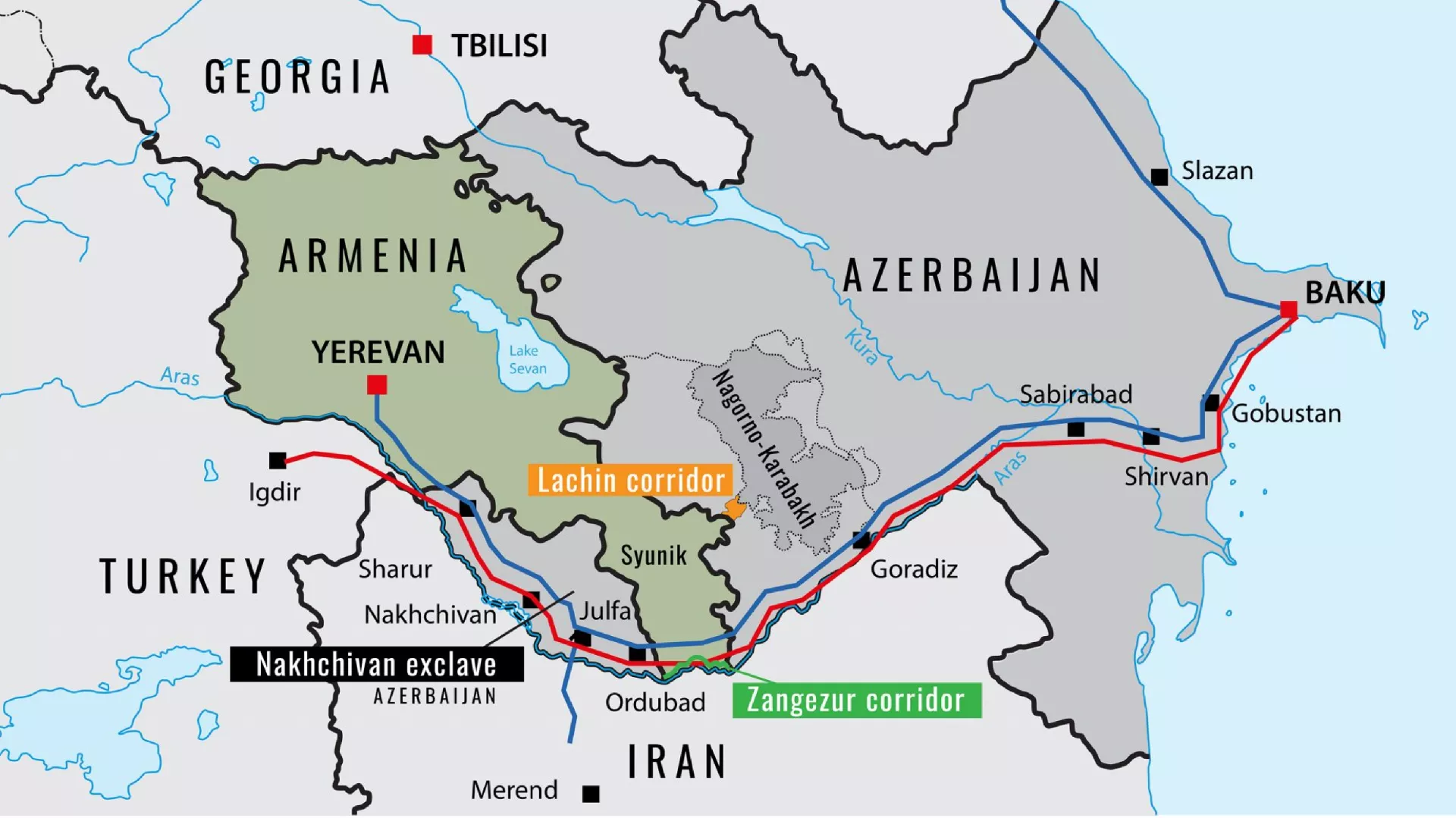
This media outlet claims to have obtained a "secret memorandum" through the Armenian diaspora in France, signed by Armenia, Azerbaijan, and the United States, according to which the three countries will build the "Trump Bridge" corridor through the Armenian province of Syunik. The 42-kilometer-long corridor would connect the Azerbaijani exclave of Nakhchivan with the rest of the country's territory, and it would be managed by an unnamed American company for 99 years, although Yerevan would formally retain sovereignty.
The article might have gone unnoticed by a larger number of readers if it hadn't been widely shared and quoted on social networks by (pro)Russian profiles, presenting it as a betrayal of the Armenian people by the pro-Western Prime Minister Nikol Pashinyan.
The quick reaction from Yerevan also showed that the Spanish media had touched upon an important and sensitive issue. "This fake news was published by a website of dubious origin called Periodista Digital, which has repeatedly been the focus of criticism for serving as a platform for fake individuals and distributing manipulative and unfounded materials. The mentioned article has no connection to reality," stated the Armenian government. The government adds that their project called "Crossroads of Peace" is on the table and that Prime Minister Pashinyan last spoke about it publicly on July 16.
A corridor that changes everything
Russia's preoccupation with the aggression in Ukraine has opened space for other powers to enter the Caucasus. Other media outlets have also written about this part of the world and discussed what the "Zangezur Corridor," as official Baku calls it, would mean for the region. The nervousness of Moscow, reflected in intensified media attacks on Pashinyan, confirms that something is happening on the ground. In parallel, Russia and Azerbaijan have been clashing for weeks over various accusations, leading to arrests and canceled meetings.
The Israeli-Iranian war has added further importance to this issue, following some accusations that Israel used Azerbaijan for attacks on Iran, although Tehran has not mentioned this. Baku's excellent relations with Tel Aviv further fuel these speculations, as does the possibility of third countries intervening on the border between Armenia and Iran, or Russia and the Persian Gulf, if we consider the broader regional picture.
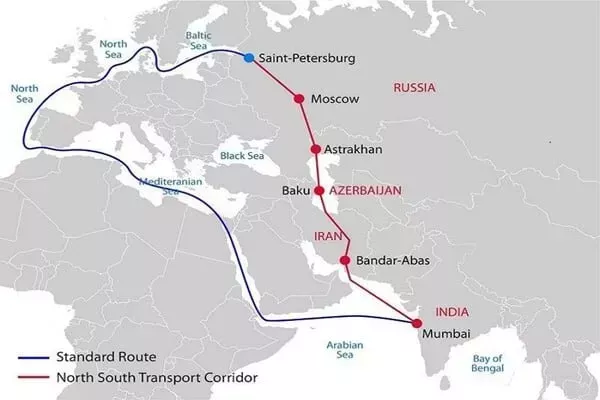
How Azerbaijan will connect its territory is a question of utmost importance for the Caucasus and the powers with interests there. If Armenia allows a corridor it will not control to pass through its territory, it changes the region. Currently, Azerbaijanis travel to the rest of their country through Iran, through which Turkey, in its intention to reach Central Asia, sends over forty thousand trucks annually.
A corridor through Armenia could also change Europe's energy landscape, as Azerbaijani gas, as well as gas from Kazakhstan and the rest of Central Asia, could be sent to Europe via Turkey. This would take about fifteen percent of Russia's share in the European market in a short period. The corridor could enable between fifty and one hundred billion dollars in annual trade by 2027 and shorten trade routes between Europe and parts of Asia by twelve to fifteen days.
Regional Relations
All of the above is known to anyone interested in the Caucasus, and there is nothing new there. However, the story became topical in April this year when the Armenian parliament adopted a set of measures pushing the country towards EU membership. Some time earlier, in January, Donald Trump appointed Louis L. Bono as acting Director of the Bureau of European and Eurasian Affairs at the State Department, who was an advisor to the Secretary of State for Caucasus negotiations. Bono proposed international monitoring of the corridor through Armenia, modeled after the Panama Canal, or corridors to Berlin during the Cold War.
It is clear to the West, especially Washington, that part of the Caucasus has had enough of Vladimir Putin's Russia and that it is the right time to move things forward. Russia, after the war for Nagorno-Karabakh and after Pashinyan came to power in Yerevan, has no way to attract former Soviet republics. Armenia has had enough of poverty, and resource-rich Azerbaijan desires further development.
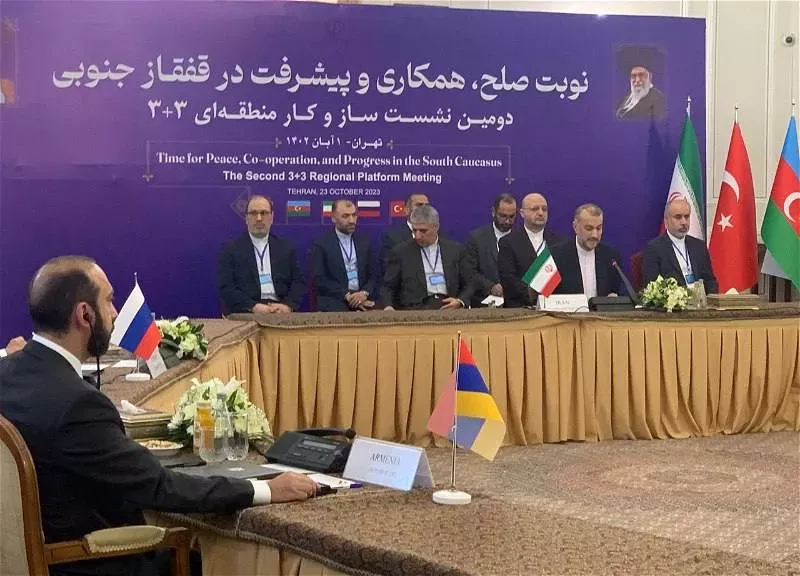
Connecting Nakhchivan with the rest of Azerbaijan is of interest to Turkey, which would weave itself into another link between Europe and Asia. Through Azerbaijan, Turkey would become a bridge to Central Asia, where it has had interests for centuries. Further Turkish penetration into that part of the world would be bad news for Moscow, which has been expecting Iran to curb Turkish influence there since the collapse of the USSR.
Iran wants to maintain its border with Armenia and has good relations with Yerevan. This was evident last week from the words of the Iranian ambassador to Yerevan, Mehdi Sobhani. Sobhani says that Iran does not mind Azerbaijan moving closer to the West, especially the European Union, and that Tehran respects the decisions of an "independent state" that has the right to an "independent foreign policy."
Sobhani says that Iran has helped Armenia diversify its foreign policy. He cited two examples. A waste treatment plant in Armenia was built by an Iranian company with money from the World Bank and the European Union, and the modernization of the Meghri customs office is being carried out by Iran, financed by European financial institutions.
The Iranian diplomat claims that Armenia's rapprochement with the European Union opens up opportunities for further regional cooperation that will include Tehran and that the Iranian authorities have full confidence in the Armenian government. "We trust our Armenian friends, and the Armenian government is very sensitive in supporting and protecting its relations with Iran, as it is in the interest of both countries and both peoples," he said.
West or China
This Iranian stance may be a surprise or a hint of a slight shift in Iran's policy. Russia has shown since the war in Syria that it often makes concessions to third parties at Iran's expense. It should be remembered that Russia allowed Israel to bomb (pro)Iranian positions in Syria for years. Also, during Israel's attacks on Iran last month, Moscow tried not to offend Israel, despite agreements on "strategic partnership" between the two neighboring countries.
However, things are far from being realized, and Azerbaijan and Armenia have been negotiating a final peace agreement for a long time. This agreement will be the first step in resolving the issue of the corridor and then positioning the great powers in the Caucasus. Before the final agreement, a referendum to change Armenia's constitution will likely be necessary, which will be an opportunity for the opposition to overthrow Pashinyan's government.
It has become clear to Armenia and Azerbaijan that an opportunity is opening up for them, if things are arranged correctly, to become a bridge connecting the West and China, Europe and Asia, and to earn enormous money from it. In China's "Belt and Road" initiative, Iran and the Caucasus have special importance.
This could bring greater or lesser benefits to all countries in that part of the world, except for Russia, which could lose two more countries in which it has made decisions for decades. The nervousness in Moscow shows that they do not like the current processes between Armenia and Azerbaijan, and the situation on the ground shows that they are mostly alone in this, but not defeated.
Komentari (0)
Prijavite se za komentiranje
PrijavaJos nema komentara. Budite prvi!
Minuta
Sve →Iz drugih kategorija

High Representative Not Elected: Germans, French and British Against Americans, New Attempt at End of June

ČOVIĆ WITHOUT MERCY: How Those Who Brought Ademović to Office Created a Political Hell for Him



Sunny Saturday, quite warm



Tragedy in Albanian resort: Two minors drown












